

Results from the study on liver involvement in alpha-1 antitrypsin deficiency, which has been running since 2015
Author
Speaker: Dr. Pavel Strnad, European Reference Centre for Alpha-1 Antitrypsin Deficiency, Department of Medicine III, University Hospital RWTH Aachen
Liver involvement in AAT deficiency
Liver involvement is the second most common organ affected in AAT deficiency, after lung involvement. AAT is produced in liver cells. In the PiZZ type, if it is altered due to a genetic mutation, the protective protein can no longer be properly released from the liver cell and remains trapped there. Consequently, there is very little protein in the blood, so the lungs cannot be adequately supplied. As AAT patients smoke less frequently, liver disease becomes a more common cause of death: of patients who had never smoked, only slightly less than half died from pulmonary emphysema, but almost a third died from liver involvement. Among former smokers, this ratio is different, with 72 deaths due to % emphysema compared to 10 deaths due to % liver involvement.
Liver involvement follows a bimodal course: it is typically detected in newborns or infants, or only after the age of 40. Diagnosis is not straightforward, as there are no specific symptoms, and routine diagnostic tests with liver function tests and standard ultrasound procedures very often yield normal results. To prevent affected individuals from being mistakenly diagnosed as healthy, methods such as elastography are necessary.
Early diagnosis of liver involvement allows for early intervention by specialized physicians with the goal of improving quality of life and life expectancy. Although much can be achieved preventively, liver care is often neglected. Therefore, establishing comprehensive care provided by experts, as in the current European network, is crucial. Physicians look for specific contributing factors that negatively impact liver health. These include smoking and alcohol consumption, as well as obesity and poor diet, diabetes, liver-damaging medications, and other undetected liver diseases such as viral hepatitis B or C. Further information can be found [here/on this website/etc.]. here.
Doctors' network »Alpha1-Liver“
The speaker's research group has been working for three years to assess the extent of liver involvement in individuals with alpha-1 antitrypsin deficiency (AATD) and their families. The project began at the Alpha1 Information Day in 2015, when the team offered conference participants the opportunity to measure their liver stiffness using their devices. This opportunity was also offered at subsequent annual meetings. In addition, members of the research team traveled directly to several Alpha1 centers and Alpha1 support groups to conduct measurements on-site.
In addition, the European working group "Alpha-1 Liver" was established, involving researchers from 18 clinics in eleven European countries. This network collaborates closely with specialized pulmonologists and the respective AAT patient groups. The Aachen clinic is also the leading center for alpha-1 antitrypsin deficiency within the European Reference Network "Rare Liver" (a European Commission initiative).
Examinations and patient numbers
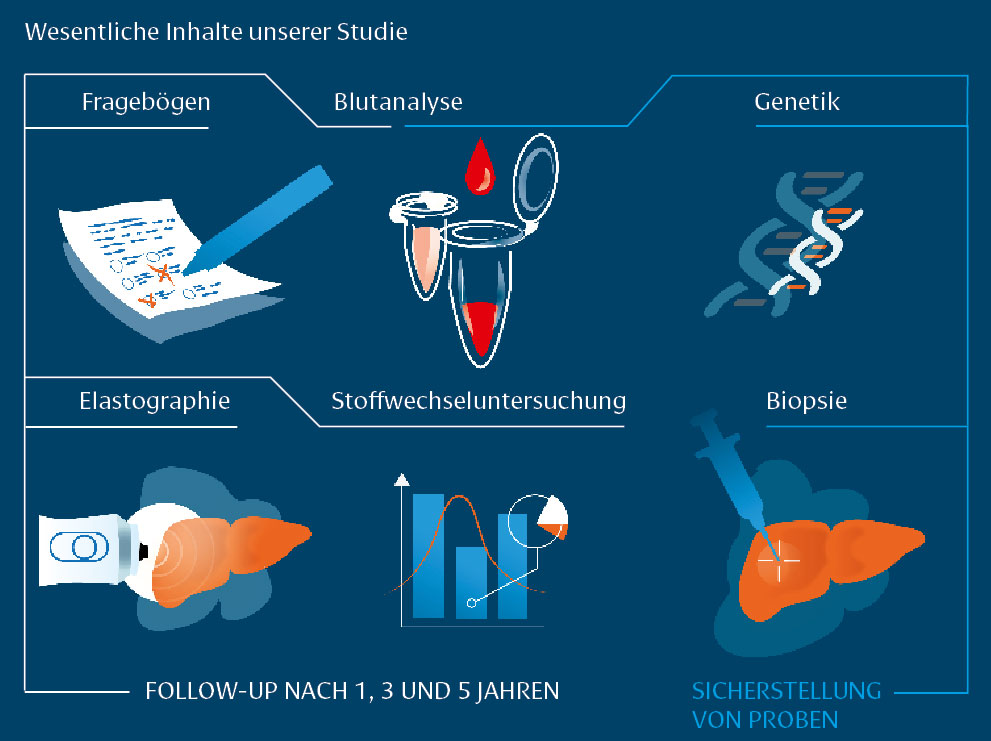
To date, the liver network has registered more than 1,100 patients and their families, including over 550 individuals with PiZZ type and approximately 210 with PiMZ type. Data collection is standardized. Patients complete questionnaires about their condition, blood is drawn to measure serum AAT levels, genetic background, and liver function tests, and liver stiffness is assessed using ultrasound elastography. The findings are discussed in detail with the patients. Patients who show abnormalities during this screening are recommended for further investigation and, if necessary, a liver biopsy. Biopsy remains the gold standard for directly examining liver tissue to determine the cause of damage.
Findings from the Alpha-1 Liver Study – Current Status for PiZZ Type
Most individuals with PiZZ liver disease had normal liver enzyme levels of ALT, AST, gamma-GT, and alkaline phosphatase. Nevertheless, the statistical mean values for this group were higher than those of the control group. When measuring liver stiffness, a value of less than 7.1 kilopascals indicates the absence of significant liver fibrosis. Researchers found increased liver stiffness in one out of every three men with PiZZ liver disease, but in only one out of every eight women. Liver cirrhosis was relatively rare, affecting only 41 of the PiZZ patients. In addition to liver stiffness, the extent of fatty infiltration was also measured. Elastography revealed significantly more frequent changes in liver lipids, with more than 60 of the PiZZ patients having abnormal values (although this was also true for a considerable proportion of the control group).
As part of the study, various blood lipids were also measured. Serum levels of triglycerides and VLDL cholesterol were, on average, lower in PiZZ participants than in the control group.
Based on all these findings, the researchers developed a framework to identify which patients require particularly close monitoring. The risk of liver scarring is relatively high (70-80 %) especially in men with elevated AST levels and in men over 50 with significant obesity. Younger individuals without obesity and with normal liver function tests, on the other hand, are less at risk. In the next step, the researchers will evaluate liver changes in patients with and without AAT supplementation and monitor the long-term course.
Findings in the PiMZ type
The PiMZ genotype is common in the general population, affecting more than one in 50 people. Affected individuals are difficult to identify because they typically have low-normal AAT blood levels. Liver function tests are also usually normal, though not always. Elastography demonstrates that the PiMZ genetic makeup is a risk factor for liver stiffness: measurements above 7.1 kilopascals were significantly more frequent in PiMZ individuals than in control subjects. Obesity was also a crucial risk factor, as normal-weight individuals with the PiMZ genotype showed significantly better elastography results than obese individuals.
Recommendations based on previous study results
In every patient with PiZZ-type liver disease, liver function tests should be performed regularly, usually every 3-6 months. However, blood tests alone are generally insufficient. The frequency of standard abdominal and liver ultrasound examinations depends on the individual findings. These examinations aim to detect fatty liver and liver remodeling, as well as to diagnose any potential liver tumors early. Depending on the degree of liver stiffness, these examinations are recommended every 6-12 months. Liver stiffness measurements are usually only necessary again after 2-3 years, provided the previous measurement was normal; otherwise, the intervals should be shorter. Only in unusual cases do specialists order a liver biopsy.
Generally, every patient with PiZZ-type liver disease should be referred to a specialized liver center. In Germany, all patients are invited to come to the center in Aachen for a free, no-obligation examination or to visit one of the cooperating centers in Bremen, Berlin, Göttingen, Frankfurt, or Homburg. There, they will receive a comprehensive examination and consultation, recommendations and tips for optimal liver health, and information on current research findings.
Summary: Prof. Gratiana Steinkamp, as published in Alpha1 Journal 1-2018.


