
Alpha-1 antitrypsin deficiency, neutrophils and skin diseases
Below you will find the latest articles on the topic of alpha-1 antitrypsin deficiency and the skin:
Below you will find the latest articles on the topic of alpha-1 antitrypsin deficiency and the skin:




Through respiration, the lungs are in direct contact with the environment and thus also with pathogens and pollutants, such as tobacco smoke. The body has various ways of defending against these negative influences through the immune system. Neutrophils (or neutrophils for short) play a crucial role in the immune defense. They are the most common type of white blood cell. Their function is to defend against bacterial and viral pathogens as well as fungi. They are also involved in the development of inflammatory responses. However, if there is a strong and uncontrolled activation of neutrophils, tissue damage and ultimately disease can occur.
Alpha-1 antitrypsin is crucial for regulating neutrophils and protecting the body from its own substances during the immune response. During an inflammatory reaction, neutrophils themselves produce the protective protein alpha-1 antitrypsin (AAT). As part of the immune defense, they also release cytokines and elastases, which are intended to ward off unwanted invaders in the body, for example, in the lungs. This immune response, however, is nonspecific and must be tightly regulated to prevent damage to the body's own cells. In healthy individuals, AAT helps prevent an overreaction of the immune response by neutrophils. A reduced secretion or loss of function of AAT, as occurs in hereditary AAT deficiency, can therefore lead to uncontrolled neutrophil overactivity.
AAT deficiency is particularly noticeable in the lungs. The gradual loss of alveoli leads to the development of pulmonary empyema. Individuals with the hereditary PiZZ antitrypsin deficiency have an increased risk of this, and cigarette smoking further increases the risk. Due to the lack of AAT, these patients experience increased accumulation and activity of neutrophils, which ultimately leads to lung tissue damage.
Although an AAT deficiency primarily manifests in the lungs, the reduced regulation of the neutrophil immune response can also lead to inflammation of other organs, such as the skin (see figure). Neutrophilic panniculitis is a localized inflammation of the subcutaneous fat tissue. Diagnosis of this rare disease is complicated by the fact that the various forms of panniculitis are very similar in their clinical presentation. Most often, panniculitis presents as a nonspecific skin reddening caused by dilated blood vessels, similar to sunburn or inflammation.
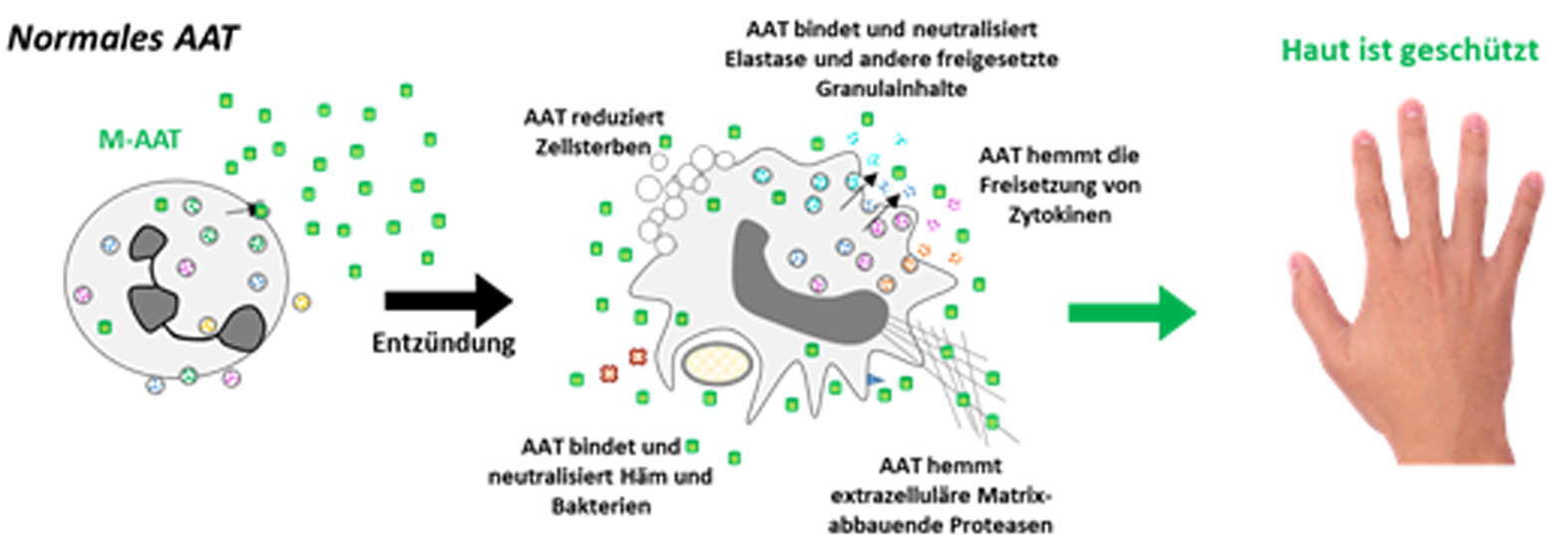
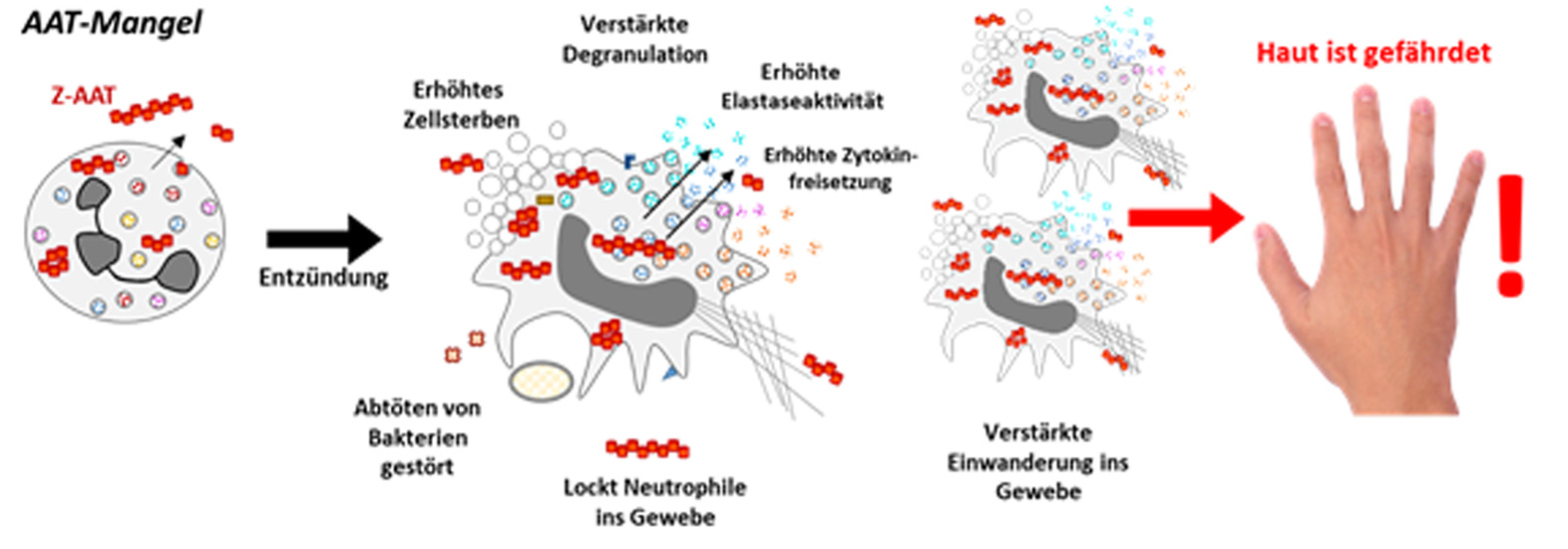
In known cases of neutrophilic panniculitis caused by AAT deficiency, middle-aged women (30-60 years) were affected, with 70 percent of cases carrying the ZZ genotype. However, neutrophilic panniculitis also occurs in carriers of the MS, SS, MZ, and SZ genotypes. It is currently unclear whether the association with these genotypes is coincidental or significant. The pathogenesis of panniculitis associated with AAT deficiency remains largely unknown. However, it is generally accepted in the medical community that increased neutrophil activity resulting from AAT deficiency leads to the development of the disease. Indeed, several patients with AAT deficiency and developing panniculitis have already been successfully treated with AAT replacement therapy.
Neutrophils also play a role in various other chronic inflammatory skin diseases, such as psoriasis. Although psoriasis is well characterized clinically and histologically, its pathogenesis remains unclear in detail. However, several cases of AAT deficiency associated with psoriasis have already been reported. An increased number of the MS, MZ, and SS genotypes have been found among patients with severe psoriasis.
Neutrophils largely regulate the properties and functions of the skin. We are only just beginning to understand the role that an AAT deficiency plays in the development of skin diseases.
Editorial staff Prof. Sabina Janciauskiene
You are currently viewing a placeholder content from default. To access the actual content, click the button below. Please note that doing so will share data with third-party providers.
More information


