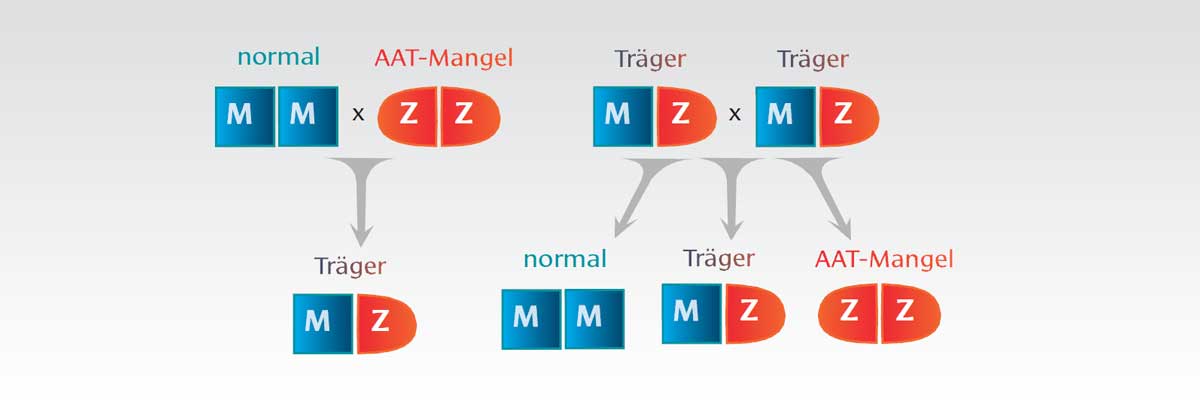
Humans possess every piece of genetic information in duplicate; each gene comes once from the mother and once from the father. This is also true for the gene that carries the "blueprint" for the protective protein alpha-1-antitrypsin. Various variations are known, which affect alpha-1-antitrypsin levels in the blood to varying degrees:
- The M variant This is the conventional, "healthy" variant. In this case, a normal alpha-1 antitrypsin level is produced with normal function. The M variant is found in most people.
- At the Z-variant This leads to clumping of the protective protein in the liver cells, preventing its release into the bloodstream. The result is a reduction in the alpha-1 antitrypsin level in the blood. Carriers of this variant are found primarily in Northern Europe and the Middle East.
- In southern Europe, this occurs more frequently. S variant, in which there is usually a slightly higher concentration of alpha-1 antitrypsin in the blood than in the Z variant.
- In the case of the very rare occurrence Zero variant No protective protein is produced at all. This leads to an extremely high risk for the lungs, whereas the liver is not affected by this gene variant.
- Our scientific advisor, Dr. Timm Greulich, describes further very rare variants.
The effects of alpha-1 antitrypsin deficiency on the lungs usually only become apparent when both blueprints of the protective protein have certain deviations, i.e., when one has inherited a defective gene variant from each parent.
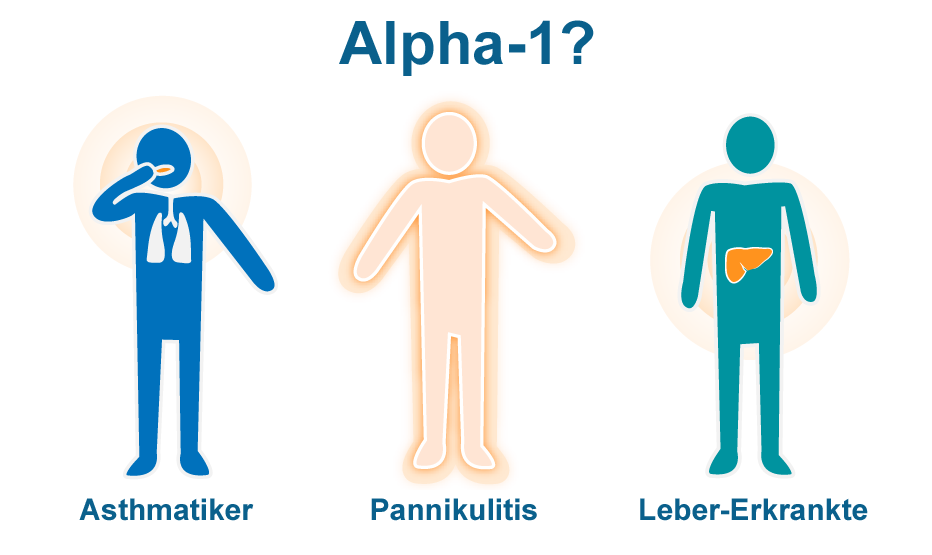
The situation may be different with regard to the effects on the liver, as it has recently become apparent that carriers of both variants M and Z (PiMZ) may also have an increased predisposition for liver changes.