What are Alpha-1 registers used for?
The registries collect data from patients with alpha-1 antitrypsin deficiency over the longest possible period. This data is used to answer questions from physicians, scientists, and epidemiologists. Many questions about the disease and its progression remain unanswered. The data in the registry should reflect the realities of care and its quality as closely as possible to real-world practice.
Study data can also be compared with registry data, and data analysis can provide starting points for new studies. Furthermore, participants (voluntarily enrolled patient groups) can be recruited for studies on new therapies.
Which alpha-1 registers are relevant for us?
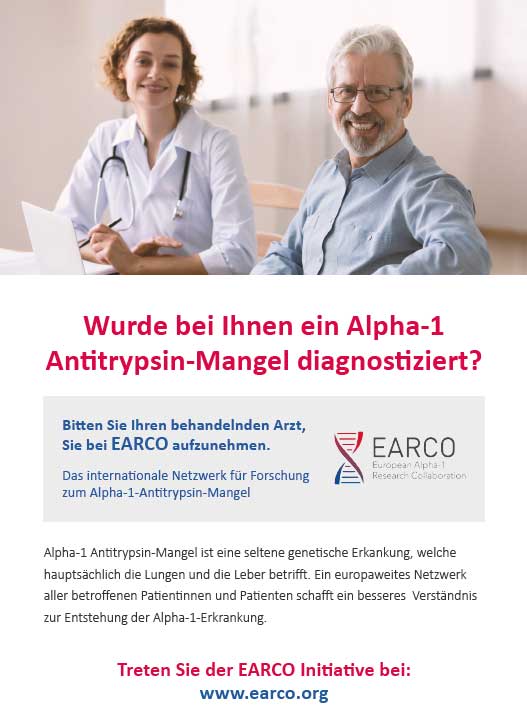
Currently, two registries are available: the German Alpha-1 Registry and the international EARCO Registry. Another one, specifically for children and adolescents with alpha-1 antitrypsin deficiency, is currently being set up by Prof. Ganschow at the University Hospital Bonn.
Patients can enter their data into the German registry themselves, with support from their doctors. Entries into the EARCO registry are only made by doctors/specialists. Unfortunately, this is currently only possible in large centers. You can find out which centers are participating in the data collection on the EARCO website.