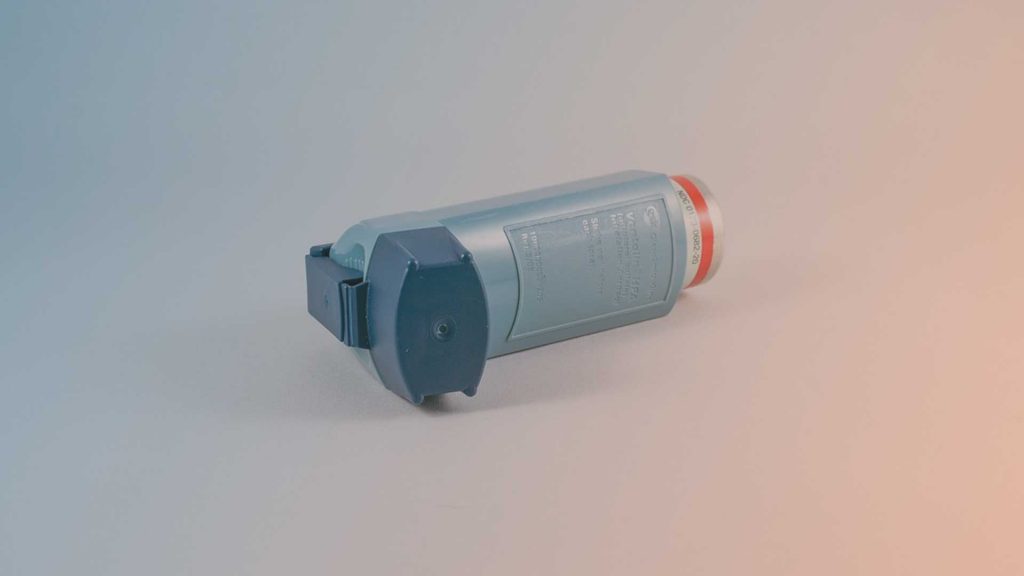
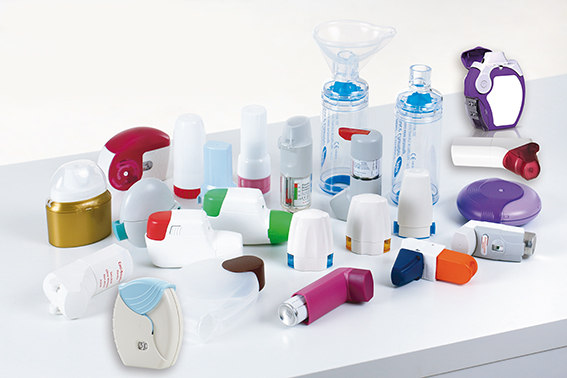
Theory and practice of inhalation therapy
For inhaled medication to be effective, a sufficient amount must reach the bronchi. Various physical mechanisms are involved in this process. Impaction describes the collision of inhaled particles with branches in the bronchial tree, preventing them from penetrating the deeper lung regions. Similar to how a car can be thrown off course and crash into a guardrail or tree when the driver is speeding, impaction in the airways also depends on the inhalation speed. Therefore, the optimal inhalation speed is crucial for effective inhalation. This varies depending on the inhalation system used. Generally, it is beneficial to inhale slowly, deeply, and steadily. For metered-dose inhalers, a low airflow of 20 liters per minute is sufficient. This is much less than most patients expect.
In practical everyday use, the position of the head during inhalation is important. Tilting the head back slightly, as when drinking, opens the airways in the throat more widely and makes the curve less constricted, allowing the medication to pass through more easily with the inhaled airflow. Attention must also be paid to the tongue and teeth. Place the mouthpiece between your lips, keeping your teeth loosely separated without biting down on the mouthpiece. This also keeps the tongue resting loosely on the floor of the mouth. It is crucial that the tongue is not pushed upwards towards the palate, as this would narrow the airway during inhalation. Another physical principle is sedimentation. This describes the process by which inhaled particles settle in the lungs. The size of the particles, their density, and their density play an important role in this process. To ensure good sedimentation, hold your breath for several seconds after inhaling and pause before exhaling. This allows the inhaled medication to settle effectively in the bronchi. Significant progress has been made with inhaled antibiotics. Particles have been developed that resemble hollow, perforated spheres and, due to their low density, can therefore penetrate particularly well and deeply into the lungs. In recent years, inhalation systems have been continuously improved, allowing more medication to reach the lungs. Nevertheless, even with new dry powder inhalers, less than 40 mg of the nominal dose actually reaches the lungs.
The Kata-App® offers excellent support, a digital tool for more precise and effective inhalation therapy.