Alpha-1 antitrypsin deficiency: Rare mutations
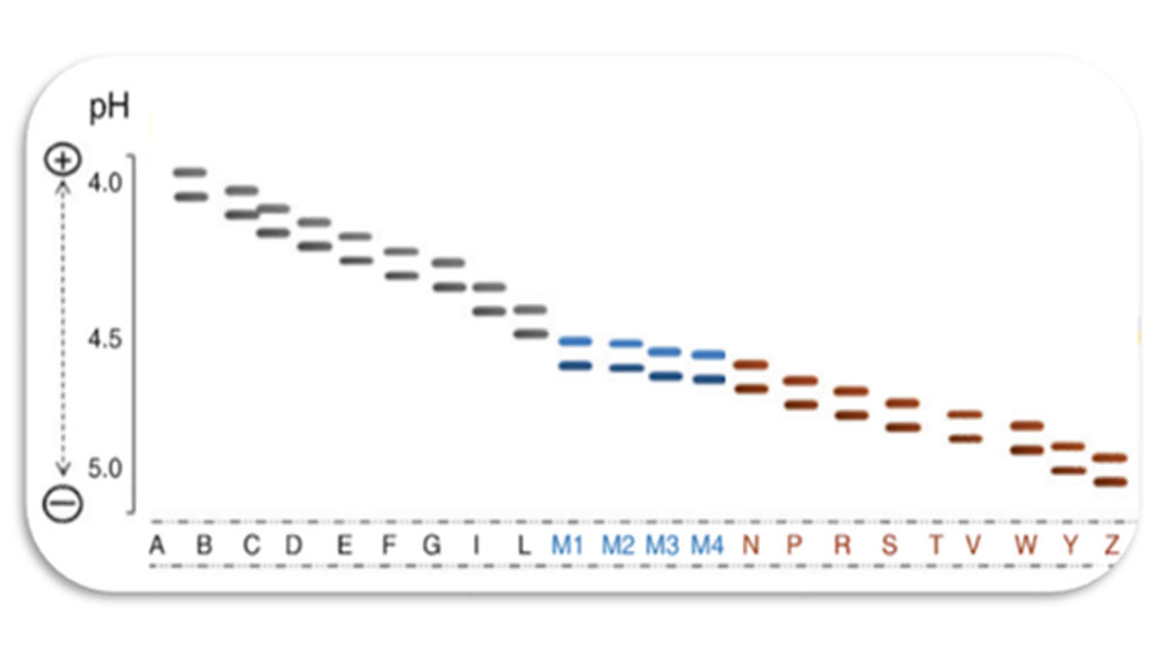
The cause of alpha-1 antitrypsin deficiency (AAT deficiency) is mutations (alterations) in the SERPINA1 gene (serine protease inhibitor A1 gene), which is located on chromosome 14. The AAT gene exhibits considerable genetic variability. Currently, over 100 different mutations of the SERPINA1 gene are known, including many rare mutations that can lead to structural changes in AAT and thus to clinical presentations of varying severity. Mutations in this gene can, but do not necessarily, lead to AAT deficiency. Depending on the type and location of the mutation on the SERPINA1 gene, the function of the AAT protein is more or less impaired, ranging from mild to complete absence. In some mutations, e.g., In the case of the frequently occurring Z mutation, the molecule accumulates in the liver, leading to a deficiency of AAT throughout the body. This results in the protective function (enzymatic breakdown of lung tissue) being impaired or completely lost. This can lead to dysfunction of various organs, particularly the liver and lungs. AAT allele variants are classified into groups: Normal (Pi*M allele) = normal serum AAT level, Deficiency = significant reduction in serum AAT level, Null (Q0) = no detectable AAT. The different mutations are designated with letters from AZ and Null (Q0) and correspond to the migration rate during pH-dependent electrophoretic separation of the alpha-1 protein. The normal (healthy) allele is designated M. (Fig. 1).
Homozygous, heterozygous and compound heterozygous forms
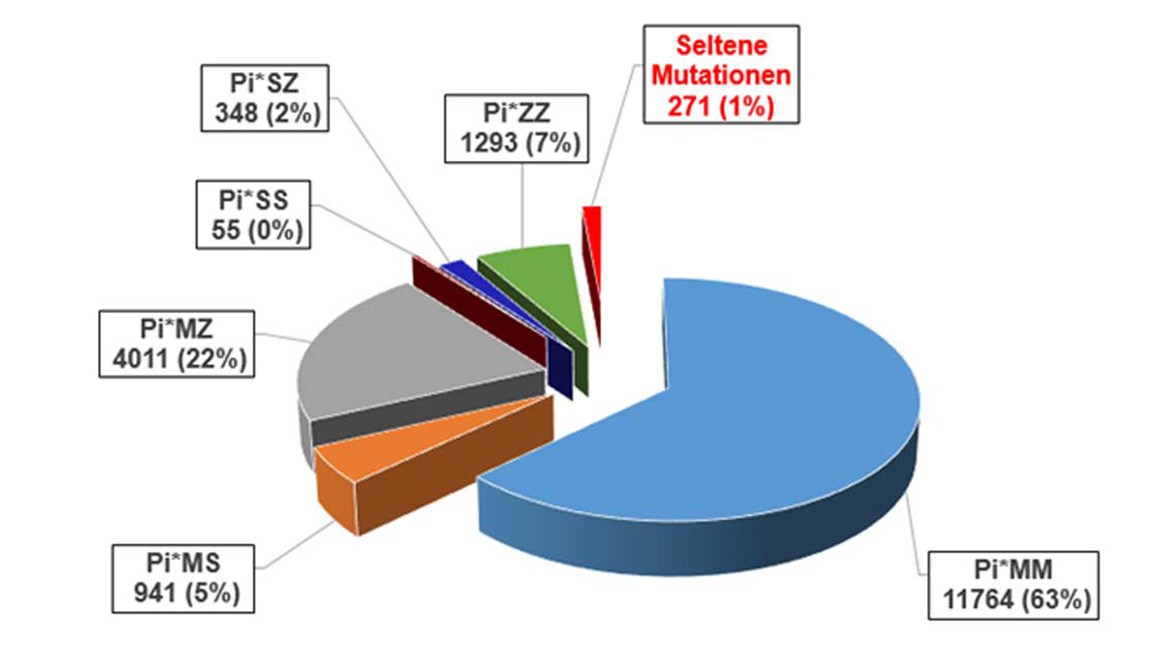
Since the human genome consists of a double set of chromosomes, the formula Pi*MM denotes a healthy person without the mutation (Pi stands for protease inhibitor, and the two following capital letters indicate the state of the two alleles). A distinction is made between homozygous, heterozygous, and compound heterozygous forms. Homozygous means that both alleles are identical; in the case of a disease, both alleles carry the same disease-causing mutation (e.g., Pi*ZZ). In the heterozygous form, only one gene copy (allele) is affected by the mutation, while the other remains unchanged (e.g., Pi*MZ). In the compound heterozygous mutation, two different mutations are present on both alleles (e.g., Pi*SZ). Most rare mutations have a name in addition to the letter, which is based on the patient's place of birth or the location or institution where the mutation was first discovered, e.g., Pi*MWürzburg, Pi*LOffenbach, Pi*YBarcelona, Pi*Q0Matthew. There are some very rare mutations that have only been detected once so far. For some of these mutations, no name has been assigned; only the exact location of the mutation on the gene is given, e.g., c221T > A.