
Author
Stilla Beitz, Group Leader Vienna & Lower Austria, presented at the AGM in Wagrain. This appeared in the Alpha1 Journal 1/2022.
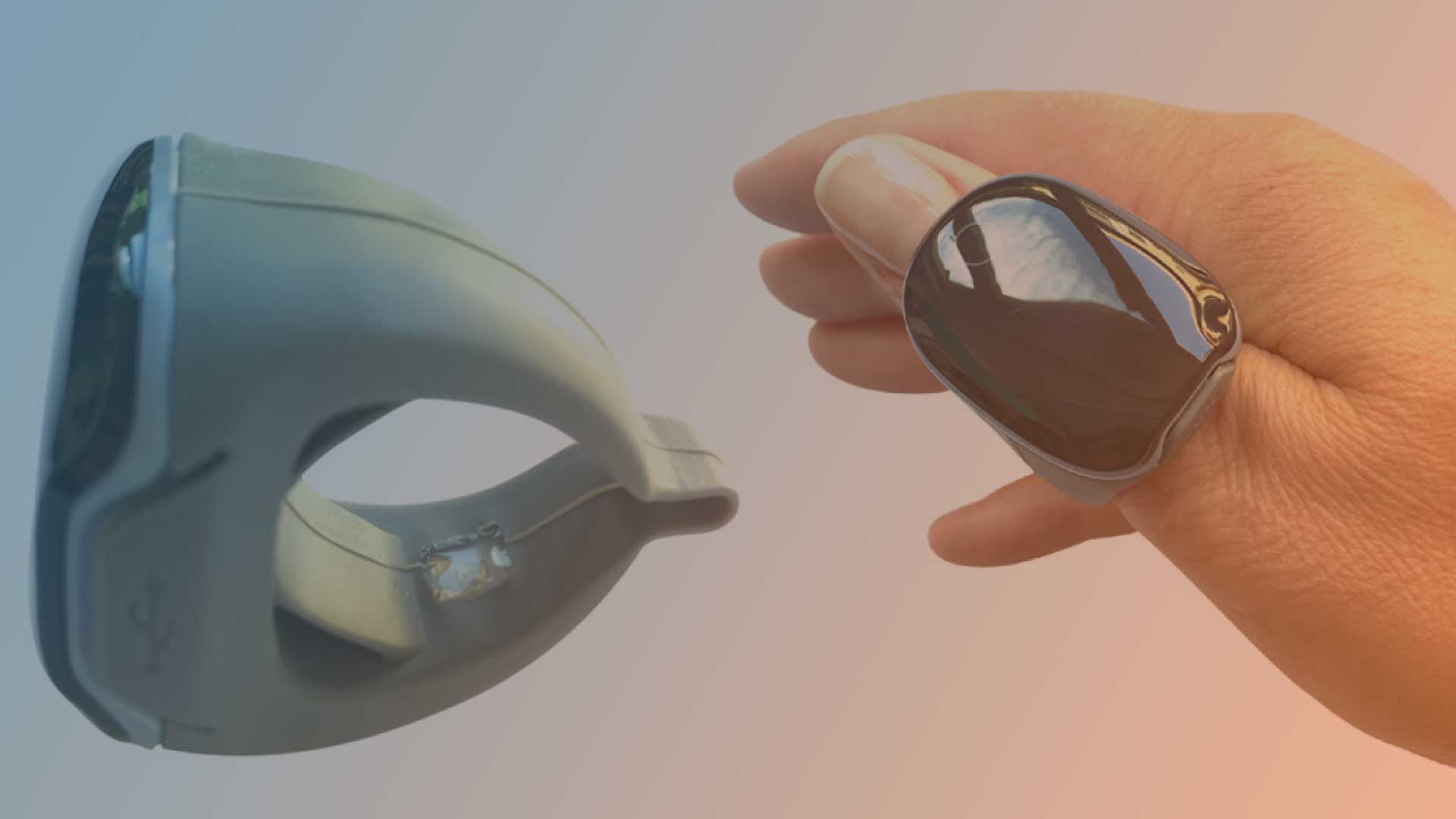
At our last group meeting, I noticed an oversized ring on the finger of one of the patients. She explained that it was a ring that measures both pulse and oxygen saturation. The ring is made of rubber and has a kind of built-in stretcher, allowing it to adapt well to different finger sizes.
This ring can be worn both during sports and at night. It reliably records pulse and oxygen levels, which can then be viewed, saved, or forwarded via an app – for example, to a pulmonologist.
The idea is ingenious: If the oxygen level drops too low, the ring vibrates to wake you up, you then breathe again, and the oxygen level in your blood returns to normal. The ring is in no way disruptive while sleeping.
The ring needs to be charged first. According to the description, the battery lasts 12 hours, but in my experience, it lasts closer to 24 hours. Data is transferred to a smartphone via Bluetooth using the 'ViHealth' app, or to a PC using a free USB charging cable.
I ordered this ring immediately. It costs around 160 euros on Amazon and I'm very happy with it.
Featured image: snorflex.de


