

Author
Marion Wilkens, as appeared in Alpha1 Journal 1/2026.
ERN-Lung, ELF, ERS, and EARCO – four organizations, four abbreviations, and one common "E." It stands for Europe. But for us, Europe is far more than a geographical term. It stands for Experience, United, Research, Opportunity, Patients, and Action. These six terms aptly describe why Alpha1 Germany is increasingly active at the European level.
Rare diseases don't stop at national borders. Especially with a rare disease like alpha-1 antitrypsin deficiency, it's crucial to pool experiences, knowledge, and data across borders. Only together can we better understand the disease, advance research, and improve care. That's why it's a matter of course for us to contribute our voice wherever research, care, and the future of patient participation are discussed at the European level.
Rare diseases don't stop at national borders. Especially with a rare disease like alpha-1 antitrypsin deficiency, it's important to pool experience, knowledge, and data across borders.
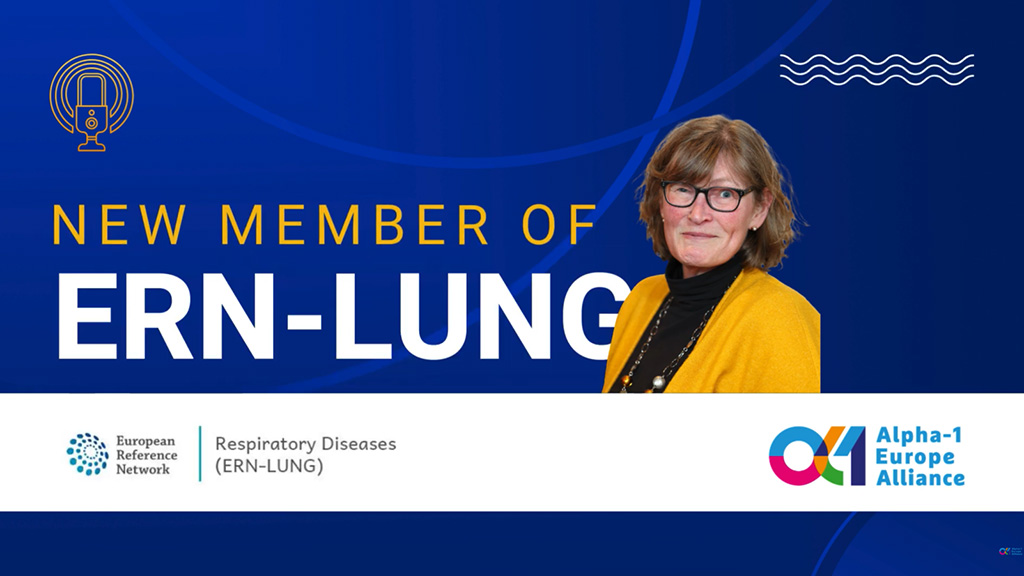
ERN-LUNG – Patient perspective in the European reference network
At the beginning of this year, I was appointed as a patient representative for the European Reference Network for Rare Lung Diseases (ERN-LUNG). ERN-LUNG explicitly defines itself as a patient-centered network. It connects specialized medical institutions and patient organizations across Europe with the aim of sharing knowledge, improving diagnosis and care, and bringing expertise to where it is needed – rather than sending patients on long journeys. Alpha-1 antitrypsin deficiency is one of the rare lung diseases represented within the network.
For me, this task primarily means contributing the experiences and expertise of the Alpha-1 community to the European dialogue. Topics such as genetic counseling, family screening, lifelong care, and the interplay between lung and liver disease are important for people with Alpha-1.
In March, I was able to participate in the 10th ERN-LUNG board meeting in Paris together with Dr. Frank Willersinn, board member of the Alpha-1 Europe Alliance. There, we had the opportunity to present the story behind the founding of the Alpha-1 Europe Alliance and to explain how a common European voice can emerge from individual national patient organizations.
Another important point was the meeting of the Alpha-1 Antitrypsin Core Network within ERN-LUNG. Here we were able to develop initial ideas on how the collaboration between ERN-LUNG, EARCO, and patient organizations can be further strengthened. I see this as a great opportunity: when medical expertise, research, and patient experience come together, projects can emerge that truly make a difference for those affected.
A discussion about European cooperation and the importance of the patient perspective can also be found in an interview we conducted as part of this work:
ELF – a new European voice for people with Alpha-1
The European Lung Foundation (ELF) has also introduced an important new development this year: the Alpha-1 Patient Advisory Group (Alpha-1 PAG) has been established. Patient Advisory Groups bring together people with a specific lung disease so that their experiences and perspectives can inform the work of the ELF and the ERS. The new Alpha-1 PAG aims to raise awareness of Alpha-1 antitrypsin deficiency and contribute to improving diagnosis, treatment, and care in Europe. Close collaboration with EARCO and European patient organizations is particularly important in this endeavor.
This is an important step: Patient participation doesn't just mean sitting in the audience at an event or being asked for their opinion at the end of a project. Patient advocacy groups should be involved in setting priorities and in research projects, and can also initiate their own patient-led projects.
For Alpha-1, this means that the experiences of people with the disease can be incorporated even more effectively into European research and healthcare decisions in the future. The first meetings of the new group have already begun; further members are expressly welcome.
Anyone who lives with Alpha-1, is a relative of a patient, or is interested in European patient work and would like to participate, is welcome to contact Alpha1 Germany.
ERS – „United for better breathing“
The role of patient advocacy is also changing at the European Respiratory Society (ERS). This year's congress motto is "United for better breathing: partnership between patients, researchers and clinicians" – working together for better breathing, in partnership between patients, researchers and physicians.
We brought the motto to life even before the congress. In an ELF working group, patient representatives from various lung diseases contributed and worked together to better integrate the perspective of those affected into ERS activities. Alpha1 Germany also participated.
For me, this is an important step towards collaboration on equal terms. Doctors and researchers are the experts on the disease. We patients are the experts on living with the disease. Bringing these two perspectives together creates the foundation for truly patient-centered research and care.
I am therefore very pleased to be able to contribute to this process – and sometimes this also includes reminding medical experts that behind every data set is a person with their own unique life story.
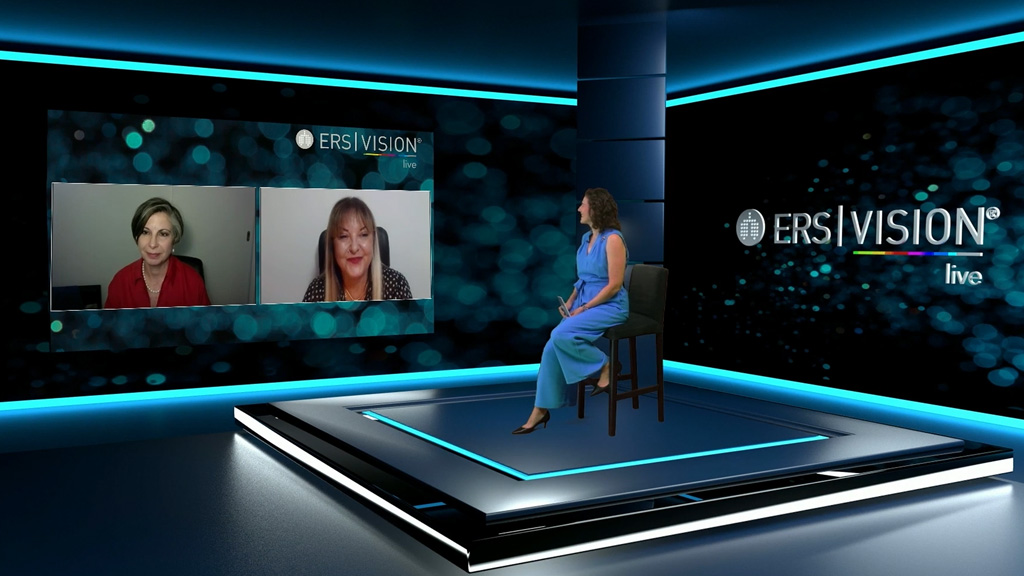
One result of this collaboration was an ERSVision live webinar, in which Alpha1 Germany participated. The recording can be viewed online:
EARCO – Research that is becoming increasingly concrete
We have reported on EARCO – European Alpha-1 Research Collaboration – several times in the Alpha-1 Journal over the past few years. And here, too, the importance of European collaboration becomes particularly evident in 2026.
EARCO is a Europe-wide research network whose centerpiece is the international Alpha-1 Registry. Its aim is to better understand the disease, investigate its natural progression, enable earlier diagnosis, and ensure improved care in the long term. To this end, the registry collects standardized clinical data from people with Alpha-1 and facilitates research projects that individual countries or centers could hardly conduct on their own.
What's particularly exciting now is the enormous number of research requests generated based on the registry data. New projects are proposed almost weekly, investigating a wide range of aspects of the disease – from disease progression and risk factors to liver and lung diseases, quality of life, biomarkers, and new treatment options. Numerous such research projects are now documented on the EARCO website.
Even more important is the focus on longitudinal data. The strength of a registry lies not only in collecting data from many patients once. Only repeated data collection over years reveals how the disease actually develops. With several years of follow-up now available, this generates data that can help us better understand disease progression and identify risk factors for different outcomes.
This impressively demonstrates that, through collaborative research, the many individual patient data points can generate knowledge that can ultimately benefit all people with Alpha-1.
A premiere: The first ERS Alpha-1 conference
A very special event is coming up in October: From October 23rd to 24th, 2026, Barcelona will host its first ever ERS Alpha-1 Antitrypsin Conference – both on-site and online.
The conference is jointly organized with EARCO and supported by ERN-LUNG. It brings together physicians, scientists, laboratory experts, and patient representatives to discuss current research findings and develop next steps for research and care. The agenda includes new therapeutic approaches, the role of rare variants, alpha-1-associated liver disease, new insights from EARCO, and questions regarding diagnosis and long-term care.
And Alpha1 Germany is also involved here: I am delighted to be part of the organizing committee for this first ERS-Alpha-1 conference, together with international experts. For us as a patient organization, this is an important sign that patient participation is increasingly understood not as an add-on, but as an integral part of a modern research landscape.
But what good is the best research if the people it affects don't find out about it?
Therefore, following the ERS Alpha-1 conference on November 4th, there will be a dedicated Alpha-1 patient webinar. Researchers, medical professionals, and patient representatives will jointly provide information on the latest developments, contextualize the results of the ERS conference, and report on EARCO's current activities. A live Q&A session will also offer the opportunity to ask questions directly to the experts.
This webinar is aimed at people with Alpha-1, their families and caregivers, patient organizations, and anyone interested in research and patient involvement. The best part: the event is free and is being developed with the support of EARCO, the Alpha-1 Europe Alliance, national Alpha-1 patient organizations like ours, and the ELF.
Looking at these various activities, it becomes clear that our European work is not about attending as many committees, meetings, or international events as possible. It's about something far more important: about having influence and ensuring that the perspective of those affected is represented where decisions are made, research is planned, and new care concepts are developed.
Europe offers us the opportunity to combine Germany's experiences with those of other countries. We can learn from others, share our experiences, and jointly initiate projects that would be difficult to achieve nationally alone.
And that brings our little European acronym to a close:
E – Experience: We contribute our experience.
U – United: Together we are stronger.
R – Research: Research creates knowledge and new opportunities.
O – Opportunity: Europe offers opportunities that we must seize.
P – Patients: The focus is on people with Alpha-1.
A – Action: The crucial point is that knowledge must be translated into action.
That is precisely why Alpha1 Germany is traveling throughout Europe: not as a spectator, but as an active voice for people with Alpha-1.


