
Author
Alpha1 Germany eV.
Get to know us now: Our new scientific advisory boards
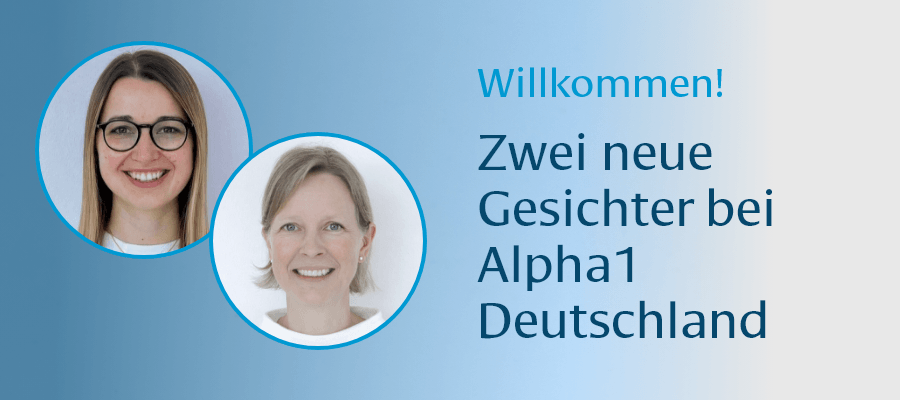
This year's second newsletter focuses on our scientific advisory boards. If you'd like to take a look at our homepage If you take a look to see who belongs to this committee, you will discover two new faces: We are very pleased to have gained Dr. Inga Jarosch for the area of rehabilitation, sport and therapy, and Dr. Tessa Schneeberger for the area of rehabilitation, sport and respiratory or physiotherapy.
We will introduce them both in detail at our members' meeting and in the upcoming journal. We extend a warm welcome to them already!
News from our advisory board member Prof. Pavel Strnad: move to Cottbus
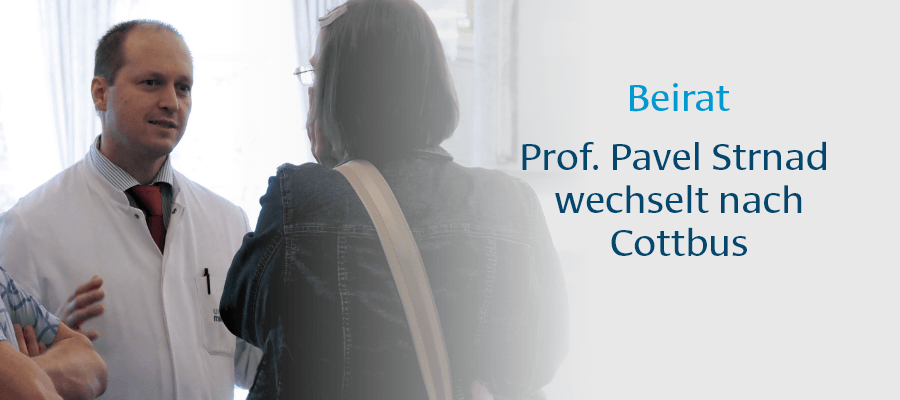
We wish our advisory board member, Univ.-Prof. Dr. med. Pavel Strnad, all the best on his move to the Lausitz Medical University in Cottbus. He has taken over as head of the 4th Medical Clinic there since March 1st.
The study/registry will continue in Aachen, and nothing will change for our information day in Bad Wildungen, as alpha-1 antitrypsin deficiency will remain a focus for him and the Aachen team. Dr. Malin Fromme will remain in Aachen and take over the care of the alpha-1 patients there. Many of us know and value her highly. It's good to have another important location for excellent liver expertise.
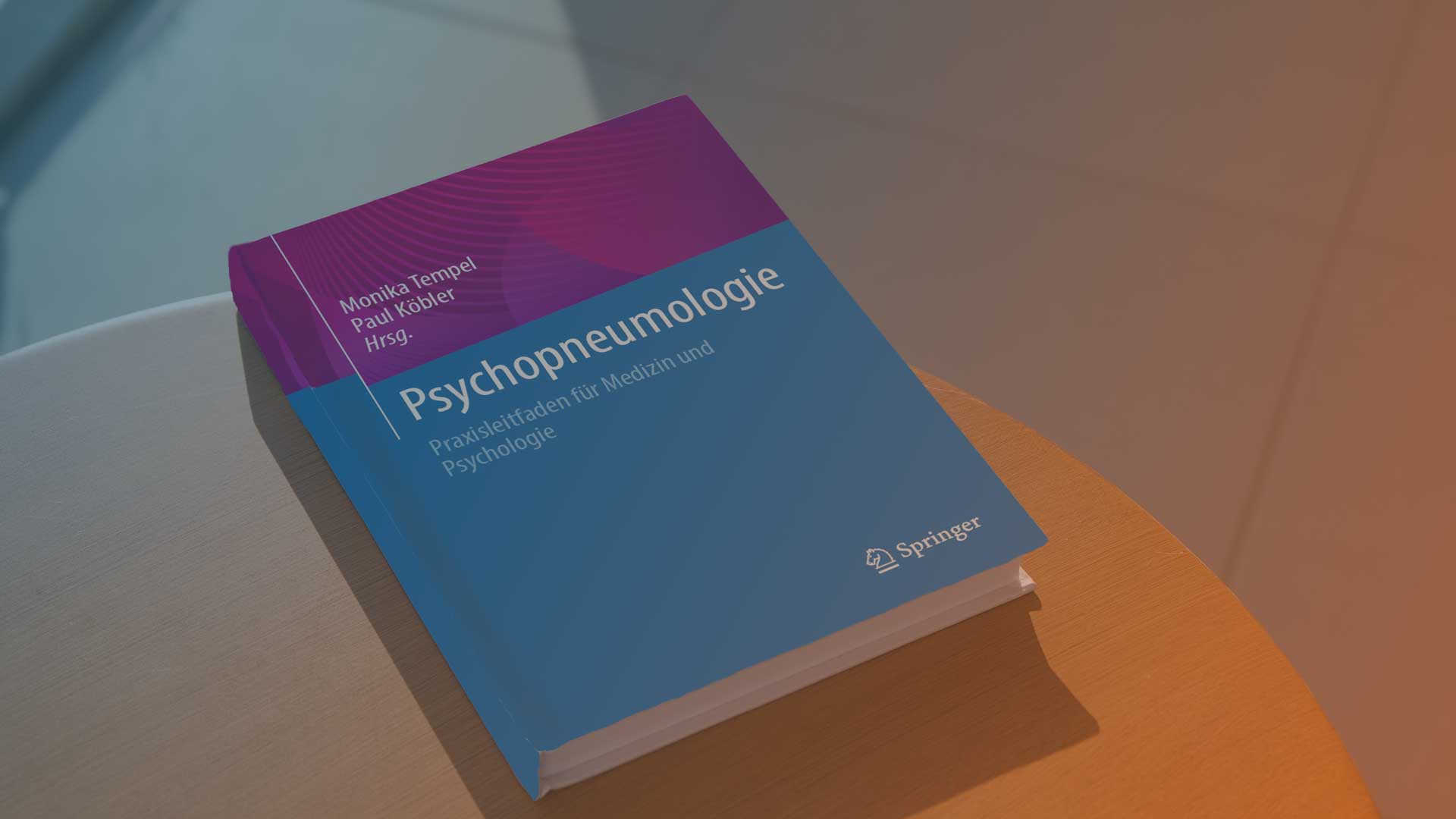
A new textbook by our advisory board member Monika Tempel and Dr. Paul Köbler has been published: „Psychopneumology: A Practical Guide for Medicine and Psychology“

Pulmonary care faces new challenges: Chronic respiratory diseases affect not only the physical but also the psychological well-being of those affected. This is precisely the focus of the new textbook "Psychopneumology – A Practical Guide for Medicine and Psychology," recently published by Springer Berlin Heidelberg.
This standard work is explicitly aimed at medical professionals: doctors, therapists, psychologists, pulmonologists, nurses and other professionals involved in care will find here a holistic guide to the diagnosis and therapy of psychosocial symptoms associated with respiratory diseases.
What makes this book special?
- It combines pulmonological and psychological perspectives in an integrative approach.
- The focus is on psychological stress, coping with illness, comorbidities and practical interventions in everyday clinical practice.
- Numerous case studies, diagnostic tools, and therapeutic strategies facilitate application in a professional context.
An important quote from the book underlines why understandable and reliable information is so crucial: „My doctor informed me about the basic medical facts of the illness. Naturally, I then consulted the internet to search for information about the illness. However, I found precisely the kinds of websites that only increased my worries without actually clarifying anything for me.“
— Marion Wilkens, Chairwoman of Alpha1 Germany e. V. (Wilkens 2016, p. 41).
This quote expresses how essential high-quality, reliable information is for those affected – a demand that Alpha1 Deutschland e. V. has been advocating as a patient organization for years.
A particularly noteworthy aspect of this book is its novelty: it is the first to combine a holistic psychopneumological approach in a standard clinical textbook format. It offers professionals a comprehensive reference work that integrates medical, psychological, and rehabilitative perspectives.
Who is it relevant for?
- Doctors and therapists in pulmonology & psychosomatics
- Specialists in rehabilitation and respiratory medicine
- Lecturers and students of clinical disciplines
- Interdisciplinary teams in hospitals and outpatient facilities
- And patients who simply want to know more.
The book is now available as a printed edition and as an eBook – a valuable specialist work that will sustainably enrich healthcare practice.
New study on rare genetic variants in alpha-1 antitrypsin deficiency
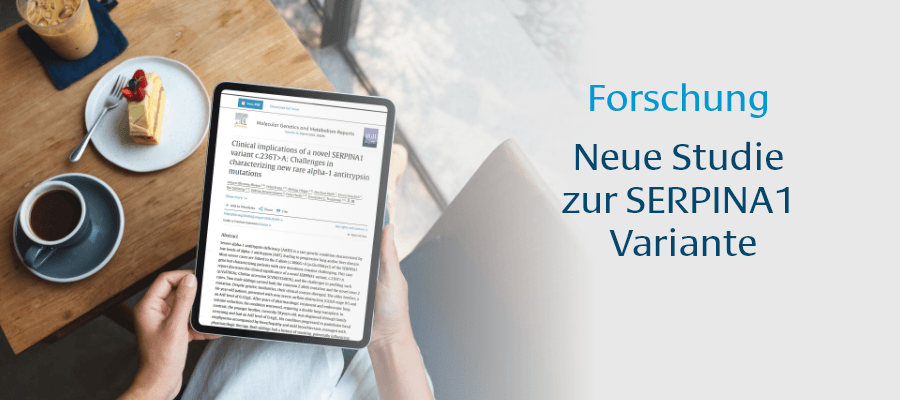
Several of our advisory board members are involved in the new publication on rare genetic variants in AATD, and it's encouraging to see how centers researching AATD are collaborating. In this case, the German Center for Lung Research (DZL) sites in Heidelberg, Marburg, and Hanover are focusing on rare genetic variants in alpha-1 antitrypsin deficiency—a clinically important and often challenging field. Accurately assessing rare alterations in the SERPINA1 gene remains a significant challenge. These rare genetic variants are biochemically and genetically complex, and current diagnostic methods cannot always definitively determine their significance.
Nevertheless, the increasing number of case reports about such rare mutations provides important insights. They help physicians to better understand the disease and to identify affected individuals as early as possible. Early diagnosis is crucial for initiating appropriate therapies in a timely manner.
The study demonstrates the importance of a comprehensive diagnostic approach. This includes:
- Genetic testing,
- Laboratory analyses of alpha-1 antitrypsin levels and their function,
- as well as a careful clinical assessment of symptoms and organ involvement.
Only by combining these steps can the full spectrum of the disease in Alpha-1 Antitrypsin Deficiency (AATD) be better understood.
Early detection and an individually tailored treatment plan can help to slow the progression of the disease and significantly improve the quality of life of those affected.
Read the study „Clinical implications of a novel SERPINA1 variant c.236 T > A: Challenges in characterizing new rare alpha-1 antitrypsin mutations„Authors include: Arturo Olivares-Rivera, Hilal Ersöz, Philipp Höger, Martina Veith, Timm Greulich, Kai Schlamp, Sabina Janciauskiene, Felix Herth, Franziska C. Trudzinski.
Patient transport – important knowledge for people with Alpha-1 Antitrypsin Deficiency (AATD)
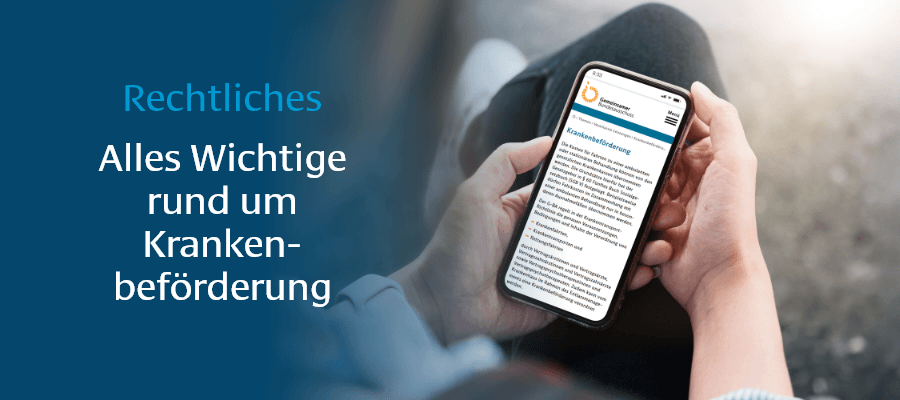
People with AATD often require regular, lifelong medical care. This includes specialist appointments, lung function tests, infusion therapies, rehabilitation measures, and even hospital stays. What many affected individuals don't know is that, under certain conditions, the costs of travel to these medically necessary treatments can be covered by health insurance.
The regulations are set by the Federal Joint Committee (G-BA). It is worthwhile to be familiar with them, as the path to treatment can pose a significant physical and logistical challenge, especially in cases of advanced lung disease.
What regulations does the G-BA (Federal Joint Committee) regulate regarding patient transport?
According to the guidelines of the G-BA (Federal Joint Committee), travel expenses for medically necessary treatments can be reimbursed if a doctor's prescription is provided. These include, among other things:
- Trips to inpatient hospital stays
- Trips to outpatient surgeries
- Further journeys if they are necessary for medical reasons (e.g., in case of limited mobility or serious illness)
In many cases, additional approval from the health insurance company is required.
Ask your doctors specifically whether patient transport is medically necessary and have them prescribe it for you.
In cases of uncertainty or rejection by the health insurance company, a medically justified appeal can be helpful.
Briefly noted: Further interesting information
Finally, something to listen to: The recording of the Lung Sports Working Group's online symposium with Heike Drechsler is now online:
It's about motivating people to do pulmonary exercise, but also about how to avoid falls.
And anyone who suddenly feels like training, just join in…


