
„"No one is sick alone. Mental well-being is a team effort involving the patient, therapist, and caregiver together."“

Author

Monika Tempel, oxygen and meaning

Patient, therapist, caregiver

Typically, a chronically ill patient has a relationship with their healthcare provider on the one hand, and with their family members or other caregivers on the other. The term "caregiver" is derived from the English words "carer" or "caregiver" and refers to a person who does not provide professional care for the patient. The patient thus has two dyads (two-person relationships) with two different individuals. Healthcare provider and caregiver are not in direct contact with each other. A triad (three-person relationship) would be more helpful and desirable, in which each participant communicates with everyone else, including the healthcare provider with the caregiver and vice versa – provided the patient has given their consent. Caregivers are sometimes referred to as co-patients or second-order patients. They, too, can develop symptoms that may even resemble those of the patient. At the same time, family members are often co-therapists. They support the patient with practical matters or specific treatments, or they pass on information to others. In this context, family members are often caught between hope and worry.

Communication within the family during chronic illness

Being able to talk to each other about each other and share burdens is a true art. Successful communication within the family can significantly contribute to mental well-being. In reality, "speechless" couples who only talk about trivial matters are quite common. In cases of serious illness, this situation becomes a problem with far-reaching consequences. Patients often feel dependent on their partner and fear becoming a burden. The caregiver, in turn, wonders how they can bear all the burdens. This can lead to mutual feelings of guilt. Sometimes, one partner protects their partner from stressful experiences and consciously avoids difficult topics. This can lead to "loneliness as a couple." Communication takes place even in silence, because the body signals one's state of being. Eye movements and facial expressions around the mouth are particularly noticeable. Even if the other person says they are fine, one relies on their own gut feeling if they perceive a discrepancy. Mutual eye contact is an indicator of successful communication.

Coping with illness COPD

When dealing with chronic illness, it is particularly important to find ways to talk to each other about anxiety-provoking topics. Experts distinguish between different forms of positive two-person communication and coping strategies (dyadic coping): both people can share the burden equally, one person can bear a significantly larger share of the burden, or one person can ask the other for help and receive it. Harmful coping strategies include one person being malicious or hurtful to the other, communicating superficially due to a lack of interest ("it'll be alright"), or feeling overwhelmed and exploited. Previously, COPD was viewed as a disease that gradually worsens over time. Episodes of severe shortness of breath trigger feelings of helplessness, anxiety, and insecurity in both the patient and their caregiver. As the disease progresses, the patient becomes more confined to their home, and both the patient and their caregiver have to forgo many things that were previously important to them. In most cases, however, the course of COPD nowadays is more like a roller coaster ride, as stable periods of good health are followed by episodes of acute deterioration, from which one recovers over time.
Other important aspects:

Emotional labor

COPD places additional burdens on a couple. Tasks and roles within the relationship need to be redistributed. It's important not to overwhelm the non-COPD partner. The patient themselves may experience identity crises that can lead to withdrawal from the relationship. In any case, coping with the burden of the chronic illness requires effort from everyone involved. Specialized training programs for couples, such as "Couple Life – What Makes Couples Strong," can help improve communication and solve problems together.

Shortness of breath and anxiety

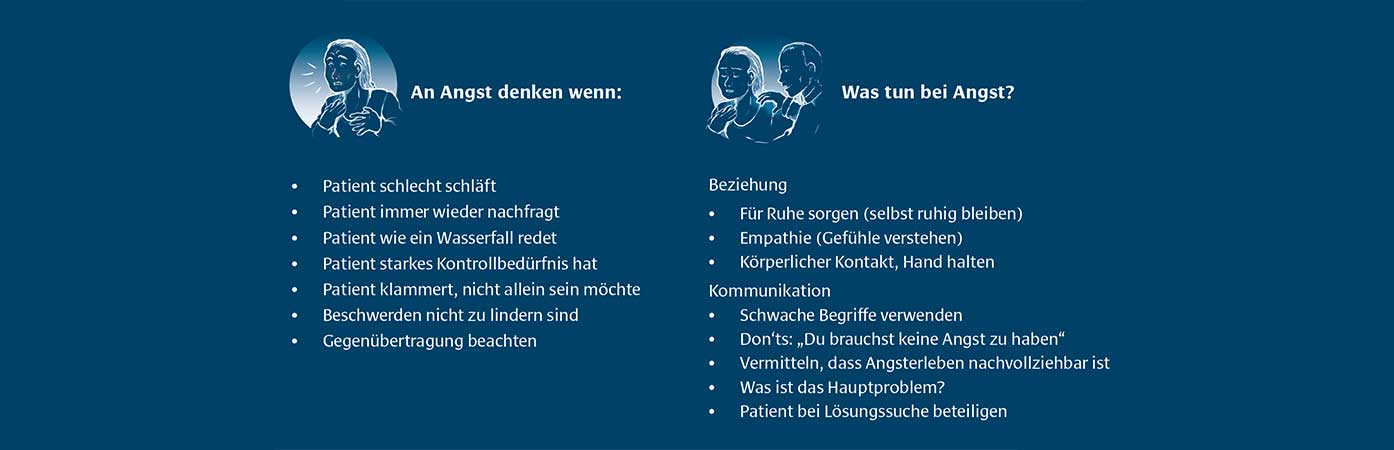
Anxiety triggered by shortness of breath is a common problem. Between partners, there is often a kind of physical contagion: the sight of the partner struggling for air can also trigger anxiety in the healthy partner, who might then feel the urge to run away. This physical contagion can be countered with physical reassurance. Often, the patient themselves has a need for physical closeness and clings to their healthy partner. In this case, it is helpful for the healthy partner to remain calm, be patient, hold the patient's hand, and allow physical contact. When speaking with a partner experiencing shortness of breath, it is important to express that their worries and insecurity are understandable and relatable. One can inquire about what might have triggered the acute shortness of breath and what might help. Phrases like "You don't need to be afraid" should be avoided. Criticism of the partner experiencing shortness of breath should also be avoided, as this intensifies their anxiety. Appreciation and empathy alleviate anxiety. The goal of psychological interventions is to make the anxiety bearable, not to eliminate it entirely. The psychologist uses various methods for this, such as exercises from Gestalt therapy (like "Giving space to fear") or focusing on the here and now.

Fatigue and depression

Debilitating fatigue with exhaustion and depression are not uncommon in chronic lung disease. They are influenced by physical factors such as shortness of breath or sleep disturbances. It is important to provide psychological support to those affected. This involves emphasizing that it is not their fault they are feeling so unwell. Alternatively, one can inquire about specific ways to offer support. Under no circumstances should one downplay the situation ("Everyone feels tired now and then") or spread empty platitudes ("Just grit your teeth and bear it").

Uncertainty and fear of the disease progressing

The reduced life expectancy in Alpha-1 antitrypsin deficiency COPD is a real threat that can be frightening. The main goal should be to achieve acceptance, meaning adjusting one's hopes to the reality of the situation. Interviews with COPD patients revealed that their greatest concerns relate to the progression of the disease. Patients primarily fear severe attacks of shortness of breath, as well as flare-ups and exacerbations requiring mechanical ventilation. When asked about the dying process, those affected fear agonizing suffocation and pain. Healthcare professionals can alleviate these fears through information and education. Other common fears include loss of dignity and loss of control. These aspects are particularly important for caregivers. COPD patients primarily want to confide in their relatives about their fears, and only secondarily in their doctor or friends. Professional training programs initially focus on the greatest fear. The anxiety-provoking situation is thought through to its logical conclusion, and participants consider how the patient and others might react. Like shining a spotlight in the darkness, the potential consequences are illuminated. Then the discussion turns to how one might prevent the situation, or what helpful things one can do in the situation.
Share
YouTube Download list Newsletter contact