
Infection and infection prevention in alpha-1 antitrypsin deficiency
Below you will find the latest articles on the topic of infection prevention:
Below you will find the latest articles on the topic of infection prevention:



Prof. Tobias Welte, MHH
Alpha-1 antitrypsin deficiency (AATD) is a specific form of chronic obstructive pulmonary disease (COPD). While treatment for AATD focuses heavily on managing the progression of emphysema, infections and acute exacerbations, which are crucial for the course of the disease, receive insufficient attention.
A study by European pulmonologists in 13 countries evaluated 16,000 COPD patients who required hospitalization due to an acute exacerbation. The three-month follow-up of these patients revealed that 111,000 of all patients died during this period. This is a significant proportion. It also demonstrates that hospitalization for a COPD exacerbation can be more dangerous than a heart attack, which has a mortality rate of only 21,000. Severely ill patients died even more frequently; patients in stage IV disease requiring non-invasive ventilation had a mortality rate of 351,000.
Another large international COPD study found that exacerbations are a marker for the further course of the disease. According to the ECLIPSE study, those hospitalized once in the first year had a high risk of being hospitalized again in subsequent years, as 651 of these patients were readmitted in the second year of the study. Mortality was also significantly higher among hospitalized patients. Several years ago, researchers calculated the average life expectancy after a COPD exacerbation: only half of these patients were still alive after 3.6 years. This figure is alarming and similar to that of people with malignant cancers.
The situation for those with AATD is worse than that of the overall group of COPD patients. More than half (541,000) of AATD patients experience an exacerbation within a year, and 181,000 even experience three or more exacerbations per year. On average, there are 1.2 exacerbations per person per year in AATD. Unsurprisingly, quality of life suffers when frequent exacerbations occur. Frequent exacerbations also determine the prognosis in AATD. Considering the decline in the lung function value FEV1, frequent exacerbations are clearly associated with a more rapid decline in lung function.
It's common knowledge that infections are more frequent during the winter months from October to March. In AATD, exacerbations often last twice as long as in other COPD patients. Importantly, exacerbations are particularly common in patients with chronic sputum production. This is also related to the increased inflammatory processes occurring in the bronchi. This affects not only the well-known inflammatory marker CRP, but also the marker interleukin-8. Interleukin-8 attracts neutrophils in particular, which play a crucial role in the disease process in AATD because they release the dangerous proteases.
Chronic obstructive pulmonary disease (COPD) is, in a sense, a catch-all term encompassing various illnesses. Experts have not yet been able to adequately distinguish the different types and develop targeted therapies for them. In this respect, the results of COPD research are disappointing compared to asthma research. COPD comprises three main groups. For inflammation of the small and smallest airways, which plays a major role in asthma, there are highly effective, primarily anti-inflammatory treatments that mitigate the course of the disease and alleviate or even completely eliminate symptoms. These processes are insignificant for AATD (acute respiratory distress syndrome). The second group, emphysema with loss of lung tissue, particularly affects people with AATD. Current replacement therapy aims to slow the progression of emphysema. New research approaches aim to regenerate lost lung tissue. One approach could be to stimulate stem cells residing in the lungs to produce new, healthy tissue. This concept has already been successful in the liver, while it is still a thing of the future for the lungs.
The third component of COPD is bronchiectasis, meaning the permanent dilation and remodeling of the bronchi. Here, too, tissue is destroyed, this time due to chronic inflammatory processes. Initially, the cleansing of the bronchi is impaired because the cilia on the mucous membrane surface are damaged and no longer function properly. Consequently, secretions, mucus, and inhaled particles can no longer be adequately transported out of the bronchi. They adhere to the bronchial wall in the mucus and form an ideal breeding ground for various pathogens. This leads to chronic infections and persistent inflammation.
Anyone with AATD should know whether or not they have bronchiectasis. Individuals with sputum, especially if it is yellowish or greenish, are at risk for bronchiectasis. A CT scan of the lungs can detect bronchiectasis and document its extent. If bronchiectasis is present, the next step is to check for a chronic respiratory infection, as this requires specific treatment.
There are typical triggers for exacerbations. These include infections, mostly caused by viruses, but also by bacteria. Among non-infectious triggers, cigarette smoking plays a prominent role. Air pollutants can also be a problem. It is clear that people with AATD should absolutely not smoke.
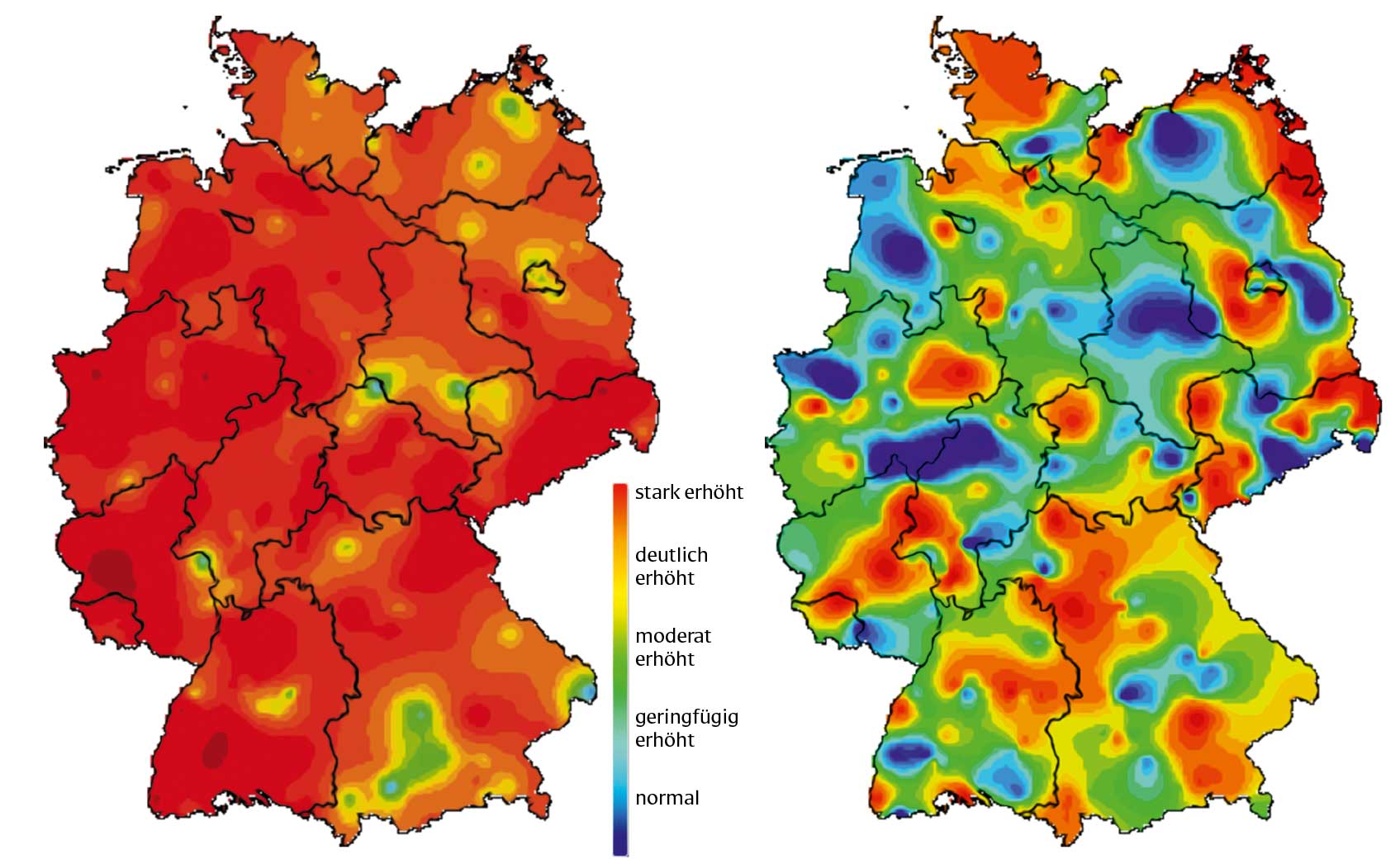
The influenza virus, which causes the flu, is a true killer. It raged particularly fiercely in 2018. In Germany alone, there were 300,000 new cases in the eighth calendar week of last year. This exceptionally high level persisted for over six weeks. According to data from the Robert Koch Institute's influenza surveillance system, a total of two million people were infected. At least 1,600 people died directly from influenza. Of these, one-third were under 40 years old! The flu, therefore, also kills healthy young people.
In addition to these officially documented deaths, many people suffer serious complications from influenza and die as a result. For example, the risk of a heart attack is more than six times higher during the first week of influenza. This is due to the massive inflammatory processes triggered by influenza. If complications are included, it can be assumed that there were 10,000 additional deaths due to influenza in 2018.
This year was less dramatic. For one thing, far more people had been vaccinated against influenza, and with the more effective quadrivalent vaccine. Secondly, the current strain caused a less severe illness.
Exactly 100 years ago, the Spanish flu raged. It is estimated that it claimed the lives of 25, or possibly even 50 million people worldwide. The H1N1 virus originally appeared in North America and was brought to Europe by traveling nurses. The first outbreak occurred in the French port city of Brest. In Spain, however, the flu arrived later. Therefore, the term "Spanish flu" is misleading.
In a groundbreaking research project, tissue samples from 68 deceased soldiers who had died of the Spanish flu were examined. Microscopic examination of the tissue revealed, in addition to influenza viruses, a remarkably high number of pneumococcal bacteria, and to a lesser extent, other bacteria. Overall, more than half of the soldiers did not die directly from the influenza virus, but from the secondary bacterial infection. Unlike today, however, antibiotics were not available against bacteria 100 years ago.
”Left: Influenza wave in week 8 of 2018 in Germany compared to week 8 of 2019 (right). Source: https://influenza.rki.de/MapArchive.aspx
Medications against influenza viruses, such as oseltamivir (Tamiflu®), can reduce mortality. For oseltamivir to be effective, it must be taken within the first 72 hours of influenza. This is due to its mechanism of action: this neuraminidase inhibitor prevents the virus from entering the body's cells, where it multiplies and damages the body. Once the virus has entered the cells, which occurs within the first three days of illness, oseltamivir is no longer effective.
Current research into influenza treatment is very active. At present, 15 different substances with novel mechanisms of action are being developed: they aim to reduce viral replication within cells. Baloxavir, a substance already approved in Japan and the USA, inhibits a protein essential for influenza virus replication. Consequently, the viral load decreases significantly after just one day of treatment, considerably faster than with oseltamivir. Approval of the drug in Europe is expected soon.
Medications against influenza viruses, such as oseltamivir (Tamiflu®), can reduce mortality. For oseltamivir to be effective, it must be taken within the first 72 hours of influenza. This is due to its mechanism of action: this neuraminidase inhibitor prevents the virus from entering the body's cells, where it multiplies and damages the body. Once the virus has entered the cells, which occurs within the first three days of illness, oseltamivir is no longer effective.
Current research into influenza treatment is very active. At present, 15 different substances with novel mechanisms of action are being developed: they aim to reduce viral replication within cells. Baloxavir, a substance already approved in Japan and the USA, inhibits a protein essential for influenza virus replication. Consequently, the viral load decreases significantly after just one day of treatment, considerably faster than with oseltamivir. Approval of the drug in Europe is expected soon.
Influenza viruses are highly adaptable. They change the structures on their surface from year to year. The influenza vaccine targets proteins located on the surface of the viruses. It's like the race between the hare and the hedgehog: if the virus changes, the vaccine must be adapted accordingly. If the virus and vaccine are a very good match, vaccinations provide protection of up to 70%.
Given that the peak of the flu season has been in February and March in recent years, the best time for a flu vaccination is October and November. The protection provided by the vaccine only lasts about six to eight months.
Research into new vaccines is exciting. While the surface of the influenza virus is constantly changing, structures in the core of the pathogen remain the same. An experimental vaccine, which has so far only been tested in mice, targets one such structure, the hemagglutinin. All of the tested animals survived the influenza virus infection. The extent to which this approach can also be successful in humans will be revealed by research over the next 10-15 years.
For people with AATD, influenza vaccination is essential. Vaccination is also recommended for everyone over 60. In addition, there are other risk groups that are particularly vulnerable to influenza infection. Pregnant women are at the highest risk because their specific hormonal situation affects certain aspects of their immune system, making them more susceptible to severe illness.
Influenza vaccination can be administered throughout pregnancy. It protects not only the mother but also the child, who is born without any immunity to influenza. The newborn benefits from receiving antibodies from the vaccinated mother via the placenta. However, in Germany, only 81% of pregnant women are vaccinated against influenza. This presents a significant challenge for obstetricians.
Seniors in nursing homes are also particularly vulnerable and should be vaccinated annually. This simultaneously reduces the risk of infection for other residents. Respiratory infections caused by viruses are especially common in early childhood. While this is inconvenient for the whole family, it's beneficial for the child's immune system. Frequent infections build up a young child's defenses. If a child gets sick often before starting school, they will be better able to cope with viral infections at school. However, this poses a problem for grandparents, who are at risk of infection when caring for their sick grandchildren. Therefore, older people should try to keep some distance from their grandchildren if they have a severe infection.
As mentioned above, bacterial infections can occur following a viral infection. Everyone should be vaccinated against pneumococcal bacteria with AATM. There are different vaccines, belonging to two main groups: the longer-acting conjugate vaccine and the less expensive polysaccharide vaccine. The official recommendation for people over 60 in Germany is the polysaccharide vaccine Pneumovax®, primarily for economic reasons. The speaker, however, clearly advocates for the conjugate vaccine, marketed under the name Prevenar 13®. One dose costs around €60, which is usually paid out of pocket. Researchers are working on an improved version of this vaccine, which is expected to be available in two years. Pneumococcal vaccinations need to be boosted every few years.
In addition to pneumococcal disease, pertussis (whooping cough) should also be considered. In the 1960s, many infants were vaccinated with a highly effective cellular vaccine against pertussis. However, it had numerous side effects, so it was later replaced by a better-tolerated, but less effective, acellular vaccine. Its protection only lasts 10-15 years. For this reason, many adults no longer have immunity against pertussis, and more and more cases are being reported. Even having had pertussis does not provide lifelong protection. The pertussis vaccine is administered as a three-in-one vaccine along with diphtheria and tetanus. Those with AATD should also check their vaccination record for this vaccination.
The German Bronchiectasis Registry has been established at Hannover Medical School (MHH) since 2015. Patients are enrolled in the registry after an initial consultation at the center. Their average age is currently 59, and 591 of the participants are women. A significant proportion of patients have bacterial infections. A particularly important and common pathogen is Pseudomonas aeruginosa (381), followed by Staphylococcus aureus (161) and Haemophilus influenzae (121). Pseudomonas infection, in particular, is crucial for the prognosis and must be treated appropriately. In addition to MHH (which manages the registry), many other private practitioners and hospitals participate in the German Bronchiectasis Registry. Registration is possible at any of these institutions. The participating institutions can be found on the website www.bronchiektasen-register.de/. Besides the German registry, there are various other registries for bronchiectasis worldwide, for example in Europe, the USA, India, and China. Researchers hope that the analysis of this data from thousands of patients will yield new insights into the course of the disease.
The bacteria primarily colonize and multiply in the mucus that adheres to the walls of the bronchi. Therefore, the most important therapeutic principle for bronchiectasis is to remove the mucus from the airways. This is achieved through daily respiratory physiotherapy and secretion drainage, which patients can learn from specially trained physiotherapists and have regularly reviewed. For doctors in Hanover, it is always a shock when nine out of ten newly presented patients have never heard of respiratory physiotherapy and secretion drainage. Medical exercise therapy, including movement and sports, also helps to clear mucus from the airways.
Another important method is the inhalation of expectorant medications using a special electric nebulizer. Saline solution with a concentration of 3% is particularly suitable. Inhaling this saline solution for ten minutes significantly loosens the mucus, making it easier to cough up and clearing the lungs.
Several months ago, some pulmonologists in Germany did people a disservice by questioning the importance of air pollutants for health. Statements from European and international professional societies subsequently clarified the role of air pollutants in health.
Inhaled particles can be classified according to their size. Larger, heavier particles are usually deposited in the throat during inhalation. Smaller particles (under 2.5 µm), which can enter the lungs with the inhaled air, are more dangerous. Current research focuses on ultrafine particles (under 1 µm), which can even penetrate the walls of the alveoli and enter the bloodstream. They can then be detected throughout the body, even in the brain. Some of these particles also contain metals. For example, metals found exclusively in aircraft turbines have been detected in many lung tissue samples. These metals are released with every aircraft movement, inhaled by people, and then deposited in the body. The effects they have there are not yet known.
Significantly more air pollutants and particles can be detected in winter than in summer. Asthma attacks occur much more frequently in patients with bronchial asthma in connection with elevated pollutant concentrations.
Researchers also found that exacerbations in patients with AATM were more frequent on days with high pollutant concentrations.
In Germany, the situation is still relatively favorable compared to many Asian countries. For example, we are currently discussing NO2 concentrations of 40 ppm, while in Beijing, NO2 levels of 2000 ppm are commonplace. Nevertheless, it is essential to improve in Europe as well and to protect the most vulnerable, especially children and the sick. The air should be as clean as possible. Although the automotive industry is capable of building low-emission cars, it rejects this for economic reasons.
The path to success consists of 80% diligence, 10% patience, and 10% luck. For people with AAT™, the path to stable and good health leads primarily through effective therapy. Patients must also do their best for themselves, investing time and effort and being diligent. Patience is equally important. Even if it's sometimes difficult, one must learn to be patient. Finally, 10% luck also plays a role. This includes groundbreaking new research findings from which one can benefit. Society must invest in progress so that comparable advances are achieved in COPD and AAT™ as are now being seen in severe asthma. Involvement in self-help groups and associations like Alpha1 Deutschland e.V. also advances civil society.


