
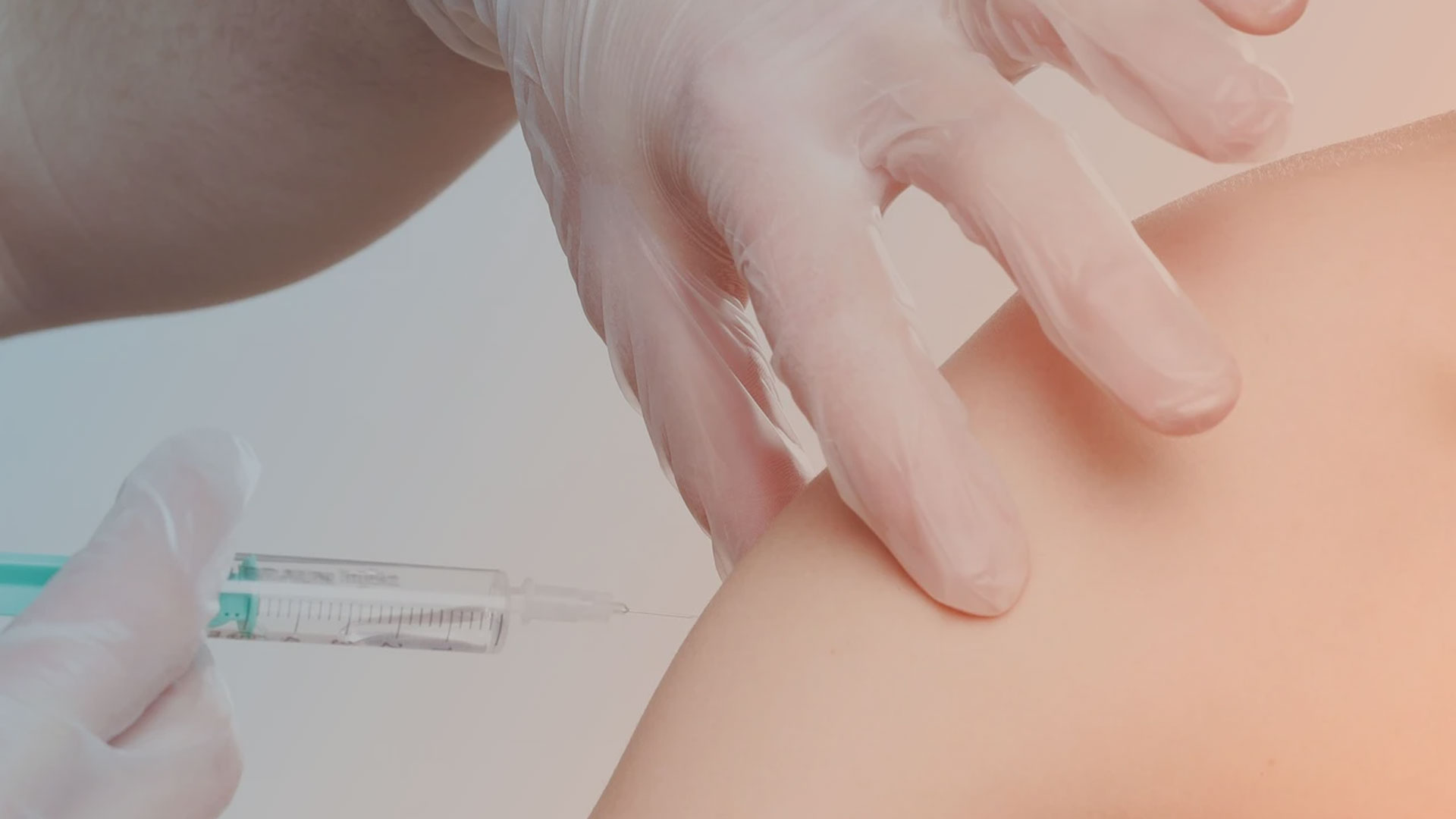
Influenza, pneumococcus and other diseases:
Which vaccinations make sense for Alphas now?
Author
Dr. Gerhard Wacker
At the end of the 18th century, the English country doctor Edward Jenner observed that people who developed a pox-like rash after contact with cows did not contract the dreaded smallpox. In 1796, he inoculated an 8-year-old boy with the pustule secretion of a maid suffering from cowpox. The boy contracted cowpox but remained unaffected by smallpox. Thus, "vaccination" (from the Latin *vacca* – cow) was born! Centuries earlier, healthy individuals in Asian countries had been treated with the pustule secretion of people infected with smallpox, which mitigated the severity of the disease. This procedure, known as "variolation," had already reached England before Jenner's method. After a smallpox epidemic claimed 125,000 lives in 1870/71, compulsory vaccination against smallpox was introduced in the German Empire in 1874. In 1979, the WHO was able to declare the earth free of smallpox – a scourge of humanity that had previously claimed 15 million lives was defeated.
Infectious diseases have accompanied humankind since the beginning. Plague epidemics killed approximately 40 million people in Europe between 1347 and 1352. In Hamburg, around 9,000 people died of cholera in 1892. From spring 1918 to mid-1919, the so-called Spanish flu claimed at least 50 million lives worldwide; in Germany alone, 320,000 people died, primarily during the second wave from September to November 1918. 500 million people (a quarter of the world's population) fell ill. The misleading name stems from the fact that Spanish newspapers first reported on the disease in April 1918, as the pandemic likely originated in a US Army training camp in Kansas and was brought to Europe by soldiers. Just two years after the discovery of the diphtheria pathogen in 1892 at the Pasteur Institute in Paris, a serum was produced there after immunizing a horse, which was used to successfully treat diphtheria patients. In the same year, Emil von Behring, together with the Hoechst dye works, established a large-scale plant for the production of the serum. In 1897, Paul Ehrlich isolated an inactivated "toxoid" from this raw material, which is still in use today. The tetanus vaccine was subsequently developed based on these fundamental findings. The oral polio vaccine—a vaccination with attenuated viruses—was largely developed by Jonas Salk and, as a mandatory vaccination since the 1960s, led to the eradication of the disease in Germany. Since 1998, an inactivated polio vaccine has been administered by injection, as the disease is still active in other countries.
Vaccinations are intended to make the immune system more effective at fighting off pathogens. In "active immunization," either live but weakened pathogens are injected (e.g., measles, mumps, rubella, chickenpox, typhoid, yellow fever), or inactivated vaccines containing virus particles or antigens of the pathogen (split vaccines, toxoids), which are often coupled with an immune-enhancing agent (adsorbed vaccines). "Passive immunization" involves administering pre-formed antibodies in the form of hyperimmune globulin, which are obtained after infection of humans, and initially also from animals (nowadays only in the case of diphtheria). An example is the administration of Tetagam in addition to Tetanol after deep, contaminated wounds. The former merely acts as a barrier against the already formed tetanus toxin and does not induce a true immune response in the recipient.
The goal of active immunization is the production of the body's own protective substances from the group of immunoglobulins and of special lymphocytes as "memory cells". Upon renewed contact with the pathogen, the immune system is then well prepared and can successfully ward off the infection.
In general, vaccinations should not be administered during acute, febrile illnesses; malignant blood disorders are also considered a contraindication. An allergy to egg protein can prevent vaccination with vaccines cultivated on chicken eggs (e.g., influenza). Live vaccines must not be given during pregnancy. A congenital or acquired immunodeficiency often leads to a weakened or even absent immune response. Generally, however, vaccinations are well tolerated, even though serious adverse reactions are very rare, and always represent a balancing of benefits against the risks of an unprevented infection.
Pneumococci are bacteria that colonize the nasopharynx and can cause inflammation in the upper respiratory tract and lungs. In severe cases, they can also spread into the bloodstream (sepsis), leading to higher mortality. The incidence of the disease peaks in the first two years of life and in older adults. The frequency of asymptomatic carriers is estimated at approximately 20% in children and adolescents and 8% in adults. In Germany, two vaccine types are available: a polysaccharide vaccine (PPSV 23/Pneumovax 23) and a newer conjugate vaccine (PCV 13/Prevenar 13). The former stimulates an immune response against 23 pneumococcal antigens, which, unfortunately, is relatively weak without the formation of memory cells. In contrast, PCV 13 also leads to the formation of memory cells, but only against 13 serovariates.
The STIKO, as our „supreme vaccination authority“, distinguishes between standard vaccinations for healthy people and indication-based vaccinations for certain population groups with pre-existing conditions and risk profiles.
The standard vaccination for infants is PCV 13, administered in up to three doses by the age of two, with the aim of achieving herd immunity that is also relevant for the adult population. This standard vaccination has led to a significant decline in the incidence of meningitis, a serious condition. For healthy adults aged 60 and over, the STIKO (Standing Committee on Vaccination) continues to recommend the PPSV 23 vaccine due to its broader coverage of 23 serotypes, even though it is not as immunogenic.
The recommended vaccination of chronically ill individuals with immunodeficiency, cancer, after splenectomy, or with chronic renal or hepatic insufficiency should be administered sequentially with PCV 13 (Prevenar 13) followed 6–12 weeks later by PPSV 23 (Pneumovax 23). However, this does not apply to individuals with chronic respiratory, pulmonary, or cardiac diseases! These individuals should continue to be vaccinated only with PPSV 23 due to its broader serotype coverage (the proportion of the 23 serotypes contained in PPSV 23 in invasive pneumococcal diseases in Germany is approximately twice as high as the proportion of serotypes contained in PCV 13), and these diseases should not be associated with immunodeficiency. A booster vaccination with PPSV after six years is still recommended for all risk groups, even though the booster effect decreases with age.
Seasonal influenza is caused by influenza A and B viruses. The dominant A virus has many subtypes, named according to their H and N antigens (e.g., H1N1), while the B virus is genetically more stable with only two lineages. Approximately every 10–15 years, the B virus becomes dominant over the A virus. Infection usually occurs via respiratory droplets; infectivity often begins before the first symptoms and lasts for 4–5 days after symptom onset. A feared complication is pneumonia with bacterial superinfection, particularly in high-risk patients with underlying bronchopulmonary diseases, diabetes, or obesity.
The WHO decides on the composition of the vaccine for the Northern Hemisphere in the spring and for the Southern Hemisphere in September. It is an inactivated vaccine (split vaccine) containing two inactivated subtypes of the A virus and the two B lineages (tetravalent since 2018, standard in Germany).
The vaccination rate among high-risk patients in Germany, at 24 per 100,000 doses (%), is unfortunately far below the WHO recommendations (75 per 100,000 doses). Only doctors, at 61 per 100,000 doses (%), come close to meeting the target. This modest vaccination rate is due to both a lack of information and the significant fluctuations in vaccine effectiveness from year to year. Nevertheless, the effectiveness in the 2019/20 season was estimated at 62 per 100,000 doses, compared to a disappointing 21 per 100,000 doses in the 2018/19 season. However, given the current COVID-19 pandemic, there should be no doubt about the importance of influenza vaccination.
Vaccine development against the current scourge of humanity, the SARS-CoV-2 virus, is in full swing, with at least 190 vaccine projects at various stages of development. Numerous different "vaccine platforms" are in the running. The usual approval process is being shortened by parallel safety studies in different countries; interim results are evaluated promptly by regulatory authorities before a final application for approval is submitted. Conditional approval may be granted, requiring the submission of missing long-term safety data. People with severe alpha-1 antitrypsin deficiency and the associated pulmonary emphysema belong to a high-risk population that is particularly vulnerable to infections with influenza viruses and pneumococci. Pneumonia is not even a necessary condition; high fever alone leads to an increased metabolism with higher oxygen demand and CO2 production, which in some cases can result in respiratory failure. Optimal vaccination protection with annual influenza vaccination and pneumococcal vaccination, preferably with PPSV 23 according to the current STIKO recommendation, as well as a booster vaccination with PPSV 23 after six years, is definitely advisable, even if 100% protection against pneumococcal disease is not achievable and serious adverse effects are possible in exceptional cases. Additional vaccination with PCV 13 is not "wrong" when considering an individual's immunodeficiency (e.g., years of treatment with cortisone tablets), but it is not recommended as the sole vaccination.
Ultimately, the great hope remains for effective vaccines against SARS-CoV-2. Until then, the well-known distancing and hygiene rules are all the more important, especially for those in high-risk groups. Don't be discouraged and stay healthy!


