
Author
Dr. Paul Köbler, Seminar Leader | As published in Alpha1 Journal 1/2025.
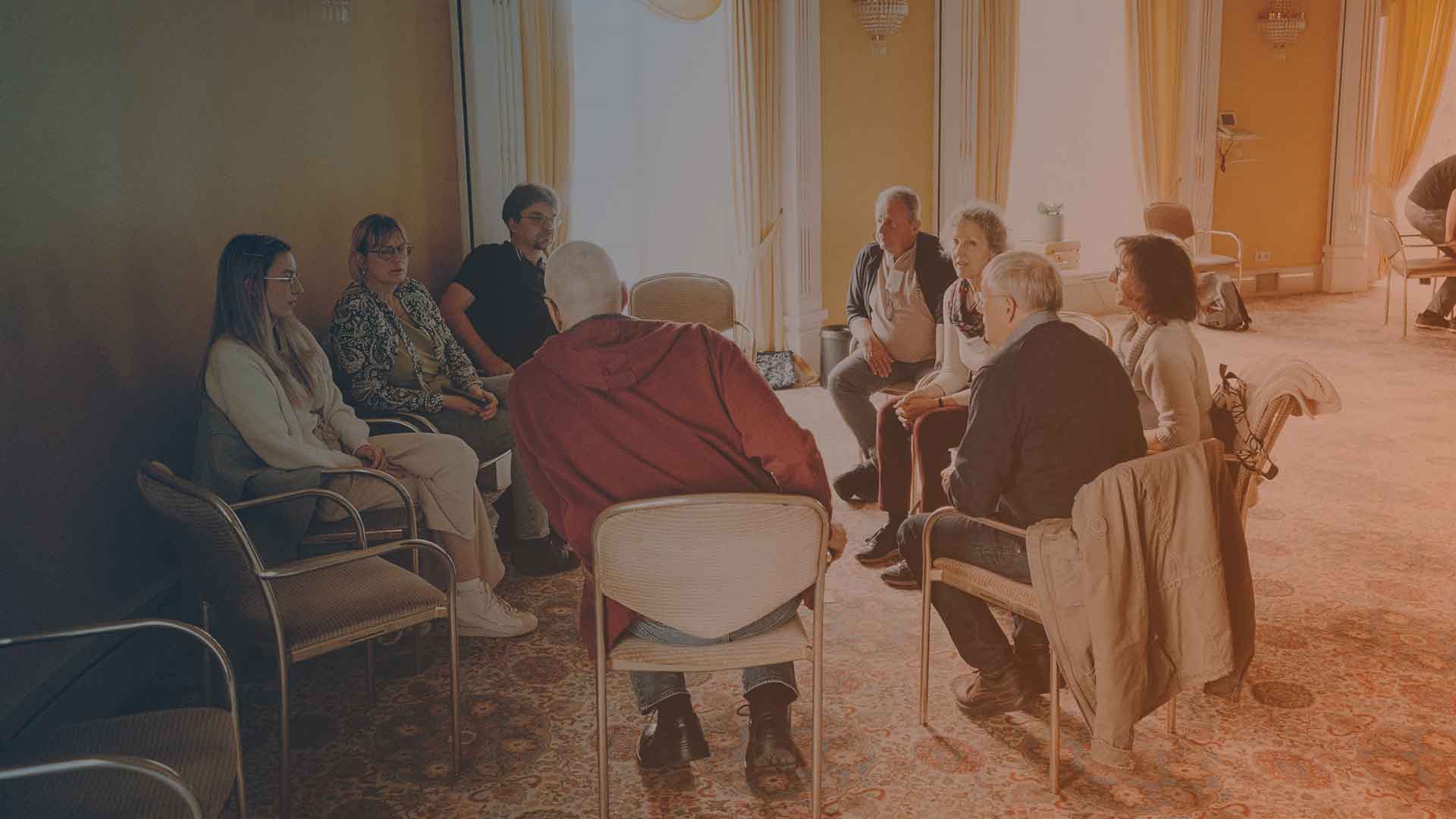
As part of this year's Alpha1 Information Day, I participated in a workshop for family members for the first time. This proved to be an important and emotionally moving part of the program. Unfortunately, partners, parents, children, and close friends are far too often overlooked, even though they are precisely the ones who bear and shape the daily lives of those living with a chronic condition like Alpha1 antitrypsin deficiency.
The aim of this workshop was to create a safe space for those who are burdened by worries, anxieties, and uncertainties regarding their interactions with sick individuals. Often, there seems to be no room for these thoughts and concerns in everyday life, or they remain unspoken out of consideration for the sick person. As the workshop progressed, the participants developed increasing openness and trust, leading to an atmosphere of deep understanding and mutual respect.
Furthermore, a wide range of topics were discussed, such as feelings of helplessness, fear of the disease progressing, and the pressure to always be strong in everyday life. For many family members, it was clear how important it was to finally be able to talk about precisely these issues. It was also addressed that many family members lack recognition for the support they provide and that their work is far too often taken for granted.
A particular benefit of the workshop was the guidance provided by psychologist Dr. Paul Köbler, who not only offered expert input but also addressed individual questions and emotional concerns. He created a safe space and offered valuable suggestions on how to practice self-care.
This event demonstrated that many people share similar experiences, that they are not alone with their worries and thoughts, and that family members also have a right to relief, information, and support. This workshop was certainly a first step for many in acknowledging their own burden and drawing new strength. This was also reflected in the positive feedback and expressions of gratitude following the workshop. It became clear how important such programs are, not only as a supplement but as an integral part of information events about chronic illnesses.
Roland Wilkens: "As was the case with the first workshop for relatives a few years ago, it became clear once again how important and necessary such an exchange in a safe space is for us relatives. In the future, even more time should be allocated to the workshop, ideally with breaks for participants to exchange ideas with each other."„
Paul Köbler: Studies on alpha-1 antitrypsin deficiency show that relatives of patients can develop significant psychological distress (Miravittles et al., 2022). They often suffer from anxiety, stress, and feelings of despair resulting from constant worry about the ill family member. These feelings are sometimes accompanied by anxiety for future generations, which further intensifies the emotional burden.
Furthermore, studies on the burden of disease in alpha-1 antitrypsin deficiency show that the illness and care of a family member can lead to significant limitations in daily life for relatives. The intensive care required often results in a noticeable loss of flexibility in professional and social life. These changes can manifest in various areas of life: financial difficulties often arise due to reduced working hours or absences, while many relatives increasingly withdraw from their social circles. Participation in hobbies, travel, or other leisure activities is sometimes restricted, which can lead to loneliness.
This leads to a kind of "dual role" for family members, which significantly shapes their lives: As fellow sufferers, they often share many aspects of the altered life situation with the person with the illness. This close connection means they experience similar emotional and psychological burdens. Uncertainty about the course of the illness and the future accompanies them daily, while loneliness can arise from altered social contacts. At the same time, family members take on the demanding role of support providers, which involves diverse and complex tasks. They become important partners in gathering and disseminating information, help with symptom control, and, for example, recognize early signs of an exacerbation of the illness. A key task is to offer the affected person psychological relief and to motivate and activate them. Furthermore, in later stages of the illness, they often also take on tasks in basic and therapeutic care, which can be very demanding both physically and emotionally (Chronic Illness as a We-Disease; Horn et al., 2023).
For this reason, a corresponding, joint, and active approach to coping with the illness is of crucial importance. A key component of this joint approach is the mobilization of social and emotional resources. Seeking and giving advice, connecting with other affected individuals and their families, and experiencing a sense of belonging are important basic psychological needs that should be actively supported.
Of particular note is a frequently observed phenomenon: protective/emotional buffering, a widespread coping strategy in the context of jointly managing illness. Here, partners attempt to suppress their own needs, worries, anxieties, and moods from one another in order to avoid placing an additional burden on each other. Although this mutual protective behavior can provide short-term relief, it often has negative long-term effects on communication and relationship quality (Langer et al., 2009).
That's precisely why forums for shared support among family members at patient events like the one in Bad Wildungen are so valuable and important. They offer a safe space where family members can openly exchange information without feeling like they're placing an additional burden on their partner. This can then potentially provide a basis for further discussions with the affected partners.
Horn, AB, Zimmerli, L., Maercker, A., & Holzer, BM (2023). The worse we feel, the more intensively we need to stick together: A qualitative study of couples' emotional co-regulation of the challenge of multimorbidity. Frontiers in Psychology, 14, 1213927. https://doi.org/10.3389/fpsyg.2023.1213927
Langer, S. L., Brown, J. D., & Syrjala, K. L. (2009). Intrapersonal and interpersonal consequences of protective buffering among cancer patients and caregivers. Cancer, 115(S18), 4311–4325. https://doi.org/10.1002/cncr.24586
Miravitlles, M., Herepath, M., Priyendu, A., Sharma, S., Vilchez, T., Vit, O., Haensel, M., Lepage, V., Gens, H., & Greu lich, T. (2022). Disease burden associated with alpha-1 antitrypsin deficiency: Systematic and structured literature reviews. European Respiratory Review, 31(163), 210262. https://doi.org/10.1183/16000617.0262-2021


