
Author
Dr.-Ing. Heinz Stutzenberger, acting member of the board of Alpha1 Germany e. V.
Prof. Dr. Felix Herth and PD Dr. Franziska Trudzinski: Imaging diagnostics and therapy options in advanced pulmonary emphysema
The first presentation dealt with imaging diagnostic procedures in connection with alpha-1 antitrypsin deficiency (AATD) and was given by Private lecturer Dr. Franziska Trudzinski. X-rays of the thorax (chest) have proven particularly useful for detecting acute inflammation. In this procedure, X-rays are passed through the body, attenuating depending on the density of the organs being examined. This allows the organs and their internal structures to be visualized on a photographic plate and identified by the radiologist.
However, this method is too imprecise and therefore less suitable for assessing changes in lung structure during the course of AATD. While a CT scan (computed tomography) involves approximately 500 times the radiation exposure (equivalent to five times the annual natural background radiation), it provides more precise insights into the condition of the lungs and, in particular, the damage caused by AATD.
Images are initially created virtually on the computer, but can of course be viewed in detail on the screen and also printed. Using low-dose thin-slice CT, in which the body is scanned in 1 mm thick slices, sophisticated algorithms allow for a very precise determination of lung density. The temporal progression of this density (measured at intervals of several years) allows for a comparatively reliable assessment of the typically deteriorating lung function. When using both of the aforementioned methods, physicians select the device settings that yield maximum information with minimum radiation exposure. Quantitative CT (QCT) allows for the precise localization of lung areas with pathological changes, such as pulmonary emphysema or fissures, thus enabling more targeted surgical interventions if necessary. Another imaging technique familiar to many Alphas is ultrasound or elastography (FibroScan) of the liver. The sound waves, transmitted into the body without any radiation, are reflected to varying degrees depending on the density of the targeted organ. This allows for an assessment of the liver's hardness, which increases significantly in cases of pathological changes. The subsequent lecture by Prof. Dr. Felix Herth, Head of the Thoracic Clinic at Heidelberg University Hospital, focused on how lung imaging techniques are used to draw conclusions for potential surgical interventions. The presentation centered on procedures indicated when large areas of the lung surface are so damaged that they can no longer participate in gas exchange, for example, due to pulmonary emphysema. In these cases, the diaphragm, as the driving force of the respiratory pump, must perform a great deal of strenuous pumping work, a significant portion of which is wasted, as much air is simply inhaled and exhaled without gas exchange.
To address this problem, there are various surgical options, all aimed at reducing the size of the areas of the lung that are no longer able to exchange gases: either the damaged part of the lung is surgically removed, or one-way valves are inserted between the healthy and diseased parts of the lung, which rapidly reduce the volume of the damaged part of the lung during breathing; this volume reduction effect can also be achieved by using small coils made of memory metal, which, after being inserted into the damaged part of the lung in the form of small rods, later contract spirally due to their "memory" effect, thereby compressing the diseased tissue.
Another method for removing diseased lung tissue is vaporization, i.e., the "burning" of the tissue with locally introduced hot steam, causing it to scar and then gradually shrink. Whether and, if so, which of the aforementioned methods is suitable for a patient must be assessed very individually based on a multitude of preliminary examinations, including the condition of the lungs as determined by CT scan. Given the complexity of the aspects to be considered, including potential side effects, every procedure must be preceded by an in-depth consultation between doctor and patient; in any case, Prof. Herth and Dr. Trudzinski He repeatedly encouraged the audience to have all proposed medical measures thoroughly explained by their attending physician and, if necessary, to question them, in the spirit of a deeper understanding of their own illness, the importance of which Mrs. Wilkens also emphasized in her later presentation.
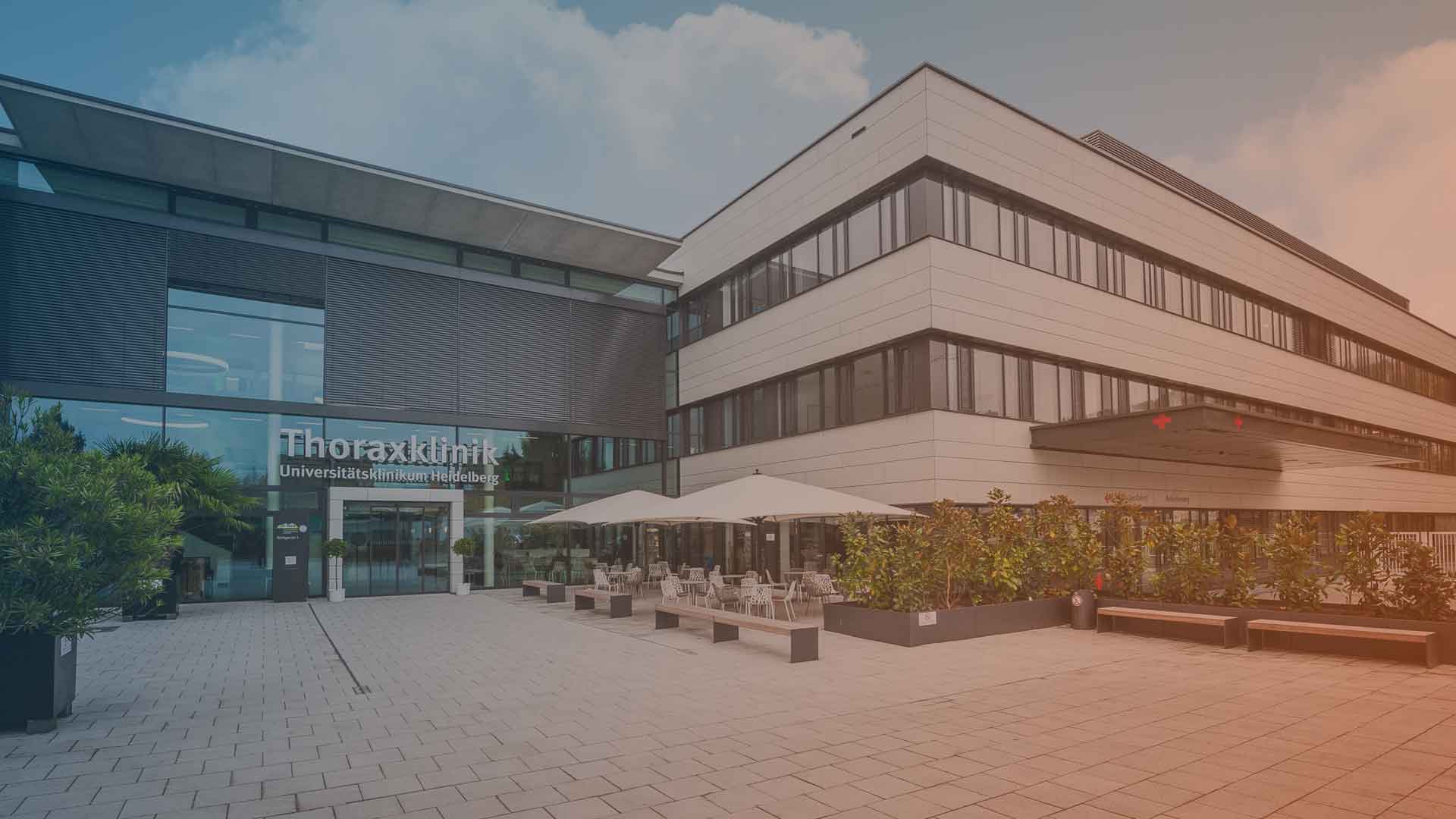
The thoracic clinic in Heidelberg
Copyright: Heidelberg University Hospital
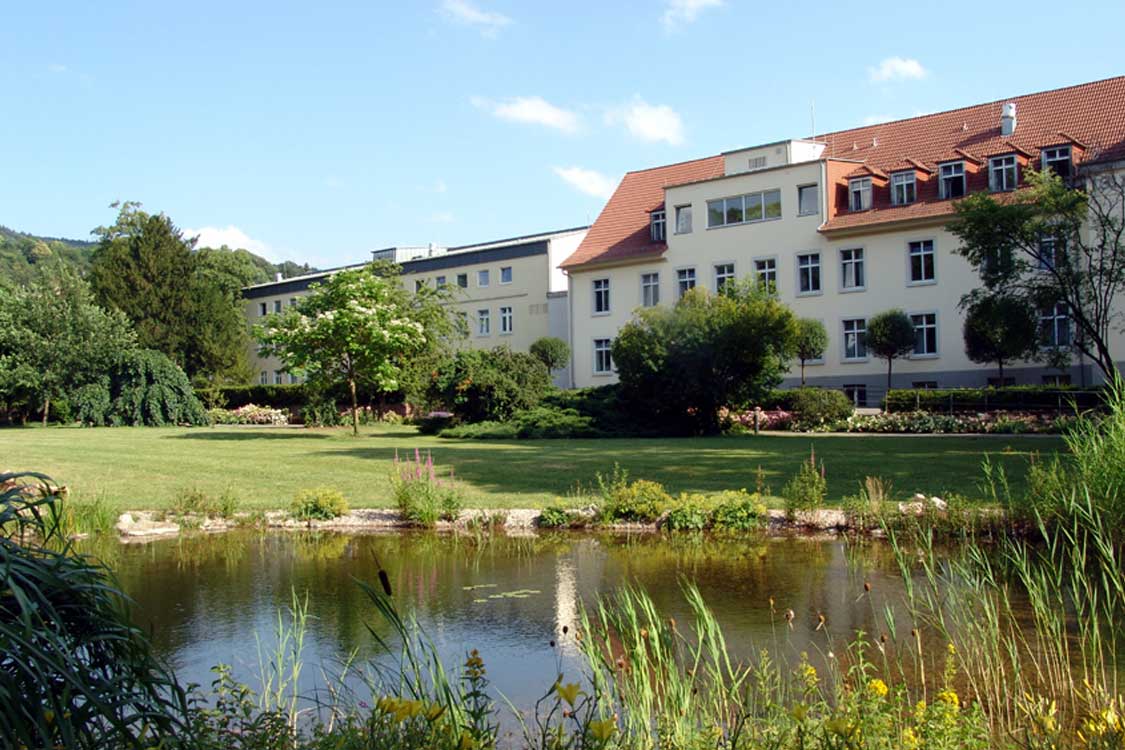
PD Dr. Dieter Kaufmann: Genetic therapy, approaches and current possibilities
Then he Private lecturer Dr. Dieter Kaufmann to genetic aspects of AATM, which is caused by mutations on a specific gene in the human genome and leads to a change in the 400 amino acid-based alpha1-antitrypsin molecule, such that its effect is reduced and, due to polymerization (a clumping process), it can no longer pass from the liver into the blood in sufficient quantity to protect the lungs.
Gene mutations occur constantly in human cells, less frequently in childhood, and increasingly with age. Most of these occur unnoticed, others are responsible for the natural aging process, and still others can lead to increased cell growth in the form of cancer. With regard to AAT₂TM₅, mutations on the Serpina1 gene located on chromosome 14 are important. These mutations primarily manifest as the S and Z alleles (gene variants) and particularly reduce serum AAT levels when they occur in combination or as the ZZ variant. The necessary inheritance patterns for this correspond to the rules of Mendelian inheritance, which have been explained in detail.
It remains unclear why the mutations leading to AATM have persisted through inheritance to this day, and thus what their evolutionary advantage is, without which AATM would have become extinct soon after its emergence. It is noteworthy that AATM occurs almost exclusively in those segments of the world's population where other mutations are also found, such as light skin, light hair, and lactose tolerance (i.e., the ability to digest cow's milk).
Due to time constraints, it was not possible to discuss the therapeutic approaches that genetics might offer in the future to alleviate or even cure AATM. However, there will be further opportunities to do so, as these approaches will not be widely used in the foreseeable future.
Marion Wilkens: Wishes and Reality – What can we, as patients, really influence?
The last lecture of the day was given by Marion Wilkens, the chairwoman of our association, on the question of what AATD patients want in connection with their illness and what they can do themselves. First, it is important to be aware that AATD can damage not only the lungs and liver, for whose protection abstaining from smoking and excessive alcohol consumption is essential. Skin, kidneys, heart, blood vessels, and the digestive tract can also be affected and require careful treatment and a health-conscious lifestyle.
Last but not least, the patient's mental health must be protected from spiraling into a downward spiral triggered by the diagnosis and any accompanying symptoms, a spiral from which those affected may only be able to escape with professional help. Gaining clarity about AATD itself and the degree of personal impact is helpful in this regard. This can be achieved, on the one hand, by obtaining objective information, for example, through all the channels offered by our association, and on the other hand, by collecting and critically examining the medical and laboratory findings that accumulate over time. Reference was made, among other things, to the Alpha1 Patient Day on June 24, 2023, in Stuttgart, where Dr. Alexander Rupp (the head of the Alpha1 Center Stuttgart) will explain the significance of the relevant laboratory values.
To enrich the aforementioned information sources with current, relevant knowledge, it is helpful to network with other organizations that are themselves developing or at least disseminating this knowledge. Pooling our interests with other similarly affected individuals and their organizations also strengthens our position with decision-makers in politics, health authorities and institutions, and pharmaceutical companies. Supporting the latter, for example, through participation in studies or by having Alphas provide their data for registries as a basis for statistical analyses, is naturally in our own best interest. All these steps will help us to obtain the existing treatment options in an optimally tailored way, to further improve them, and, hopefully, one day in the not-too-distant future, to find a cure for AATD.
To conclude the official part of the event, Dr. Oswinde Bock-Hensley A guided tour of the Tuberculosis Museum, located in the event building, was offered. In addition to the detailed explanations of the disease, the spectacular collection of historical medical equipment (especially the old X-ray machines) and pathological-anatomical specimens was impressive, sending a slight shiver down the spine of some. The significance of tuberculosis, which has been detected in skeletal remains dating back 6,000 years, was evident to earlier generations in the long list of famous figures who died from it, from the pharaohs to modern times, where, fortunately, it has been largely contained in our region.
In addition to the official agenda, there was an opportunity for participants to network with each other and with representatives of the sponsors CSL Behring and Grifols during the breaks and at the concluding lunch. More adventurous participants even had the chance to try inserting an IV line into an artificial arm, as is necessary for self-administering substitution medication.
The participants agreed that the 2nd Alpha1 Patient Day was a resounding success and that the series should be continued. Carsten Büch, one of the event's co-organizers, expressed his gratitude to all the speakers for their presentations, Dr. Trudzinski for the organization, all the clinic staff who contributed to the event's success, and of course, the sponsors. He is the head of the Rhine-Neckar-Odenwald region self-help group and was delighted by the high level of participation.


