
Author
Alpha1 Germany eV.
State of affairs:
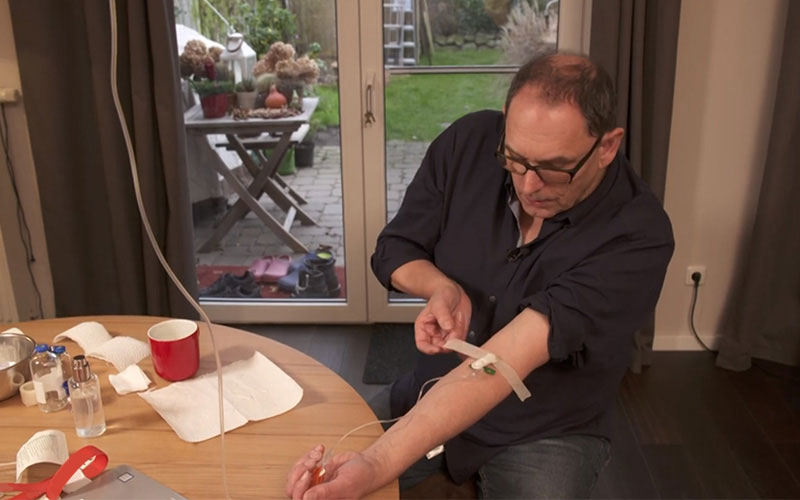
In recent years, some of our members receiving substitution therapy have shifted their weekly medication administration to their homes, primarily due to the risk of coronavirus infection in doctors' offices. This was made possible by:
- Guided instruction in the case of Respreeza/CSL Behring, up to and including complete self-administration.
- Home therapy supported by specialists in the case of Prolastin/Grifols
As a result of a legal dispute between the two major AAT suppliers, it emerged that Grifols is no longer allowed to administer Prolastin in the home environment through a commissioned subcontractor from 01.4.2022.
This currently presents many of our members on substitution therapy with real challenges, which has prompted us to search for alternatives and solutions since the end of last year. We convened a roundtable discussion with our scientific advisors and representatives from the Alpha1 centers, which unfortunately did not yield any usable results. The only outcome was the survey on how patients are coping with substitution therapy.
What alternatives for continued care are under discussion?
- The visit to the doctor's office
Since the vast majority of those receiving home care were once treated by a doctor, those who still have good mobility will initially return to a doctor's office. We know that the return isn't always straightforward, and some doctors struggle with it. - Home Self-Therapy
This would involve a product change for Prolastin customers as soon as the supply situation at Respreeza allows it again. The situation is expected to ease in the second quarter, but we cannot guarantee this. Furthermore, such a step is only possible for those who are either able to administer an IV infusion themselves or who have appropriate support from their partner at home. In any case, this must be clarified and supervised beforehand by the treating physician. - Further External Help
So far, we've looked at many things, but unfortunately, no usable models have emerged. Specifically, the following approaches are currently being evaluated by the board:- Own commissioning of a local aid service (such as the German Red Cross, Johanniter, Malteser, …)
This approach incurs its own costs, which first need to be raised, and the availability of supplies naturally depends on local conditions (city, country). - The attempt to organize external help through the health insurance company
There is no such thing as home care "on prescription" (form 16). A standard prescription from a health insurance provider is for "prescribing medicines and dressings," not for services.
Then there is the "prescription for home nursing care." This includes prescriptions such as assistance with putting on and taking off compression stockings. With this prescription (form 12), injections are also possible, but unfortunately only subcutaneously (such as heparin into the abdomen after surgery) or intramuscularly, as with vaccinations in the arm (Covid, influenza, hepatitis, etc.).
Unfortunately, intravenous injection is not an option here.
- Own commissioning of a local aid service (such as the German Red Cross, Johanniter, Malteser, …)
Let me reiterate:
Prolonged interruption or even discontinuation of therapy should be avoided. Results from an observational study in Ireland show that this has led to an increased number of hospitalizations and even deaths. Note: Unfortunately, this article Oliver J McElvaney et al., N Engl J Med 2020; 382:1478-1480 Accessible only with an existing subscription to the New England Journal of Medicine.
What can we currently recommend to our affected members?
Patients covered by statutory health insurance
They should contact their health insurance company, explain their situation, point out that they are not responsible for their hardship, and then hope that they will receive some form of assistance. Don't let the first representative turn you away! One approach could be to consider that a weekly infusion is also a form of medication administration (as prescribed).
Civil servants, judges and soldiers,
Like all other privately insured persons, they should take a look at their personal insurance terms and conditions and thus also enter into a dialogue with their insurance company.
And all They should explore further options with their respective family doctors. The more experts and those affected consider this, the better ideas will emerge.
How do other countries in Europe do it?
In some European countries, AAT replacement therapy is still not reimbursed and therefore not used. In other countries, it is common practice, similar to ours. For example, Spain has recently mandated administration by qualified personnel and has now paved the way for a service provided by Grifols, as we recently did. Substitution by qualified personnel (subsidized by the pharmaceutical industry) is also available in Italy, Austria, and Switzerland. France has taken a different approach, where so-called "home infusions" are billed through health insurance. We are also seeking solutions to this issue through monthly discussions with the Alpha1 organizations.
Unfortunately, we currently see no easy and quick way to continue home-based treatment with Prolastin. Not a good situation!
Anyone who has found a solution of any kind is welcome to tell us about it so that we can check whether it could be a viable way for many.
Thank you.
All personal designations and functions refer to all genders.


