
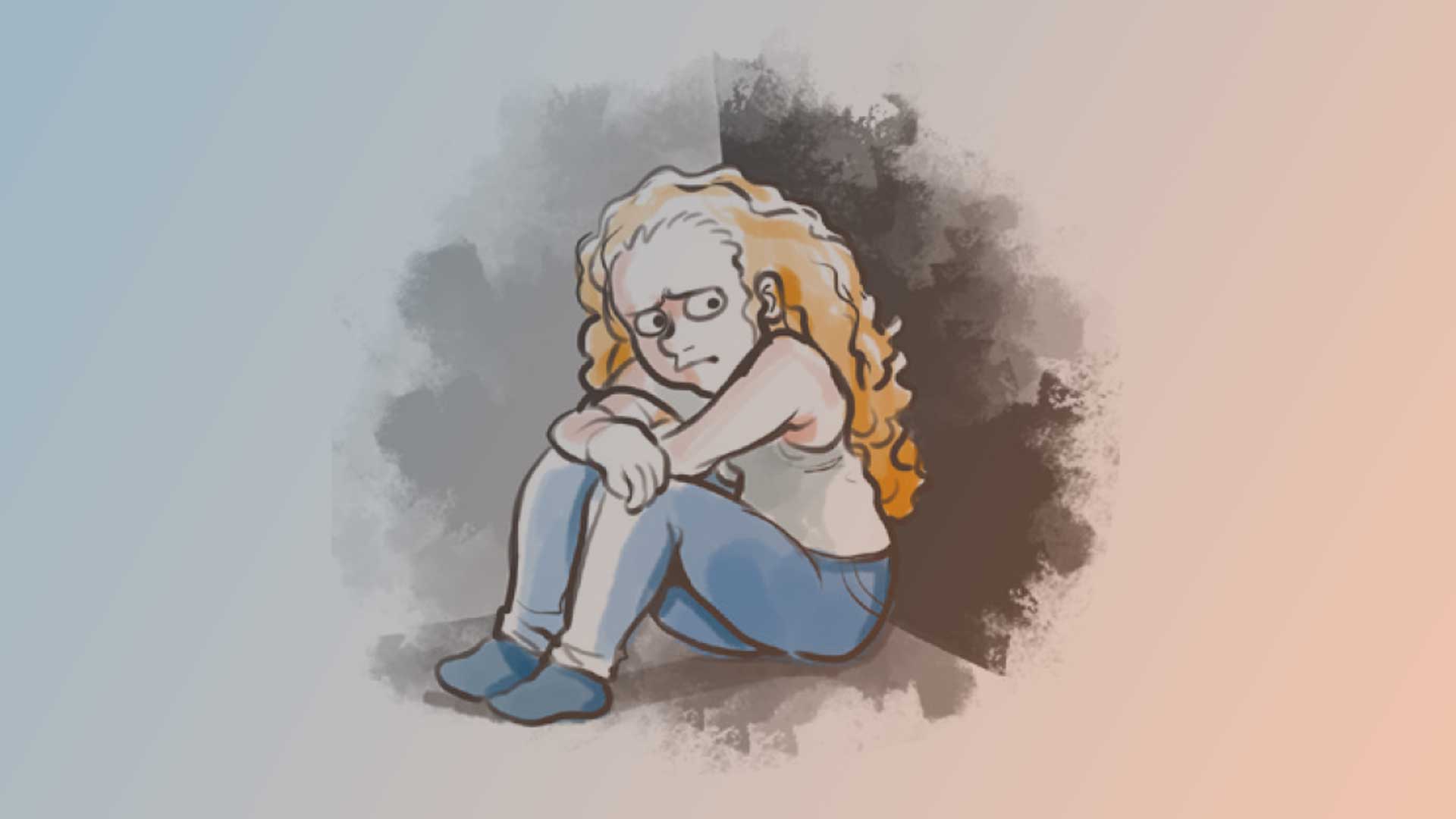
„"Those who are lonely have it good..."“
Author
Monika Tempel, scientific advisor
At least that's what Wilhelm Busch claims in a whimsical poem. "Together we are strong." That's the motto of Alpha1 Germany for its anniversary year 2021. A seeming contradiction! Which statement is correct?
Anyone who delves into the importance of social support in chronic illnesses (such as alpha-1 antitrypsin deficiency) will be surprised to find that there is no simple answer to this rather complex question. I therefore invite all readers to gradually unravel the complex situation and interpret research findings with an open mind. It is helpful to begin by clarifying a few basic terms related to the topic of "social support.".
Lonely or alone.
These two states are by no means identical! The differences become clear when looking closely at the relevant influencing factors.
loneliness
Loneliness is the subjective feeling of being alone. It is a painful experience and is caused by the conscious perception of a lack. The temporary or permanent absence of loved ones (in technical terms: of significant others) creates stress and suffering – in short: the feeling of loneliness.
Social isolation
Social isolation describes the objective lack of social contact. A distinction must be made between:
- Living alone
- few (or no) social contacts
- lack of social participation (in technical jargon: lack of social engagement)
Various combinations of these factors are possible:
- For example, a person living alone may have few (or no) social contacts and not participate socially.
- or a person living alone has several social contacts daily and regularly participates in different social activities
Dear readers, you are welcome to imagine further combinations at this point.
Social support
Support from a social network (family, friends, neighbors, other affected individuals in self-help groups, etc.) provides psychological and material assistance to help patients cope better with their illness and its effects in everyday life.
Social support is divided into:
- emotional support (e.g., empathy, sharing experiences)
- instrumental support (e.g., help in dealing with daily challenges caused by the illness)
- Attention (e.g. attention, constructive feedback)
- informative support (e.g. advice, hints, recommendations, tips)
Social support therefore encompasses a whole range of different forms of assistance. This makes it clear that providing patients with adequate social support is a demanding task.
Conclusion: Being alone does not necessarily mean loneliness – and having many social contacts does not necessarily protect against a lack of social support.
Social protective factors and social risk factors – what exactly are they?
For the general population, a lack of social relationships, pronounced social isolation, and insufficient social support are proven risk factors for increased mortality. Simply put: loneliness can be deadly! Does this also apply to patients with chronic lung diseases? The few studies available provide very complex results.
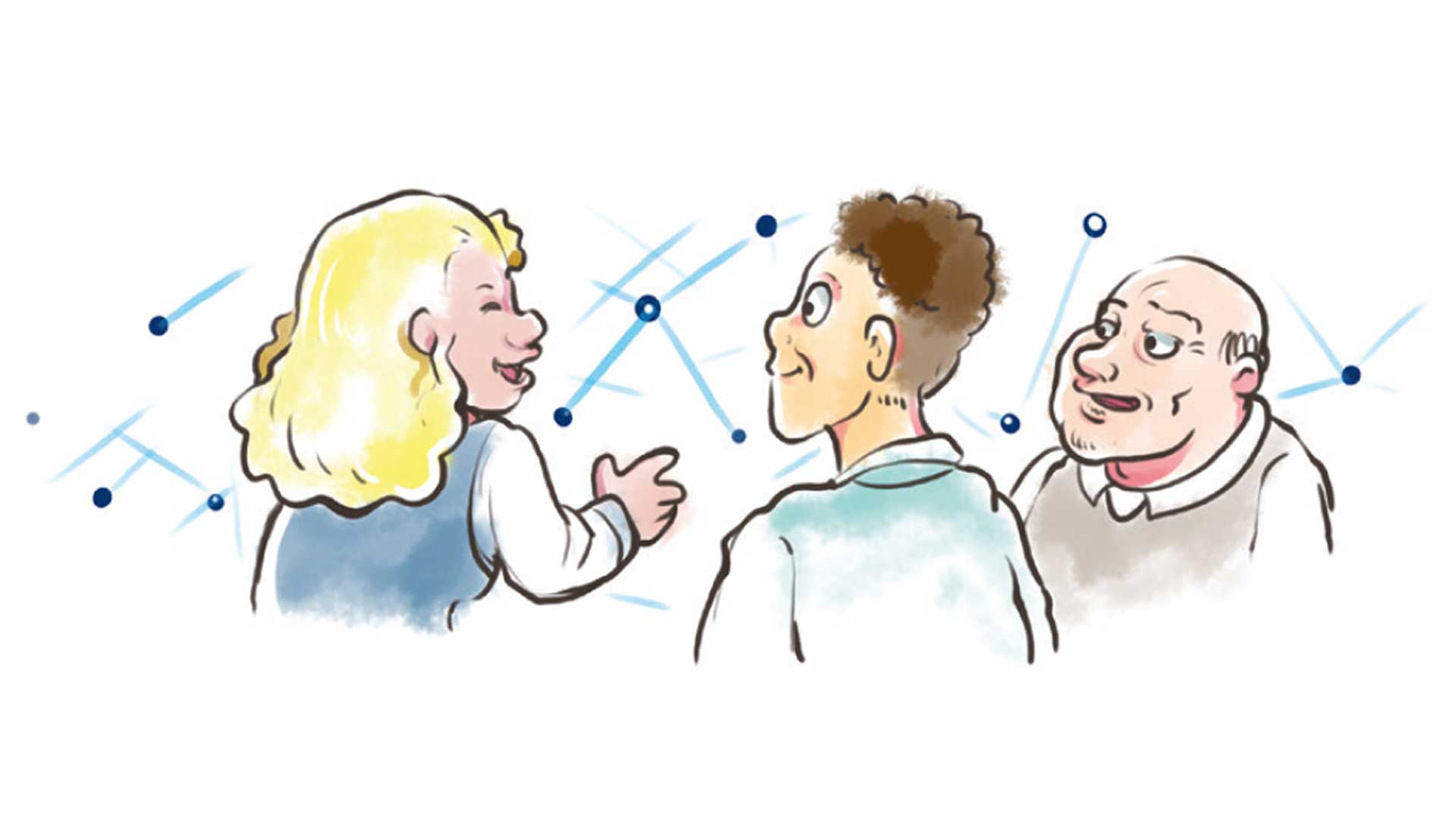
Findings regarding social support and social networks
Finding 1: Positive social support is associated with fewer hospitalizations and fewer exacerbations, and better health.
and better self-management skills.
Finding 2: The size of social networks shows a positive correlation with self-efficacy, disease severity, exercise tolerance, and shortness of breath.
Conclusion: Positive social support has a beneficial influence on the course of the disease. A larger social network also improves the self-management skills of patients (with COPD).
However, it seems important not to focus solely on the characteristics of social networks (size, structure, frequency of contacts, duration, accessibility, intimacy of exchange). Other conditions and events in the lives of COPD patients must also be considered (e.g., moving house, loss of a loved one).
Furthermore, the following important insight should not be overlooked: Social support can have both a positive and a negative influence on self-management. The perceived quality of social support and satisfaction with social networks are crucial.
The following study results shed light on these connections.
Finding 1: Patients who are more satisfied with their social network experience more positive emotions. They receive better emotional support and exhibit less
Cognitive decline.
Finding 2: Inadequate social support, on the other hand, impairs patients' self-esteem and sense of independence.
Finding 3: Symptoms of anxiety and depression are reduced through positive social support.
Finding 4: Negative social interactions (e.g., criticism, contradiction) increase the anxiety and depression levels of patients.
Conclusion: Not everything that glitters is gold, even on social networks. When it comes to social relationships and social support, the dose and type determine whether they have a positive or negative impact on patients' well-being. The quality of social relationships and social support plays a crucial role.
Findings on social isolation and loneliness
A recent British long-term study (over 9.6 years) investigates social risk factors for hospital admissions in 4,478 elderly patients with chronic conditions.
Lung diseases. She arrives at astonishingly precise results.
Finding 1: Living alone and a lack of social participation among patients increase the risk of more frequent hospital admissions – regardless of socio-demographic, health-related and behavioral factors.
Finding 2: A low number of social contacts and subjective feelings of loneliness do not have a significant impact on the frequency of hospital admissions.
Conclusion: A close look at social risk factors is needed. Living alone and a lack of social engagement should be identified, addressed, and tackled in psychosocial interventions.
Which social support strategies are helpful?
A lack of or inadequate social support is increasingly recognized as a risk factor for patients with chronic lung diseases. However, only a few strategies for specifically strengthening the resource of "social support" have been established so far.
Based on the study results, the following step-by-step approach appears sensible in order to achieve adequate social support.
Step 1: Raising and sharpening awareness of the problem for vulnerable individuals – especially among healthcare professionals.
Step 2: Identify patients affected by social isolation (e.g., by asking targeted questions about their social history) and address them sensitively.
Step 3: Inform affected patients/relatives about opportunities for social participation (through information material about self-help groups, patient organizations, etc.)
Step 4: Breaking down social isolation and ensuring targeted social support through self-help groups and patient organizations. Numerous opportunities to implement this step are offered, for example, at the planned information day in the anniversary year 2021 under the motto "Together we are strong".
Step 5: Encourage affected patients/relatives to engage in social activities (through motivational interviewing) – especially by highlighting the health-promoting effects of activities of daily living (= ADL) with social components (e.g. playing with grandchildren, walking dogs, …).
Step 6: Address mobility and transport options proactively.
Step 7: Assess the quality of social relationships sensitively and, if necessary, point patients/relatives in need of support to offers for improving social relationships and interactions (e.g., couple or family training on expressing feelings, dealing appropriately with feedback, criticism, etc.).
Step 8: Reliable and effective psychosocial support is guaranteed throughout the entire course of the illness through personal health coaches (case managers) (especially in times of crisis and deterioration of condition).
Conclusion: There are many ways to minimize social risk factors and strengthen social protective factors for the benefit of patients with chronic lung diseases.
Who is right: Wilhelm Busch or Alpha1 Germany?
The Solomon-like answer to this question is: It depends!
For a creative loner like Wilhelm Busch, self-imposed "solitude" (or rather, the self-determined reduction of social contacts to the absolute minimum) was evidently beneficial to his health and prolonged his life. Wilhelm Busch died – without any apparent chronic illness – after only a few days of illness at the age of almost 76.
For an introverted (= reserved, introverted) Alpha-1 patient, the following applies: Few (but strengthening and appropriately acting) social contacts and self-determined, measured social engagement have a positive effect on well-being and the course of the disease.
For an extraverted (= outgoing, open-minded) Alpha-1 patient, it is likely that adequate support from a wide-ranging social network and lively personal social engagement will have positive effects on well-being and the course of the disease.
This differentiated consideration and evaluation can hopefully contribute to a well-founded agreement with Alpha1 Germany's motto for the anniversary year 2021: „Together we are strong“
Hopefully, these explanations will also help to bring a smile to the face of even the most die-hard "social creatures" when reading Wilhelm Busch's poem.
to elicit…
For those interested, here are the publications used for further reading:
- Metting, EI, Schrage, AJ, Kocks, JW, Sanderman, R., & van der Molen, T. The forgotten social implications of asthma and Chronic Obstructive Pulmonary Disease: a focus group study.
- Lenferink, A., van der Palen, J., & Effing, T. (2018). The role of social support in improving chronic obstructive pulmonary disease self-management.
- Bu, F., Philip, K., & Fancourt, D. (2020). Social isolation and loneliness as risk factors for hospital admissions for respiratory disease among older adults. Thorax.


