
Information about long-term oxygen therapy
Author
Published in Alpha1 Journal 1/2015
To improve the quality of life and survival time of patients with chronic and severe oxygen deficiency – also known as hypoxemia – these individuals are tested for the possibility of long-term oxygen therapy (LTOT). However, all drug treatment options must be exhausted beforehand. During testing, which involves multiple blood gas analyses – importantly, also under stress – the partial pressure of oxygen must repeatedly fall within a critical range of < 55 mmHg. Furthermore, it must be demonstrated that oxygen administration improves these values.
causes
Oxygen deficiency can be caused by various diseases. A significant and large group consists of lung diseases, especially COPD, emphysema, and alpha-1 antitrypsin deficiency. Pulmonary fibrosis, pulmonary embolisms, and pulmonary hypertension can also lead to oxygen deficiency. Orthopedic problems can also trigger oxygen deficiency. Deformities of the ribs or spine severely constrict the rib cage, leaving the lungs insufficient space to expand. Certain heart defects or paralysis of the respiratory muscles also lead to oxygen deficiency and are therefore an indication for long-term oxygen therapy. Long-term oxygen therapy serves not only to supply the internal organs but, above all, to relieve the pressure on the right ventricle of the heart.
Oxygen is a medication
To ensure long-term oxygen therapy is effective and efficient, it should be administered for at least 16 hours, ideally 24 hours a day – as recommended by the guidelines of the German Society for Pneumology. Patient cooperation is essential for the success of the treatment. The required 16-hour duration may seem easy to achieve: many patients "hide" most of their oxygen therapy at night, taking in supplemental oxygen during the eight hours they sleep. They then take another four hours of oxygen in the morning and perhaps spend four hours relaxing on the sofa in the evening. This is how some patients manage to reach the required 16 hours. However, it is particularly important to have sufficient oxygen, especially during physical exertion. Whether shopping, taking a walk, or lifting a walker up a curb, supplemental oxygen enhances performance. Pulmonary rehabilitation exercises are also more effective when combined with long-term oxygen therapy as prescribed by the doctor. It should never be forgotten that the body cannot store oxygen; the gas cannot be supplied in advance. Long-term oxygen therapy does not replace exercise therapy or other medications. Nor does it improve the underlying disease or its symptoms such as coughing or phlegm. However, it does support the management of everyday stresses.
The pillars and devices of long-term oxygen therapy
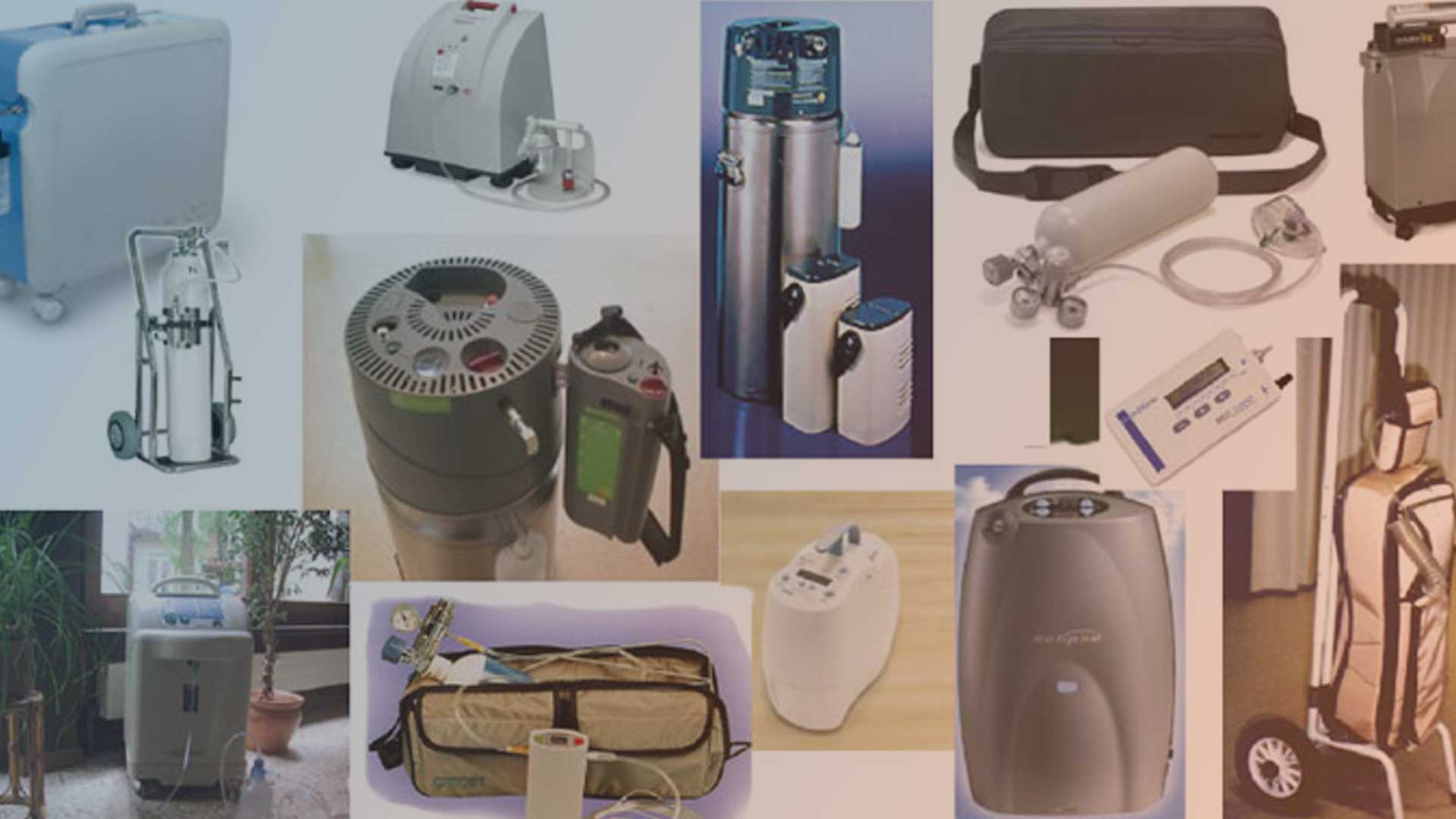
The three pillars consist of a concentrator (conc) as a stationary or portable device, gas cylinders (gox) and liquid oxygen tanks (lox) for home use, and mobile units for self-filling. With a concentrator, oxygen is extracted from the ambient air using a molecular sieve. For home use with a stationary concentrator as a basic supply, gas cylinders (weighing approximately 5 kg + accessories) are available for use outside the home, possibly with a fuel-saving system. Patients with statutory health insurance should definitely submit their electricity costs to their health insurance company for reimbursement. However, this isn't just about the €5 flat rate per month. It's better to read and note the operating time of the device on the meter to calculate the actual electricity costs. This precise calculation often results in a significantly higher reimbursement amount.
Portable liquid oxygen devices are divided into continuous flow and demand devices. With continuous flow, oxygen is delivered continuously, regardless of whether the user is inhaling or exhaling. A small cloud of oxygen forms in front of the mouth and nose. The oxygen can then be inhaled through the mouth or nose.
The flow rate is measured in liters. With breath-actuated devices (also called demand or triggered devices), oxygen is released only during a brief phase of inhalation. Effective nasal breathing is required to activate a valve within the device.
However, the following generally applies to demand-controlled devices for liquid oxygen, portable concentrators, and the oxygen-saving system for compressed gas cylinders: The settings should be checked at least once a year by a pulmonologist. This check should be performed both at rest and during exertion to ensure that oxygen deficiency does not occur. Firstly, all devices deliver a different oxygen flow rate per breath, meaning they are not interchangeable. There is no one-size-fits-all demand-controlled test. Secondly, it is possible that, as the disease progresses, the valve may no longer be able to be triggered during inhalation, or a different setting may be required. When adjusting the breath-controlled flow rate, the term used is "level," not "liters." It is also important to note that a setting of, for example, two liters is not the same as level 2.
And it's also important to consider: How do you breathe at night, under exertion, or when you're not feeling well? Can you really still breathe effectively through your nose to trigger the valve?
Oxygen passport
An oxygen passport records which device is used or which system one has been tested on, and the oxygen requirements determined by a doctor at rest, during exertion, and during sleep. Since the measurements are repeated at regular intervals, the current values can be read. This is also important for pulmonary rehabilitation, so that therapists have precise information.
Nasal cans and accessories
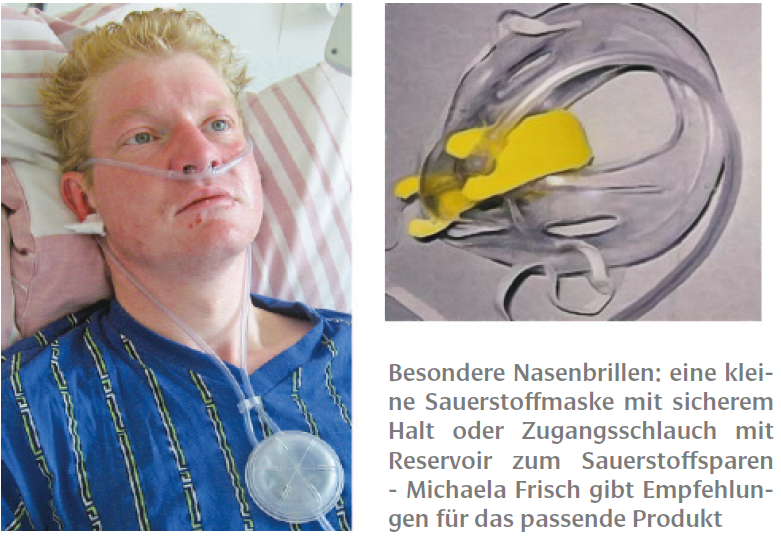
Oxygen is delivered via a tubing system made of PVC, Kraton, or silicone. Various models and designs are available. It's advisable to try several options to find the most suitable system. As mentioned earlier, patient cooperation and adherence to the therapy are essential. PVC nasal cannulas should be changed at least every 14 days, or more frequently in cases of infection. Silicone models can be boiled or cleaned with a special cleaning gel for silicone nasal cannulas. While these tubes are more expensive to purchase, they have a longer lifespan. In addition to cosmetic solutions for long-term oxygen therapy—now offered by various manufacturers—there are also other accessories to facilitate and support daily therapy: extension tubes, detanglers, condensation traps, earplugs, etc.

Humidification
If you have a continuous runny nose and feel dry, you should use a humidifier with bubbles. Closed water systems are hygienic and easy to operate. Alternatively, you can fill the humidifier reservoir with...
To fill with sterile water. Alternatively, water – whether tap water or mineral water – must be boiled vigorously for at least 10 minutes daily. With this last option, the humidifier reservoir must also be cleaned daily.
Carrying aids
These portable oxygen concentrators, weighing several kilograms, can be transported in various ways. Smaller systems are available in belt bags or special backpacks. Larger units can be transported in a caddy. Riding comfort varies depending on the device. Air-filled tires and a well-padded handle are advantageous. There are also significant differences between models of rollators. The weight of such a walking aid can range from 7 kg to 15 kg. A tipping aid is very useful, as it makes it easier to overcome obstacles such as curbs. It is recommended to receive training in the correct use of a rollator to ensure it provides greater mobility and does not restrict movement.
Thus appeared in Alpha1 Journal 1/2015.


