
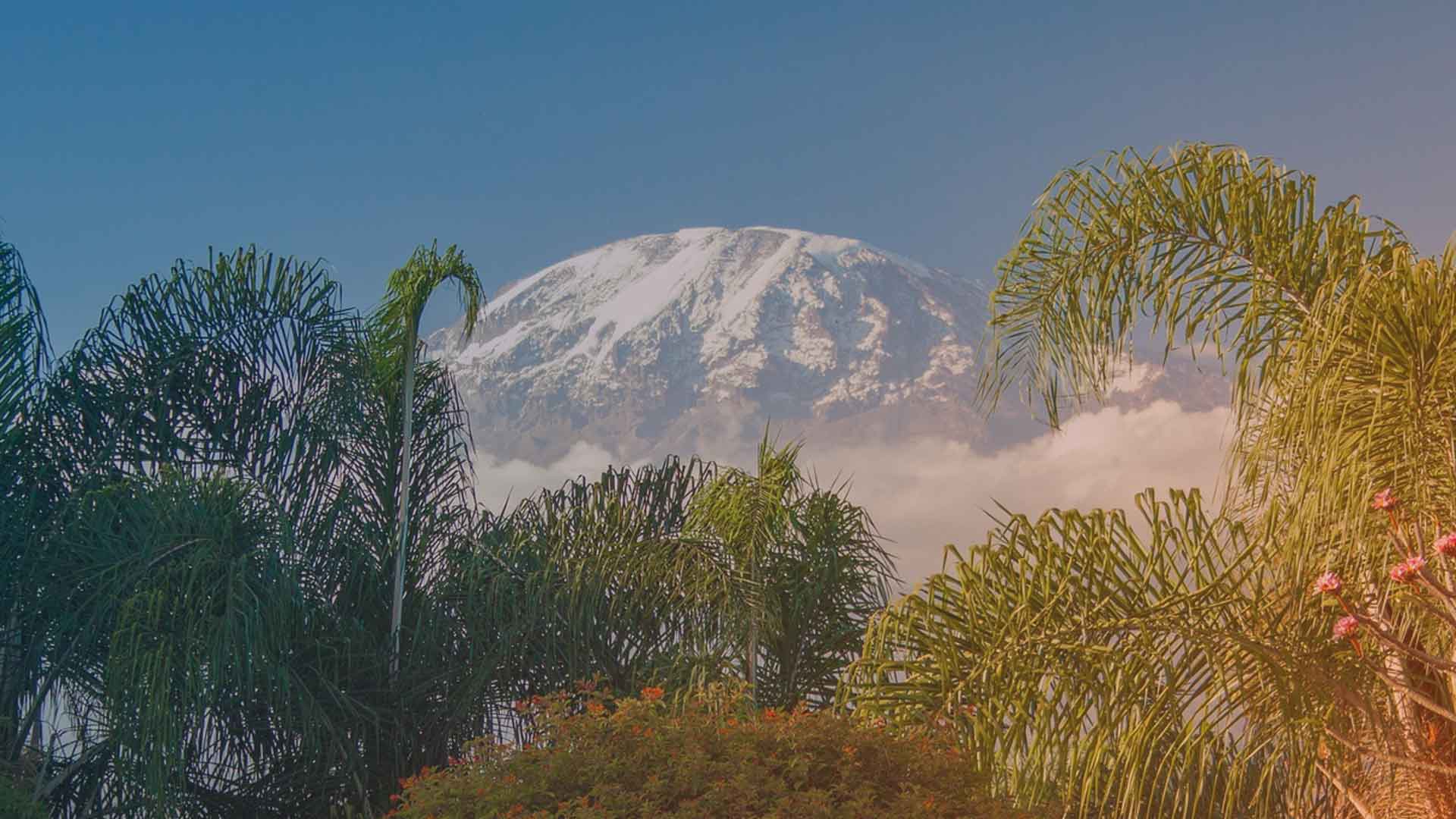
Kilimanjaro – slow adaptation is the recipe for success
Author
Herbert Rude
For a PiZZler like myself, attempting to climb a mountain like Kilimanjaro is certainly a special challenge. According to the guides, in many groups with healthy participants, often only one in four reaches the summit. My success was likely due to the preparation and the way I carried out the climb.
For a year I planned and trained, exercising more or less five times a week and buying the necessary equipment for the extreme temperature differences between plus 30 and minus 15 degrees Celsius. I also got vaccinated against several tropical diseases and put together a travel first-aid kit. When I stood on Stella Point, one of Kilimanjaro's peaks, about 5,750 meters high, on September 9th, my dream of climbing the snow-capped mountain on the equator had truly come true. I had planned and trained for a year, and now I had done it. The climb was certainly one of the greatest adventures of my life.
Although the expedition was strenuous and I considered abandoning it several times, it actually improved my health. While my blood oxygen level was only around 85 percent during the ascent to approximately 3,000 meters, it was over 90 percent during the descent at the same altitude. Previously, I had measured it at almost 4,800 meters, where it was 73 percent.
Even the preparatory training, which included regular cycling, strength training, and circuit training at the gym, had significantly improved my FEV1 and lung hyperinflation. My FEV1 increased from 75 percent to 88 percent, and the hyperinflation value decreased from 160 to 120 percent. The most important thing during the ascent is adapting to the increasingly thin air. Therefore, it's essential to ascend slowly and drink plenty of fluids. This encourages the body to produce more red blood cells, which in turn allows it to bind more oxygen. You shouldn't gain more than 800 to 1,000 additional meters of altitude per day, and you should always sleep well below the highest point of the day's stage. That's why I chose an 8-day tour via the Lemosho Route. There are faster routes, but the dropout rates are very high on those.
Mild headaches are probably to be expected, despite the slow adaptation; everyone in our group experienced them at some point, as did occasional loss of appetite or sleep problems. I was spared severe headaches or a bad cough; in those cases, only a quick descent helps, after which the symptoms usually subside quickly.
The guides carry oxygen, by the way. Anyone who needs oxygen is not allowed to continue the ascent but must descend immediately. Helicopters have also been available since this year, but their use costs over $1,000. One way to acclimatize is on the flight to the summit. In large aircraft, the cabin pressure corresponds to an altitude of about 1,800 meters, and in smaller ones, about 2,400 meters. Anyone who generally has problems with altitude sickness should therefore book seats on larger aircraft for their vacation. My next vacation will be without a plane. I'm going to the Alps for skiing. Altitudes between 1,000 and 3,000 meters are sufficient there. To prepare, I've shifted my focus to gymnastics and yoga for flexibility. I'm cutting back on cardio training a bit, but my fitness, like my overall health, is still benefiting from the Kilimanjaro project.
Herbert Rude


