

Author
Michaela Frisch, Advisor for Pulmonary Sports, Training, Activity, Mobility, Deputy Chairwoman of the Pulmonary Sports Working Group.
Thus appeared in Alpha1 Journal 1/2022.
Looking back
Pulmonary exercise is one of the most important non-drug therapy options for patients with lung disease, in this case: Alpha1 antitrypsin deficiency with reduced exercise capacity, diagnosed COPD, shortness of breath, etc.
The specially tailored and dosed training (muscle building, endurance and everyday life training) which is specifically designed to address different levels of resilience and comorbidities (such as metabolic syndrome, diabetes, osteoporosis, mental illnesses, depression, heart disease, pulmonary hypertension, etc.) provides guidance for lifelong therapy and increasing activity in lung patients.
The program takes into account any assistive devices used, such as oxygen equipment, walkers, trolleys, etc., and each participant is individually assessed, considering their specific medical condition. Appropriately trained instructors meet all participants at their individual fitness levels to prevent both under-stimulation and resulting lack of motivation, as well as over-stimulation/overexertion (even leading to shortness of breath) and the resulting fear of exertion.
The program takes into account any assistive devices used, such as oxygen equipment, walkers, trolleys, etc., and each participant is individually assessed, considering their specific medical condition. Appropriately trained instructors meet all participants at their individual fitness levels to prevent both under-stimulation and resulting lack of motivation, as well as over-stimulation/overexertion (even leading to shortness of breath) and the resulting fear of exertion.
„"The goal is to be able to manage the illness independently."“
The goal is for all different patient groups to benefit from participating in pulmonary rehabilitation, both in terms of their physical performance and their ability to cope with the demands of daily life, thus enabling them to manage their condition independently. This promotes independence in daily life, the patient's self-esteem, and mobility. However, it is important to note that pulmonary rehabilitation is not competitive sport, but rather a specialized, dosed, and tailored training program for patients with lung problems, ranging from mild to severe lung disease.
Pulmonary exercise can still be prescribed by both the patient's general practitioner and a pulmonologist in private practice. It can also be prescribed by the German Federal or State Pension Insurance (Deutsche Rentenversicherung Bund or Landesversicherung) during rehabilitation at a specialized rehabilitation clinic – in this case, for a period of six months.
Pulmonary exercise may only be conducted by appropriately trained instructors who have completed the required advanced training and mandatory license renewal courses (every two or four years, depending on the federal state). The sports club providing the service must be a member of the disability sports association of the respective federal state.
Membership in a sports club can be beneficial for the long-term success of the therapy (continuing treatment even without a doctor's prescription or approval from the health insurance company), but it is not required for participation in pulmonary exercise programs – not even for insurance reasons. Participation in pulmonary exercise programs is covered by the doctor's prescription using form 56 or G 850. The situation is different if you are already a member of the club or wish to take advantage of other club offerings. In these cases, there should be no obstacle to membership.
A typical pulmonary exercise session lasts between 60 and 90 minutes and takes place once a week. Depending on the prescription and the number of groups or training sessions, participation several times a week is also possible – subject to prior agreement with the health insurance company, the doctor's prescription, and the institution providing the program.
Pulmonary exercise is definitely much more than the southern German 'schnaufen' and the standard German 'atmen'; it includes so much more:
Respiratory area
- Raising awareness and perception of breathing
- Learning / training in pursed-lip breathing (most important self-help technique)
- Breathing-relieving body positions (proper support is often forgotten!)
- Economization of breathing, especially under everyday stress (reduction of accessory respiratory muscles and deepening of breathing)
- the different breathing patterns (abdominal breathing, chest breathing, kidney breathing, lateral breathing)
- Raising awareness of the respiratory system
- Increased thoracic and shoulder mobility
- Improvement of respiratory muscle strength and mobilization of the diaphragm.
- Reduction of exertional dyspnea or the fear of shortness of breath during exertion
- Learning helpful and practical relaxation techniques
Training area:
- Maintaining and training endurance performance
- general muscle building
- Increased physical resilience
- Perception and shiftability of performance limits
- Muscle stretching
- Avoidance of protective behavior and joint stiffness,
- Coordination training, osteoporosis prophylaxis, polyneuropathy training
Training area:
- secretion mobilization
- Coughing techniques and cough discipline
- Nasal hygiene
- Emergency procedures, including those of your partner (or: how do I explain to my grandchild, for example, if I have problems on the stairs)
- Assistive device training (rollator, trolley, Flutter, Cornet, Acapella, Shaker etc.)
- Knowledge transfer about the disease and disease management
- Hygiene training relating to, for example, long-term oxygen therapy and everyday behavior
- Teaching of further self-help techniques
- Exchanging experiences with other affected individuals and building social contacts
- Reduction of exacerbation frequency (= phases of worsening condition)
- Strengthening / stabilizing the immune system.
Everyday life area:
- Avoidance of stressful breathing patterns during everyday stresses and situations (e.g. lifting, carrying, talking or arguing, walking or coughing, etc.)
- everyday-life-oriented training, e.g. in the form of an everyday-life training circuit (emptying the dishwasher, hanging up laundry, walker obstacle course, etc.)
- Correct and therefore effective, everyday-oriented stair climbing
- collaborative development of a feasible home program
- Accident and fall prevention (respiratory patients are unfortunately currently catching up in fall statistics due to incorrectly adjusted aids or unstable footwear)
- Training control under load
Many people need guidance, and the therapist often provides a familiar sense of security during exercise instruction and management, offering support and guidance. In addition, the psychological factor, the group dynamic (meeting and exercising with other participants), is a very important aspect of pulmonary exercise groups. Furthermore, there's the enjoyment of exercising with like-minded individuals and fellow sufferers, whom one often knows from years ago.
In pulmonary exercise classes, it is particularly important that the instructor offers variations in intensity during functional gymnastics, gait training, games, and everyday training circuits, for example, through different starting positions, additional tasks, etc. To control the intensity, the instructor, and therefore also the participants, have access to the Borg scale (e.g., using thumbs-up – horizontal – downwards), pulse oximetry, and, after extensive training of the participants, the recording of the 10-second respiratory rate.
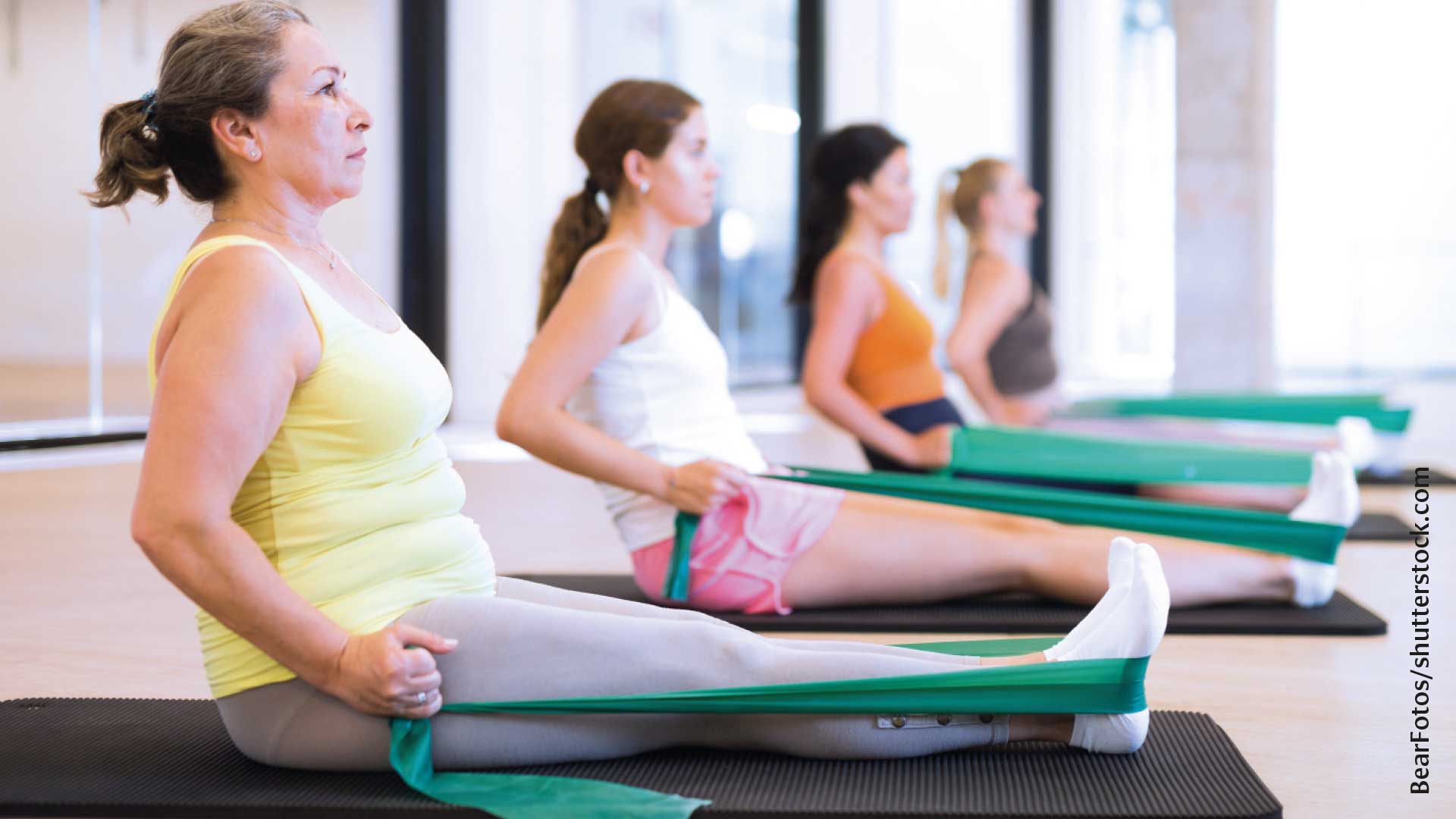
outlook
1. Due to post- or long-term COVID-19, many patients have been added to the list in recent months, as they also benefit from regular training due to their symptoms (dyspnea, limitations in performance and activity, cough, altered breathing patterns, cognitive impairments, etc.). These patients are distributed among the various rehabilitation sports indication areas: internal medicine (pulmonary exercise), cardiology (cardiac exercise), neurology, psychiatry/psychosomatics, and orthopedics (functional training). A corresponding initial examination by a specialist physician, a doctor's prescription for rehabilitation sports, and approved cost coverage from the health insurance company are required.
The prescription can be issued based on ICD-10 codes U08.9 and U09.9 (conditions related to previous COVID-19 infection). ICD-10 codes U07.1 (presence or diagnosis of COVID-19 infection) and U10.9 (conditions related to current COVID-19 infection) are excluded due to the acute infectious situation or the acute need for treatment.
The introduction of special COVID-19 training groups in rehabilitation sports must be carefully considered, as this could lead to the stigmatization of participants. Furthermore, existing participants in rehabilitation sports groups would lose their support (e.g., in providing guidance on long-term oxygen therapy, coping with daily stress, self-help techniques, social integration, motivation, etc.). The exchange among those affected within the groups is more important than ever, also to support new and existing participants and the instructors. Despite the additional time required, the initial consultation forms the basis for the individual therapy and training plan. Instructors are advised to create questionnaires/checklists regarding symptoms (e.g., fatigue assessment) and to use a regular check-up questionnaire to monitor any changes in symptoms. To potentially change the rehabilitation sports training group to a different indication (cardiology, neurology, orthopedics, psychiatry) as a consequence after consultation with the treating physician.
Conclusion 1
In summary, regarding COVID-19, it should be noted that there are no specific COVID-19 exercises. The currently known symptoms also occur in other areas of indication. Training content and exercise intensity must be individually adapted, and differentiation within the training program continues to be based on varying levels of resilience and comorbidities.
2. Online lung exercise:
Even though health insurance companies have since discontinued coverage (temporary transitional arrangement), online pulmonary exercise has been available since 2020, with specific requirements for participation (doctor's prescription, detailed telephone consultation, functioning device and defined software requirements, cognitive ability to perform the exercises without tactile stimuli, participants must not be at risk of falling, insurance coverage for participation at home, etc.). Additional requirements included guidelines for implementation and quality assurance (valid accreditation of the exercise group, limited number of participants, consistent session times, safety instructions at the beginning of each session including exercises for home use, detailed documentation marked "Tele" regarding attendance, date, time, incidents, number of participants, etc.). Regulations concerning data protection, billing procedures, and the accreditation process were also included.
The feedback varied considerably across Germany:
PER: Driving is eliminated, people are more likely to take advantage of the offer than to do something alone, group dynamics are maintained, and a sense of security is preserved during the pandemic.
CONS: Not everyone could participate, there were technical problems, fear of "downloading" anything, error correction was difficult, participation was limited (talking to people in the background, mobile phone, telephone, front door), no carefree chatting like before, personal contact was missing, not all lung exercise content is available online.
Conclusion 2
Many instructors quickly discontinued online lung exercise, while some instructors continued online lung exercise as an add-on. The Lung Sports Working Group offers free online lung exercise once a week for all interested parties, without billing or prescription.
3. Apps:
Digital training options are gaining increasing importance, not least due to the COVID-19 pandemic. They are increasingly complementing aftercare following rehabilitation, pulmonary exercise, or physiotherapy on days without appointments, offering a guided home program. In addition to providing information about the disease and its management, the apps primarily offer guided exercises at varying levels of exertion and intensity for strengthening, mobilization, and relaxation, sometimes accompanied by a virtual coach with real-time feedback. Reminder functions, various documentation tools, and questionnaires create a training record for overview and motivation.
Here are some examples of fitness apps:
- KAIA COPD (Kaia Health Software GmbH)
- Active with COPD (AstraZeneca)
- Walking the respiratory system together (AstraZeneca)
Conclusion 3
Digital medicine is certainly gaining ground in bridging the gap between in-person training sessions. It cannot replace a doctor's visit, but it can be a valuable addition and support for maintaining activity levels.
In general, however, therapeutically guided pulmonary exercise is worthwhile, as it is well-established. Exercise and physical activity in a group are enjoyable. However, there is still a need for more groups and instructors. And since current exercise recommendations aim for 30 minutes of physical activity per day, it is also important to incorporate what you learn in pulmonary exercise into a daily home routine and to be physically active every day, ideally documented in a training log.
And please always remember: every step, every stair step and every exercise is important for your own quality of life, (social) mobility and participation!


