

Author
Dipl. Biol. Martina Veith, PD Dr. Timm Greulich
It has now been 59 years since Laurell and Eriksson described the first cases of alpha-1 antitrypsin deficiency (AATD). Since then, much has been learned about the disease (1). AATD is the most common inherited disorder in adults (2), and although approximately 120,000 people in Europe carry the Pi*ZZ genotype (Pi*ZZ is a common mutation in AATD), only a small proportion of these are diagnosed and treated (3). However, early diagnosis is very important so that doctors can take preventive measures and, if necessary, initiate appropriate treatment.
The Alpha-1 Antitrypsin Laboratory at the University of Marburg was founded in 2003 and is one of the leading laboratories in Europe for the diagnosis of Alpha-1 Antitrypsin Deficiency. Most specialized laboratories have developed their own diagnostic algorithm for AATM detection, and therefore the sequence of diagnostic procedures varies from laboratory to laboratory.
The diagnosis of AATD should generally begin with determining the AAT concentration in the blood. If AATD is suspected, for example, if the patient has a persistent cough, sputum production, or shortness of breath, the general practitioner or pulmonologist should order a serum alpha-1-antitrypsin (AAT) test, usually at a local, commercial laboratory. If the serum level is less than 90 mg/dL (0.9 g/L), molecular genetic analysis should then be initiated to detect various mutations and confirm a possible AAT deficiency at the DNA level.
The information for the development and function of living organisms is encoded in DNA (deoxyribonucleic acid). Each segment of DNA that codes for a specific protein is called a gene. DNA is therefore the blueprint (genetic code) for protein production. A deficiency of AAT is caused by mutations (changes) in the genetic code for AAT, specifically the SERPINA1 gene (serine protease inhibitor A1 gene). This segment of DNA is the one that is examined for mutations.
The Alpha-1-Antitrypsin Laboratory in Marburg offers a service for free molecular genetic analysis, supported by Grifols.
Two testing methods have been available for this purpose since June 2021:
- The AlphaKit® from the company Grifols (DNA is extracted from dried blood; see also the article "What happens to my sample in the lab") and
- A new testing procedure using the so-called "AlphaID®" (Grifols) is available. This involves a simple cheek swab (Figure 1). A sterile sponge is used to collect a sample of cheek mucosa (epithelial cells). The sample is then registered on a web platform by the physician using a barcode. Each AlphaID® has a unique barcode. The sample, along with the barcode, is then sent by mail to the Alpha-1 Antitrypsin Laboratory in Marburg.
DNA can be extracted from the epithelial cells of this sample, and within a few hours, a multiplex polymerase chain reaction (PCR) allows for the parallel detection of the 14 most common AAT mutations (Table 1). It is important, however, that the donor does not eat, drink (including water!), smoke, or chew gum for 30 minutes before the buccal swab is taken.
The physician can access the results of the AATM test using the AlphaID® via the web portal a few days after submitting the sample. Only the physician can link the results to the patient's data using the sample barcode.
For results that cannot be explained by PCR or in cases of suspected rare mutations, further analyses may be necessary. One option is to sequence the genetic code for alpha-1-antitrypsin. This involves determining the sequence of the building blocks (bases) in the DNA and then comparing it to a template (reference sequence).
One advantage of AlphaID® is that no second blood sample is required (non-invasive test) and the application is very simple. This makes the test suitable for infants, toddlers, and anxious individuals.
Depending on the type and location of the mutation on the SERPINA1 gene, the activity of the AAT protein is slightly reduced, severely reduced, or completely absent. Consequently, the protective function of AAT (enzymatic breakdown of lung tissue) is either no longer present or only partially functional.
| Mutations | Protein activity of alpha-1-antitrypsin (AAT) |
| PI*I | slightly reduced |
| PI*M procida | greatly reduced |
| PI*M malton, PI*M palermo, PI*M nichinan | greatly reduced |
| PI*S iiyama | greatly reduced |
| PI*Q0 granite falls | none (no AAT protein measurable) |
| PI*Q0 west | none (no AAT protein measurable) |
| PI*Q0 bellingham | none (no AAT protein measurable) |
| PI*F | slightly reduced |
| PI*P lowell, PI*P duarte, PI*Q0 cardiff, PI*Y barcelona | slightly reduced |
| PI*S | slightly reduced |
| PI*Z | greatly reduced |
| PI*Q0 mattawa, PI*Q0 ourem | none (no AAT protein measurable) |
| PI*Q0 clayton, PI*Q0 saarbruecken | none (no AAT protein measurable) |
| PI*M heerlen | greatly reduced |
Table 1: The 14 mutations that can be directly detected with the A1AT Genotyping Test from Progenika Biopharma (Grifols).
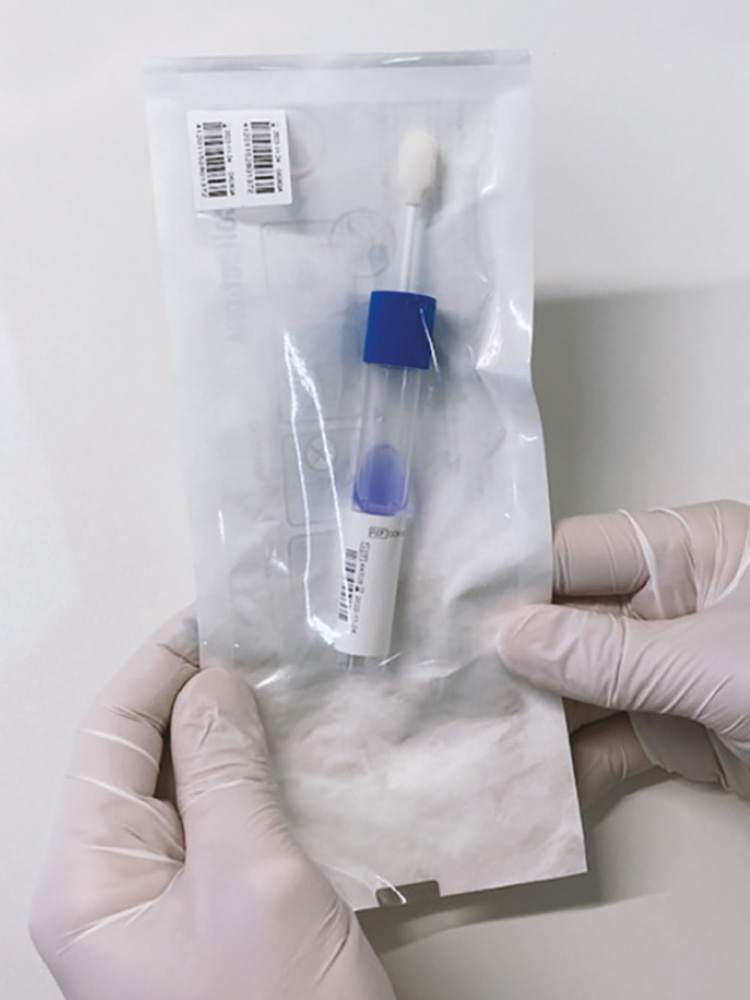
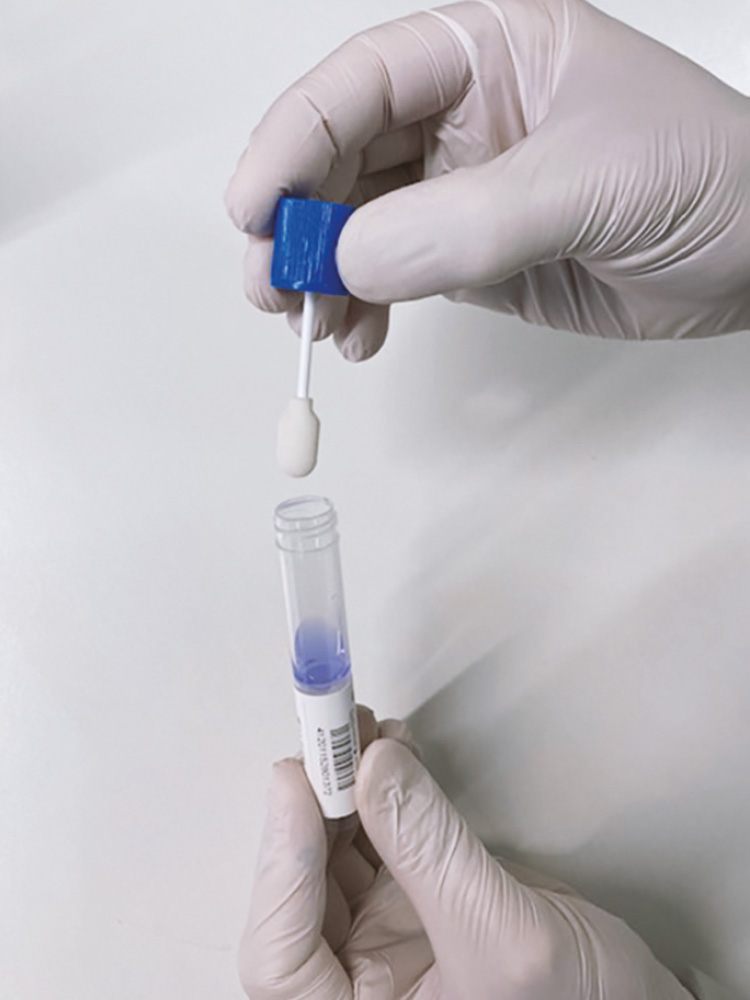
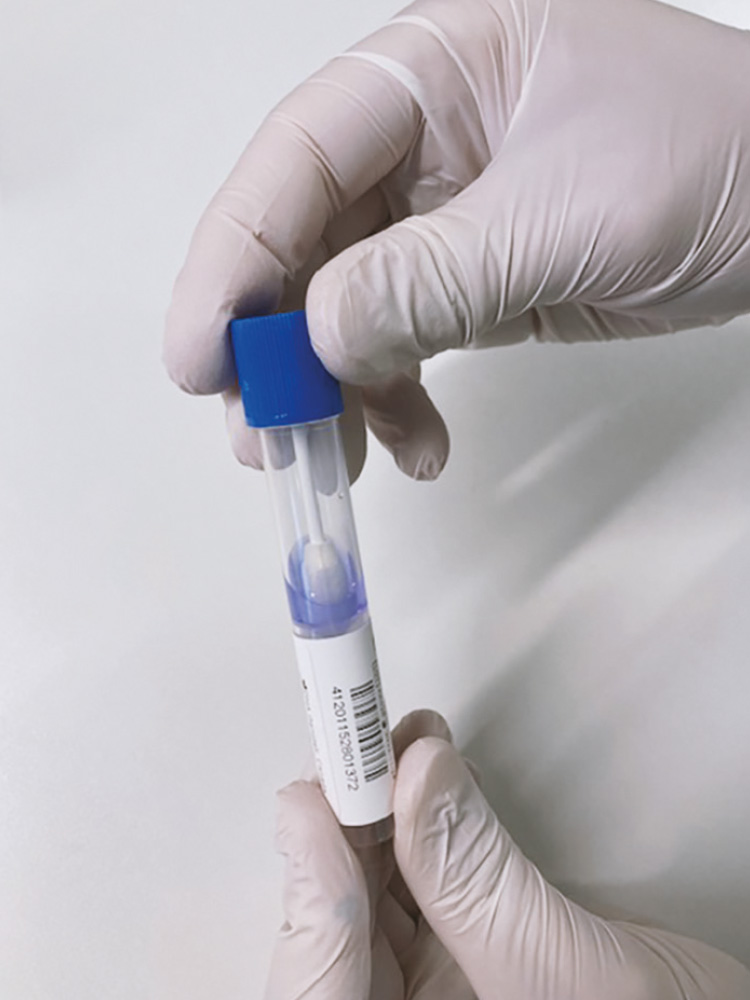
Kit for the cheek swab – this is carried out according to the instructions (included in the kit) and the sample is sent by post to the Alpha-1-Antitrypsin Laboratory in Marburg.
Sources
(1) C.-B. Laurell & S. Eriksson (1963) The Electrophoretic Alpha-1-Globulin Pattern of Serum in Alpha-1-Antitrypsin Deficiency, Scandinavian Journal of Clinical and Laboratory Investigation, 15:2, 132-140, DOI: 10.1080/00365516309051324 (2) Gramegna, Andrea et al. "Alpha-1 antitrypsin deficiency as a common treatable mechanism in chronic respiratory disorders and for conditions different from pulmonary emphysema? A commentary on the new European Respiratory Society statement" Multidisciplinary respiratory medicine vol. 13 39. 8 Oct. 2018, doi:10.1186/s40248-018-0153-45 2017, Alpha-1 European Expert Group Recommend (3) Torres-Durán, M., Lopez-Campos, JL, Barrecheguren, M. et al. Alpha-1 antitrypsin deficiency: outstanding questions and future directions. Orphanet J Rare Dis 13, 114 (2018). https://doi.org/10.1186/s13023-018-0856-9


