

Author
Marion Wilkens, as appeared in Alpha1 Journal 1/2025.
Individual approaches to the treatment of chronic obstructive pulmonary disease (COPD)
COPD – these four letters stand for one of the most underestimated widespread diseases in Germany: chronic obstructive pulmonary disease. It is estimated that about one in nine people over 40 in Germany suffers from the disease – many without knowing it. People over 65 are particularly affected. Typical symptoms of COPD include chronic cough, shortness of breath, and increasing fatigue. The disease progresses slowly, is currently incurable, and in many cases leads to a significant reduction in quality of life. A specific form of COPD is the so-called alpha-1 antitrypsin deficiency – a genetically determined cause that often goes undetected.
COPD – a complex challenge
The causes of COPD are manifold. Smoking is considered the most important risk factor, but environmental pollutants such as particulate matter or certain occupational exposures also play a role. Genetic predisposition and immunological factors are additional contributing factors. Other diseases often occur simultaneously – such as cardiovascular problems, diabetes, or mental health issues. These comorbidities make diagnosis and treatment more complex and often complicate targeted therapy.
A new approach: PerMed-COPD
This is precisely where the PerMed-COPD clinical platform, supported by the Federal Ministry of Education and Research, comes in. Its goal: the development of a so-called clinical decision support system (CDSS) that assists physicians in choosing the optimal, individually tailored therapy.
The system is based on state-of-the-art artificial intelligence (AI) and accesses a wide range of health data – including lung function, lab results, comorbidities, and lifestyle factors. From this information, the CDSS develops specific therapy recommendations tailored to the individual needs of each patient. For example, a different treatment will be recommended for a person with concomitant heart failure than for a person with psychological stress or metabolic problems.
Researching together – benefiting together
The patient perspective is an integral part of the project. The patient organization Alpha1 Germany e. V. actively participates in its development and implementation. As a representative, I contribute important insights – for example, on how to communicate information clearly and what the actual needs of those affected are in everyday life. However, I first had to learn to ask questions when I didn't understand something, and it was precisely through these questions that new insights often emerged. We patients see things differently – and that's exactly what helps the researchers.
Participate and help shape the future
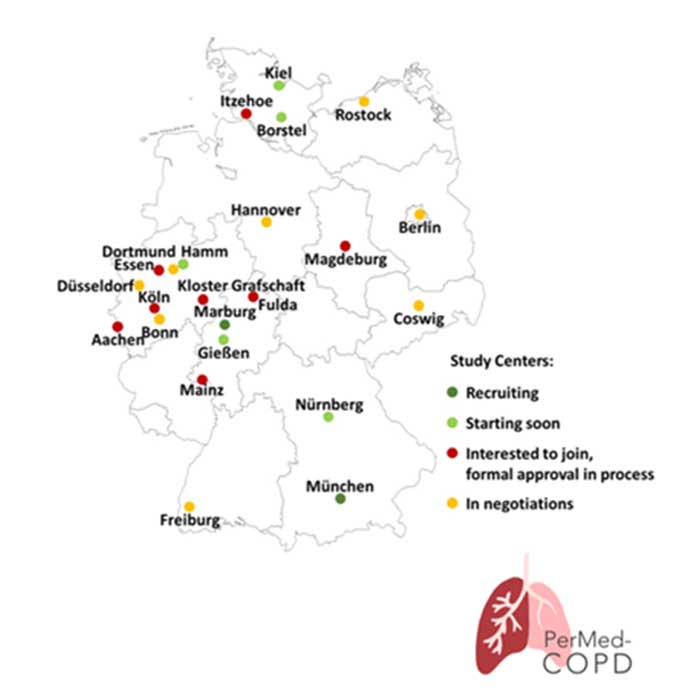
Currently, COPD patients aged 40 and over are being recruited nationwide for the PerMed-COPD study. Participation includes three examination appointments within one year, including lung function tests, ECG, blood tests, and questionnaires. A portion of the participants will also be monitored by the new CDSS – with the aim of developing earlier diagnoses and even more precise and helpful treatment recommendations. Benefits for participants at a glance:
- Detailed, free medical examinations
- Personalized treatment recommendations through the CDSS
- Active participation in shaping future COPD therapy
- I will cover a travel expense allowance.
Why are we involved in this as well?
Many may remember Cosyconet, the predecessor project that inspired the PerMed study. Several of our members participated and reported only positive experiences. Therefore, we hope to achieve similarly positive results with this study. For COPD patients with a genetic cause, participation in the study offers the significant advantage of including the measurement of alpha-1 antitrypsin serum levels in the data collection. This provides an opportunity to discover new alphas that can then be targeted for appropriate therapy.
Anyone interested can find information and register on the project website, or be put on the waiting list, as not all centers have started yet:


