Psychological aspects in chronically ill patients
Author
Published in Alpha1 Journal 01/2015
Chronic obstructive pulmonary disease (COPD) doesn't just affect the lungs. Other organs are also involved. The cardiovascular system can be affected, diabetes mellitus is common, and bones and muscles also show changes. In the muscles, the composition of muscle fibers differs from normal: COPD patients have fewer muscle fibers specialized for endurance and instead a higher proportion of strength fibers. Bone changes similar to those seen in osteoporosis can occur. Finally, psychological changes are also common in COPD.
Psychological changes
The three main components are anxiety disorders, panic attacks, and depression. Anxiety is normally a useful protective reflex. However, in this case, it refers to excessive anxiety that is unfounded, meaning no clear trigger can be found. An anxiety disorder is only diagnosed if the symptoms persist for at least six months. Without treatment, this can develop into panic attacks. These occur without any external cause and last for several minutes. Depression involves a narrowing of mood; one experiences less joy, but also less sadness. Motivation is reduced, especially in the mornings. One feels inner restlessness, and the sleep rhythm is disrupted. One depressed patient put it this way: "There I sit by the window, watching others go about their lives.".
Anxiety disorders
Anxiety triggers a vicious cycle. External stimuli or negative thoughts cause negative feelings to arise. The autonomic nervous system reacts with symptoms, primarily shortness of breath. When this shortness of breath is then perceived, it intensifies the negative thoughts. In people with lung disease, shortness of breath can be perceived more intensely due to feelings of anxiety. Therefore, shortness of breath and anxiety are hardly separate. Questionnaires on anxiety disorders have been developed specifically for people with lung disease. As disease-related
A variety of anxieties are identified: the fear of shortness of breath, of physical exertion, of a worsening of the condition, and of social isolation. Relationships, death, and dying can also trigger illness-related anxieties and are addressed in the questionnaires. When specifically asked about anxieties related to oxygen therapy, just over 20 percent of respondents with COPD stated that they felt "often" or "always" uncomfortable when others looked at them because of the oxygen therapy. Nearly 25 percent said this happened "sometimes," while more than 50 percent saw "no problem" with it. The question, "I'm afraid others will think I'm terminally ill when they see me on oxygen therapy," was answered by just over half of the patients with "sometimes," "often," or "always." In patients with pulmonary emphysema, it was investigated whether the severity of the disease played a role in the extent of the anxieties. This was not the case. Anxieties essentially develop from the time of diagnosis. Recognizing this issue allows for early intervention.
depression
Similar to anxiety, depression also involves a vicious cycle. In COPD, this often begins with shortness of breath. This leads to a reduction in physical performance and causes depressive symptoms. These reduce quality of life, which in turn can lead to more shortness of breath. A large study compared three groups of people: non-smokers, smokers without COPD, and COPD patients. Seven percent of non-smokers, 12 percent of smokers, and 26 percent of COPD patients scored high on the depression questionnaire. This means that one in three to four people with COPD struggles with depressive symptoms. Further categorization of those affected reveals that patients with more severe COPD, smokers, women, and patients under 60 are more likely to develop depressive symptoms.
Depression has significant adverse effects. COPD patients with depression experienced more frequent exacerbations compared to those without depression. They required hospitalization more often due to exacerbations, and more than three exacerbations per year were also more common. Physical performance is also more severely impaired in people with depression, as demonstrated in a study using the 6-minute walk test. Depression was also linked to anxiety disorders in another study. Disease-related anxieties, such as fear of shortness of breath or disease progression, were more pronounced in COPD patients with depression.
Therapy for mental problems
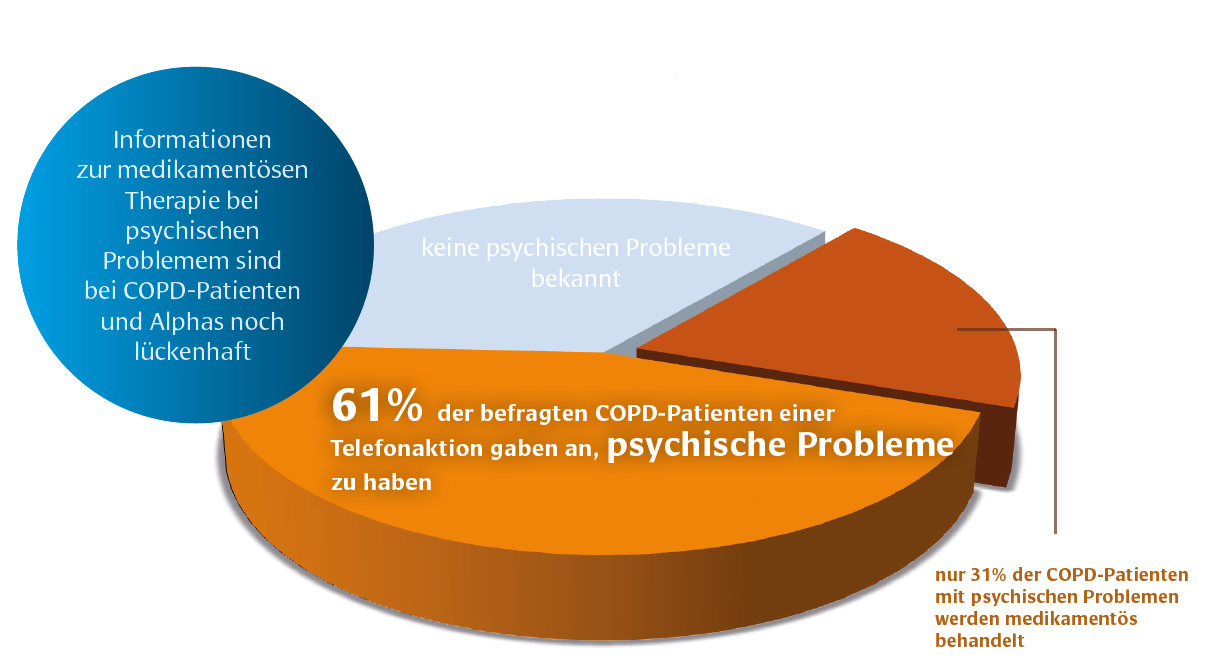
For the treatment of anxiety disorders and depression in general, there are medications that can be used according to treatment guidelines. However, information on drug therapy for COPD patients is still incomplete. In telephone interviews, [they] reported...
Although 61 percent of the COPD patients surveyed reported psychological problems, only 31 percent of them received medication. The second important pillar of treatment is psychotherapy or psychological counseling. This primarily involves cognitive behavioral therapy (CBT). In COPD patients with anxiety disorders, just four CBT sessions proved effective. While anxiety scores on questionnaires increased in patients receiving standard care over an 18-month period, they actually decreased slightly in the CBT group. The CBT sessions focused on education about stress and the resulting vicious cycle, suggestions for physical activity, and an individualized plan for coping with the illness. Relaxation exercises are also recommended. Researchers have demonstrated beneficial effects of progressive muscle relaxation.
Pulmonary rehabilitation involves not only physical training but also psychological support and counseling. Patients diagnosed with anxiety disorders or depression showed, on average, more favorable outcomes after rehabilitation than at the beginning. Even in cases of non-diagnosed depression but only depressive symptoms, rehabilitation had a positive effect on emotional well-being. A patient with alpha-1 antitrypsin deficiency who attended rehabilitation in Schönau for four consecutive years experienced a clear improvement in his psychological quality of life. This occurred despite the fact that his lung function and physical performance had declined over the years due to his illness.
Coping with illness
The patient's assessment of their illness and their own situation plays a significant role. This involves considering the nature and cause of the illness, its past and anticipated future course, and the question of what control they have over the illness and its treatment options. These assumptions and beliefs of the patient—for example, "Nothing I do will affect my illness"—have an impact on their quality of life. Furthermore, they are associated with depression and anxiety disorders.
Partners and family can also make a significant contribution to coping well with illness. The patient's illness strongly impacts family life. Relatives worry, experience the patient's symptoms, and potentially witness their social withdrawal and loneliness. It was therefore logical to also look for psychological problems among family members. Indeed, depressive disorders were found among relatives, even more frequently (17 percent) than among the COPD patients themselves (12 percent). Panic disorders were more common among patients than among relatives (8 percent compared to 5 percent). The way partners and relatives deal with illness-related stress has a positive or negative impact on the patient's quality of life and also on the quality of the relationship. Helpful support involves telling the partner that you understand their feelings, that you are supportive, and that you stand by them. A superficial, brief listening approach combined with a dismissive attitude such as "that's not my problem" would be counterproductive.
Conclusion
Psychological problems in COPD impair the quality of life of those affected, in addition to shortness of breath, coughing, and reduced physical performance. Therefore, it is worthwhile to address them. Current research shows that greater well-being strengthens the immune system and improves stress management. People actively involved in a social network are more satisfied and report less stress. Currently, the medical perspective is deficit-oriented: a problem is identified and treated. A resource-oriented approach would be beneficial, one that considers the opportunities and perspectives that can arise from the current situation.
Thus appeared in Alpha1 Journal 01/2015.