
Alfa Europe – A temporary alliance for the Alpha world of Europe
Author
Memories of Jürgen Schulz
A year after my diagnosis of "AAT deficiency with genotype ZZ," I was receiving my Prolastin infusion when my pulmonologist showed me a brochure. She mentioned a patient congress in Berlin in May, saying it was something for me. "Why don't you go?" she asked. I asked, "A congress? Aren't those only for doctors? Isn't that a bit pretentious?" Her reply: "Yes, perhaps, but it's definitely a good thing." I registered and my wife and I took the train to Berlin. Berlin. It was the Alpha Information Days. 2006, in conjunction with the Alpa-1 Germany General Meeting.
I had previously inquired about the hotel price for an extension of my stay. When Ms. Takahashi called me back, she offered free accommodation in exchange for membership, or even better, for active membership. They were looking for someone with international experience. I had plenty of that, so I agreed.
A founding conference for Alfa Europe was added to the information days, and I was appointed treasurer. Prior to this, however, eight national representatives of Alpha-1 associations submitted a declaration of intent, notarized by two Berlin lawyers. They also applied to the court for registration in the register of associations, submitting the association's statutes, the English version of which still needed some refinement. The German version, however, was submitted to the court. Who were these eight? They were the representatives of the associations in Germany, Denmark, Ireland, Italy, Austria, Sweden, Switzerland, and Spain. The official language was English. The Scandinavians spoke it fluently. This was explained by the fact that American films with subtitles were shown in those countries. The learning effect was enormous. The further south one looked at the pronunciation, the stronger the accent became.
Before Alfa Europe was legally established, there had already been some informal meetings of Alphas or their representatives, for example in Dublin, Barcelona and 2005 In Zurich, the further course of action was also determined. The spelling Alfa with an "f" was chosen because that is how it is spelled in some member countries. Now it was a matter of quickly establishing the most important foundations for an association structure. Much had to be accomplished in Germany, as it was an association under German law. To this day, there is no European regulation for associations. To make decisions, board meetings were held periodically in Cologne, the then headquarters of Alpha-1 Germany. The chairman was a retired headmaster from Dublin, the vice-chairwoman was the head of Alfa-1 Italy from Brescia (herself affected), I was the treasurer, living in Westphalia, the deputy treasurer was the head of Alpha-1 Czech Republic from Prague, and the secretary was an employee of Alpha-1 Denmark from Copenhagen.
Of course, I needed some initial support at the time, particularly regarding the German aspect. I received this help primarily from Ms. Takahashi, due to her experience with Alpha-1 Germany. At the second Alfa Europe board meeting at the beginning... 2007 My colleagues grew impatient because the registration from the court still hadn't arrived. So I decided to go to the local court to put some pressure on the matter. I made an appointment with a senior court clerk in Lünen. I parked next to the courthouse, right in front of the prison entrance. My wife and I were able to watch as a new inmate was being brought in. She preferred to come into the courthouse with me, but stayed in the hallway. The official looked up from his files, listened to me, and then became quite displeased with my initiative. He said I was only delaying his departure, and he couldn't accept that. On the drive back, I just thought, for the good cause of the Alphas, you have to put up with it. And it wasn't long before the long-awaited registration arrived in the mail.
Next, I registered our organization with the local tax office. They're the ones who issue the confirmation of our non-profit status. The tax office had a dedicated department for associations, and a new list of charitable purposes had just been compiled at the federal level. The official determined that our bylaws didn't quite fit. So, the most suitable purpose was identified, and we were allowed to amend the bylaws again. That took some time. But eventually, the concept was finalized, and the revised application was promptly approved by the tax office. The next step was setting up a bank account for the association. Because of our international composition, we chose Deutsche Bank, which wasn't universally popular on the board. After some grumbling, it was approved. The essentials were now in place.
From then on, it was essential to meet the diverse demands and wishes of the member states. Different mentalities, experiences, and expectations accompanied our work in the coming years—that's Europe for you. The general assemblies were held in a different host country each time. Berlin was followed by Rome, Prague, Vienna, London, and Amsterdam.
The event in Rome It was very lavishly staged when the third World Congress of Alpha1 Antitrypsin Deficiency Patients took place in September. 2007. Alfa1-AT Italy organized the meeting and secured enough sponsors beforehand to cover all the costs. It was a mammoth event with a long list of speakers. Guests from virtually every imaginable nation were present. Most, however, were Americans, following the motto of "a once-in-a-lifetime trip to Rome." Our general assembly was almost lost in the program. Nevertheless, this meeting, right at the beginning of Alfa Europe, brought in a four-figure sum for our coffers. An audience with the Pope had also been requested. After a long wait, the Vatican had just agreed. So we were taken by bus to Castel Gandolfo, but had to get off in a remote location and walk up a steep path. My wife suddenly had reservations, firstly because we are Protestant, and secondly because she has difficulty walking due to MS. But two Alpha members from Austria, Christa Berger and Gabi Gruber, took her between them and pulled her along, "because it can only be good for her health." It was an experience to witness the spirit that gripped the pilgrimage in the square of the residence when Benedict XVI blessed the crowd in more than 10 languages.
In January 2008 The first audit was due. It was conducted at a law firm in Cologne. The lawyer reviewed the legal framework before examining the accounts on a sample basis. I had wanted to apply my knowledge from business administration, part of my engineering studies. Ultimately, however, simple bookkeeping sufficed. The important thing was that the membership fees were paid every January. After all, we only had eight members, each country counting only once. In the end, we received an audit report stamped by a lawyer, which made a good impression. This allowed us to replace the tax office's preliminary approval with a final version. Later, our accounting was essentially limited to administrative costs, travel expense reports for board members, and project funding for the member countries. All costs for information days, such as meeting rooms, speakers, and hotel catering, were always centrally ordered and paid by the Alpha-1 Foundation, so the country projects accounted for the largest share of our books. I personally requested these funds from the foundation. A significant effort was required to prepare all bookings and the cash report once in German for submission to the tax office and once in English for presentation at the general meeting.
The Annual General Meeting with Information Day 2008 found in Prague The event took place. Ms. Takahashi usually moderated such occasions. Due to illness, she entrusted me with the task at short notice. We held new elections, and the board was re-elected with the exception of the vice-chair. A French candidate had offered herself for this position and subsequently received a majority of the votes. She was the mother of a boy with Alpha-1 diabetes who had liver damage. A few years later, he received a liver transplant at the University Hospital in Paris. Guest speakers at the information day included Dr. Köhnlein (now a professor) from the University Hospital of Hanover, a physician from Warsaw specializing in lung research, and a pulmonologist from Prague, a lecturer at the University of Prague. A presentation on substitution therapy in Europe followed. Afterwards, there was some relaxation with a tour, including a view from Prague Castle, before everyone dispersed.
End 2008 The first attempt to influence the Alpha-1 community in Europe came from the USA, more precisely from the US Alpha-1 Foundation, based in Miami. A meeting of representatives was planned for January in Malaga, Spain. We were invited but decided against attending because we were still busy building our own organization at the time. However, this didn't prevent those from the Mediterranean region and Ireland from accepting anyway. Those who were unwilling were contacted and persuaded from Miami. My phone call lasted over an hour. The Americans saw it as a mission. "We have a lot to teach you." My argument was, "You can also learn something from Europe. Our scientists are very successful." The response: "Yes, then we can exchange ideas." In the end, most of us remained steadfast in accordance with our agreement. On the day of the meeting, the Americans landed in Madrid. The airport was snowed in, and the connecting flight was delayed for hours. The key players arrived much too late. The whole thing didn't quite achieve the intended success. Such attempts to take us over would occur more frequently in the following years.
May 2009 The next audit took place in Ladbergen, the meeting location of our Münster Alpha group. The audit was conducted by Elke Saedtler-Lison, the current chairwoman of Alpha-1 Germany. She had come all the way from central Lower Saxony despite her breathing difficulties. Many thanks again for that.
One month later, following the Austrian General Meeting, which took place on a Danube riverboat, we held our Annual General Meeting. 2009 with information day in Vienna, This meeting, however, took place in the hotel ballroom. Walter Berger gave a welcome speech in pre-rehearsed English. This time, no new elections were necessary except for the election of a new chairman. The Irish chairman was no longer available. There was an English candidate who was subsequently elected. His wife was affected by Alpha-1. They had a residence in Alicante, Spain, and a second base in England, the area of operation for the British Alpha-1 Awareness Association, for which they also worked. A Scottish group was also visiting Vienna and had requested membership in Alfa Europe. This was declined by the English, however, because they were pursuing their own activities in northern Britain. The speakers at the information day were predominantly Austrian representatives from the scientific community, including the Ministry. Austria possesses profound knowledge and experience in the field of pulmonary medicine and transplantation. Vienna General Hospital (AKH) performs the highest number of organ transplants in Europe. Organ donation is more readily available in Austria than in other European countries due to a special law. Other speakers at the information day included Dr. Kenn from Germany, Prof. Stolk and Dr. Fregonese from the Netherlands, and Prof. Pittschieler from South Tyrol. Finally, Dr. G. Lang gave a very impressive overview of the work of the Transplant Center at the Vienna University Hospital.
In May 2010 The audit took place again, this time during the Alpha-1 Germany annual meeting/information day, and was conducted by Peter Kukry. The Alfa Europe annual general meeting 2010 The information day was then held in London The meeting was held. Gernot Beier and Kurt Samsel attended from Germany, and Mr. and Mrs. Berger and Mr. and Mrs. Geiblinger came from Austria. Ms. Takahashi reported on the Alpha-1 Foundation. The meeting dealt with the usual formalities: the annual reports, the discharge of the board, and new elections, the latter without any changes except for the vice-treasurer, who was now Annette Bederke. It was already becoming clear that the Prolastin production would be transferred from the USA to Spanish management. In addition to the representatives of the European national associations, all British individual members were present. The children were cared for by the play gallery. Speakers in London included Professor Janciauskiene, who had recently moved from the University Hospital of Gothenburg to the University Hospital of Hanover, whose topic was research; Dr. Hadzic, lecturer at King's College London, whose topic was liver function in Alpha-1 children; Professor Lomas from Cambridge University, whose topic was research; a spokesperson from the Genetic Alliance UK; and Dr. Steveling from the Ruhrland Clinic in Essen. It was observed that Dr. Steveling's report was followed with particular interest by the British because he described his experiences with Prolastin and its reimbursement in Germany, Austria, and a few other European countries, but not in Great Britain. Following this program, a city tour of London was conducted in an amphibious vehicle, which launched from the south bank of the Thames and passed by the Houses of Parliament. After a turn back to the ramp, the vehicle continued on the road to Buckingham Palace and then back to the starting point. A truly memorable experience.
In April 2011 The next audit was due. Members of the Alpha-1 Germany board met in front of the office on Dürener Straße in Cologne. Gernot Beier arrived an hour early and conducted the audit with me across the hall at the Holiday Inn. Despite my respect for his position, I also felt a connection with him. As such, he presented me with a gift: two Spreewald pickles in a Red Bull-sized can. I immediately opened one to eat the contents. There was so much pickle juice that the tiled floor in the lobby was covered in drips. Later, I gave him two cans of Westphalian pumpernickel, also in Red Bull-sized cans. At that point, I had no idea that a radical structural change for Alpha-1 Germany was decided upon that day in the Cologne office.
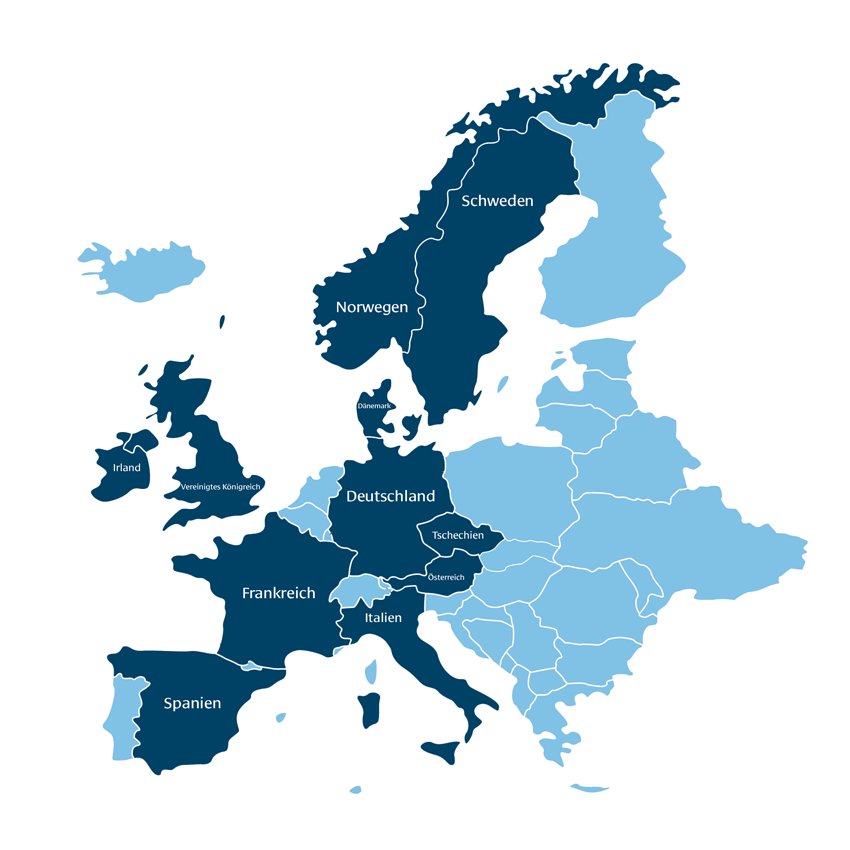
Alfa Europe initially consisted of eight founding member associations. Switzerland left because the successor to the chairwoman only wanted to work for a salary. In the following years, however, we gained new members such as the Czech Republic, France, Great Britain, and Norway, so that for a long time we had eleven member countries. At our general meeting in May 2011 in Amsterdam At Schiphol, a new member was presented: Alpha-1 Portugal. During the meeting, a Dutch group also applied, and the Belgians expressed interest as well. After the usual procedure—the chairman's report, my treasurer's report, and the selection of a new vice-treasurer—a number of points were discussed according to a previously distributed agenda, representing a kind of exit strategy. This was actually paradoxical given the demand we had received. Other topics included sponsorship, membership fees, amending the statutes, relocating the headquarters to another country, more discussion, fewer scientific presentations, etc. However, some participants of the annual meeting viewed the assembly very positively, as the official report below summarizes:
This year's meeting was very different from previous years; it was a very well-organized business meeting. There were no medical speakers. The three presenters were John Walsh from the Alpha 1 Foundation USA, L. De Baere from the Society for Rare Diseases, Belgium, and J. Prevot from the International Patient Organization for Primary Immunodeficiencies (IPOPI). All were there at the invitation of the Alfa Europe Board Committee and Talecris to discuss their own organizational structure and to help the Alfa Europe Federation view itself as a patient organization, exploring how best to restructure and move forward in a more positive way than in the past. Representatives from Talecris were also present as part of the meeting. It had been decided beforehand to have an independent moderator to conduct the meeting, a role filled by Dr. Thomas Henschel, who did so in a very calm and positive manner.
All 12 member states were represented, and interpreters were present for French, German, Spanish, and Swedish members. This meant that everyone could follow the session in their own language, as the meeting was conducted in English. After hearing from the three speakers, an open discussion was held with them and Thomas Henschel, who chaired the meeting. The afternoon began with three separate workshop groups to discuss and contribute ideas on topics such as "How can Alfa Europe move forward and best serve Alphas in Europe?" The same factors emerged from all political groups:
- A joint body that could raise awareness, provide support and lobby for the treatment of Alpha 1.
- A must for everyone to come together and work for the good of all Alphas.
- Respect and understanding for all member states and their organizations.
The workshops were thoroughly discussed, and everything the groups had written down is intended to help with the rebuilding and restructuring of the Alfa Eur. Federation. The general assembly was held in the afternoon. Beforehand, T. Henschel brought the meeting to a close by moderating a role-playing exercise on stage, with the aim of creating a positive future for the entire organization. Afterwards, we held the general assembly. Alan, as president, asked Stig from Norway, as chairman, to conduct the business. There were no candidates for the position of deputy treasurer, so there were no elections. We had previously been submitted several proposed amendments to the statutes from the board committee, as well as from Italy. Many parts of the current statutes are rooted in German law, where Alfa Europe is registered, and are cumbersome and unclear, but the investigation of registering in another European country with more favorable tax laws was postponed. Italy then announced that, following today's discussions, they would withdraw all their proposed amendments. This was a breakthrough. Several good decisions were made, including maintaining annual communication, voting on amendments and proposals via email throughout the year, and not waiting for the general assembly in 12 months; this was unanimously adopted. The Dublin Consensus Statement (blood donation rules) was discussed and ratified. The meeting concluded after some discussion and decisions on how to move Alfa Europe forward. Everyone who attended left with a renewed sense of unity; there were no disruptions, no arguments, no hard feelings towards other members, just a positive outcome that will hopefully continue to flourish and grow into a strong patient organization that can work together for the well-being of all Alphas.
I personally had the feeling that the people around our British chairman intended to turn their backs on mainland Europe. Today, we would call that Brexit. My enthusiasm was considerably dampened. In December of that year, I was forced to resign from my position with Alfa Europe due to a heart attack. Despite being severely weakened by the surgery, I was still able to ensure an orderly withdrawal. I later learned that Alfa Europe's headquarters had been moved to Bristol, UK. The federation gradually faded into insignificance. Today, no trace of its activities remains.


