

Author
Marion Wilkens, Alpha1 Germany eV, as published in Alpha1 Journal 1/2022.
Digitalization is a very topical issue right now, and we want to address it as well. What does it mean, and where could it offer added value for us patients? We will try to dedicate an article to this topic in every future journal issue.
We patients already frequently use the digital world without really noticing or paying much attention to it. We use wearables (computer technologies worn close to the body or head), such as pedometers or smartwatches, and many of us use apps (application software). The internet, which is so widely used, is also digital and offers advice and support to both us and our doctors. So, it's fair to say that digitalization has arrived in healthcare.
But what good does it do us, the patients?
By creating new diagnostic and treatment options, we are getting significantly closer to personalized medicine. Digitalization facilitates communication between the various stakeholders in the healthcare system through the use of the internet, emails, video meetings, and training. Individual patients are empowered to better monitor and thus manage their health, for example, through apps and online information. Data collected from us via apps, for instance, could be analyzed quite easily. In the future, such analyses might allow for earlier prediction of exacerbations (deterioration) and thus timely intervention. Of course, this involves a vast amount of data that would need to be analyzed; neither doctors nor medical staff can manage this task alone. Artificial intelligence (AI) would be invaluable in this regard.
Thanks to the pandemic, some doctors are now offering advice and support via video consultations online, and patients are increasingly making use of these services. The pandemic has been particularly beneficial for us, as we don't always have to go to crowded doctors' offices. This saves us patients time and energy, which we don't always have for the sometimes long journeys to a specialist, not to mention the risk of infection, which we all want to minimize.
Digitalization is primarily supported and driven by healthcare providers (health insurance companies). Digital technologies can generally help to better address challenges facing almost all Western healthcare systems. Fortunately, our population is aging, which, however, poses a real challenge for the healthcare system. It can also be difficult to provide adequate care with expensive medical innovations for those with chronic illnesses who live in structurally weak rural areas.
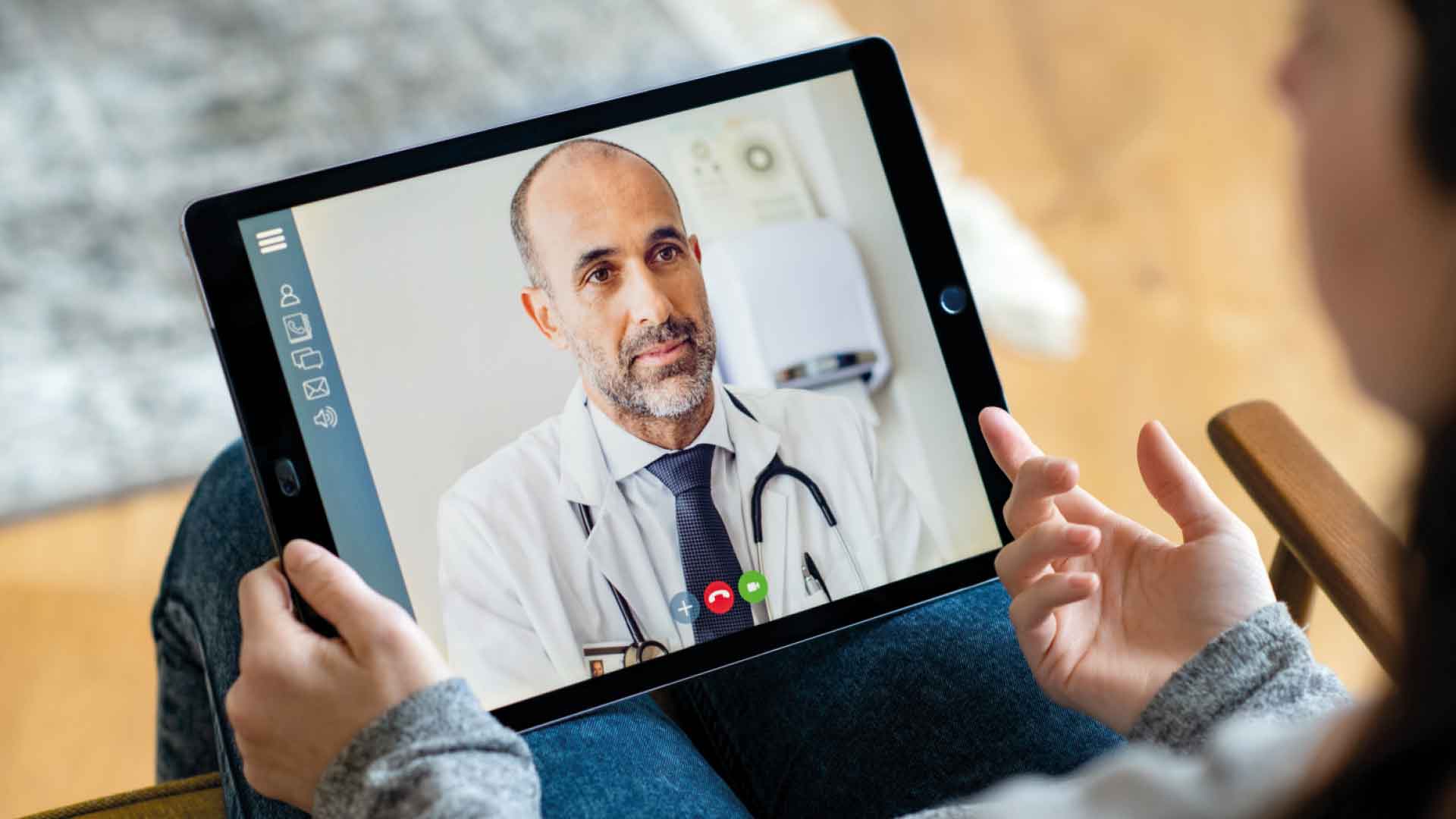
Virtual doctor's appointments have become almost part of everyday life since the pandemic.
The following is stated on the website of the Federal Ministry:
„"The Federal Ministry of Health has recognized this and, in recent years, has created the framework to allow the many advantages of digitalization to be utilized. Important steps have been taken, always with the aim of improving healthcare in Germany. These include the introduction of the electronic patient record (ePA), the introduction of the electronic prescription (e-prescription), the creation of a new access point for digital health applications (DiGA or 'app on prescription'), the advancement of telemedicine, and the establishment of the Health Research Data Center at the Federal Institute for Drugs and Medical Devices."„
- We already reported on the introduction of the ePA in Journal 1/2021 – unfortunately, from our point of view, not much more has happened and far too few people are taking advantage of these opportunities.
- According to the Federal Ministry of the Interior, the path to the electronic prescription was also very long: "Because from September 1, 2022, pharmacies throughout Germany will be able to redeem electronic prescriptions and bill the health insurance companies." Only that late, you think? We also thought it was already possible.
- What about so-called DiGAs? A DiGA is a digital health application, a medical device, e.g. in the form of an app.
At the Federal Institute for Drugs and Medical Devices (BfArM) Here you will find everything you need to know, especially the list of DiGAs (Digital Health Applications) available by prescription. Currently, 33 apps are listed in the directory. However, only a few doctors have prescribed such apps so far. As also reported in our journals, you can find good apps by looking for the PneumoDigital seal. A list and further information can be found on the [website/link]. Pages of the Respiratory League.
Ultimately, we, as affected individuals, hope that digital possibilities in healthcare will provide assistance in everyday life and a well-informed doctor who may even have more time for us and our problems through the use of these tools.
Returning to the question: How can we advance all these digital tools – which are actually intended to support patients? Can we influence digitalization?
Our answer: Yes! Because digitalization is coming, no matter what we do. But should health insurance companies, doctors, and/or pharmaceutical companies decide what we patients need? It's surely better to be involved from the outset and to say how we envision a digital future and how we can benefit from it.
We will keep you updated on details and our projects as best we can.


