
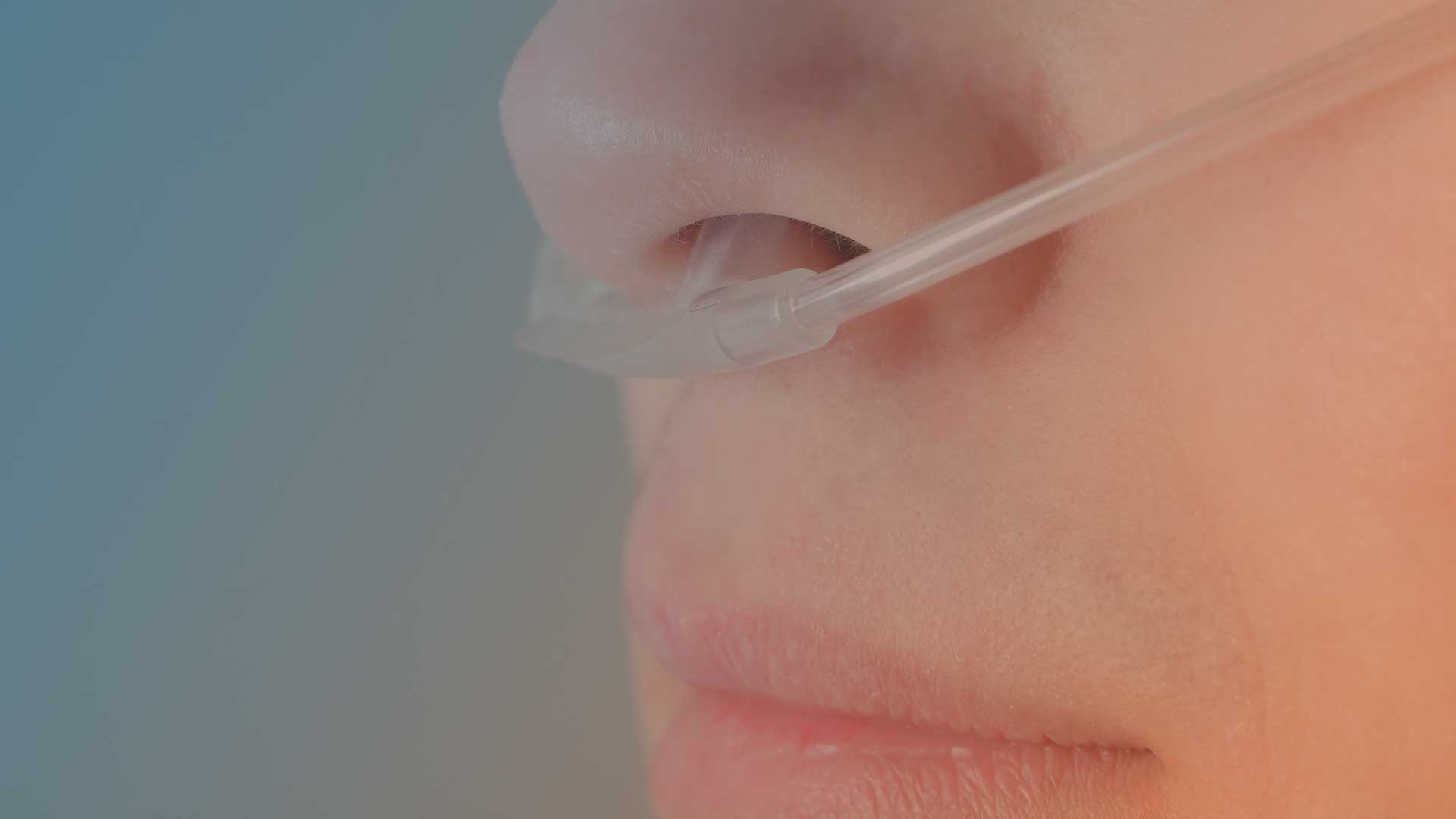
Use of sterile water in long-term oxygen therapy
Author
Ursula Krütt-Bockemühl, Honorary Chairwoman of the German Oxygen and Respiratory League LOT eV.
Question: I'm unsure how to handle the sterile water for moisturizing my nasal passages. Can I boil the water myself? Who pays for this supplement? What else should I know?
Answer from Ursula Krütt-Bockemühl, Honorary Chairwoman of the German Oxygen and Ventilation League LOT eV.
Long-term oxygen therapy with an oxygen flow rate of more than 2 liters per minute can lead to dryness of the nasal mucous membranes.
Dryness of the nasal mucous membranes can be prevented in most cases by using moisturizing ointments and nasal oils (only oil- and grease-free products should be used with liquid oxygen) and by using a humidifier. With all oxygen sources (liquid oxygen, concentrator), the released oxygen can be passed through a container of sterile water before being delivered to the nasal cannula.
For humidification, both open systems (Perlan humidifiers), which need to be refilled regularly, and closed systems (Aquapak with sterile water), which must be used up and then replaced, are available. See the accompanying illustrations.
Open systems
In an open system, the user is responsible for continuous refilling, ensuring sterility (i.e., germ-free water), and maintaining hygiene. The humidifier reservoir should always They must be cleaned daily.
For refilling, sterile water bottles available from oxygen suppliers or medical supply companies, or specially distilled water for medical purposes from the pharmacy, are suitable.
Alternatively, tap water, water for baby formula, or still mineral water can be boiled and then cooled before use. However, be aware that if you are using an electric kettle, it may switch off automatically too soon. Water is only truly germ-free after boiling vigorously for at least 3 minutes. The other refill options mentioned above can also be boiled again before use to ensure maximum sterility.
Please note that distilled water is not the same as sterile water. Sterile water refers to water that is "purest" and free of microorganisms (germs, bacteria) and trace elements. Therefore, the following are completely unsuitable for use in a humidifier: distilled water from a hardware store, which is only free of trace elements and other impurities; sparkling mineral water; or unboiled tap water. Only distilled water for medical purposes is an exception.
Closed systems
As the name suggests, an Aquapak sterile water system is a self-contained unit. The Aquapak is sealed, the water is sterile, and it can be used down to the last drop before being replaced with a new Aquapak. Closed systems thus offer the most optimal form of humidification.
The expiration date of an Aquapak can be found on each package and is several years.
Cost coverage
Coverage of costs varies depending on the health insurance company and the oxygen supplier. It is no longer a given that the costs for sterile water will be covered.
Some health insurance companies cover the costs, and for some oxygen suppliers, it is still standard practice that Aquapaks are included in the overall supply.
Ask about:
- at your regional health insurance company
- with your personal supplier
- Ask your doctor to prescribe sterile water as well.
If you have to pay for it yourself, you should definitely compare prices! For example, visit the online shops of the suppliers mentioned in this magazine. It can also be helpful to search for "online shop medical product sterile water" on the internet or to use self-help forums.
Prices and packaging units vary (some examples found online are €2.60 for 340 ml, €3.60 for 650 ml or €4.20 for 500 ml as of 12.05.2017).
Note: Even in hospitals, the supply of sterile water is no longer a given due to cost reasons. Ask about it during your hospital stay!
Source: Patient Library magazine / COPD in Germany, Summer 2017 issue, www.patienten-bibliothek.de


