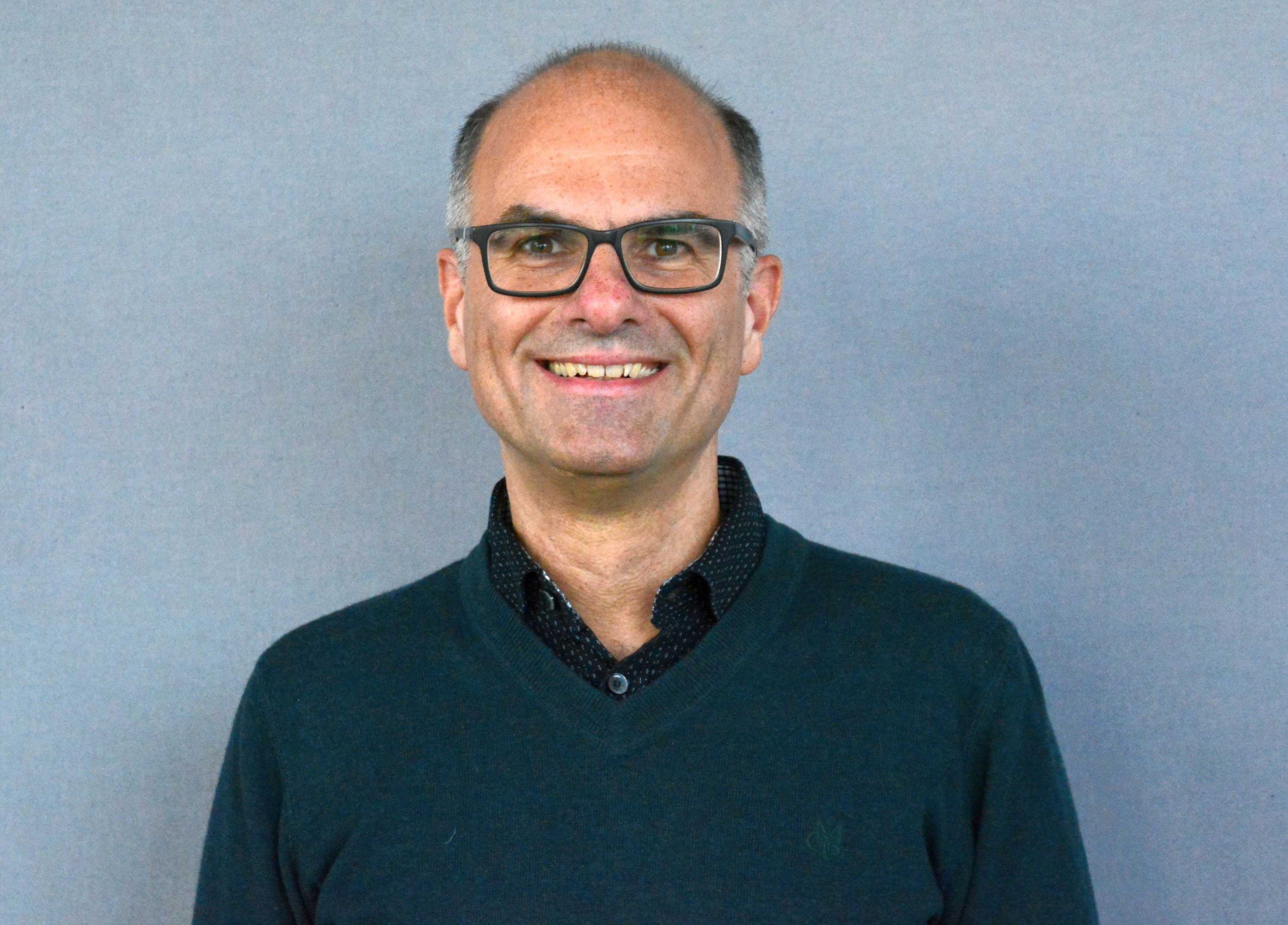
A breath of fresh air in the advisory board
Author
Linda Tietz, as published in Alpha1 Journal 1-2019.
An interview by Linda Tietz with our new advisory board member Alexander Niepel
Linda Tietz: Hello Alexander! Before we begin, I'd like to say that it's wonderful that you've been appointed to the advisory board of Alpha1 Germany on an interim basis. What tasks are you entrusted with within the association's work?
Alexander Niepel: Thank you so much, Linda. This new role is very important to me, and I'm delighted that the board has placed its trust in me. The feedback from my self-help group has been very positive, and my family is also very proud. The Munich self-help group, or rather the Southern Bavaria group, is something I re-established – based on the excellent preparation and support of Marion – back in 2016. Since then, I've led the group together with my wife, Irina. We have a core group of about 10 participants who almost always attend, some of whom travel for an hour to get here! I think everyone appreciates the discussions we have together. So far, we've only had one guest – a naturopathic practitioner who contacted us after seeing my interview in the Munich Abendzeitung newspaper. The visit was well-received and interesting, and in the end, some of us even regretted not having enough time to talk!
Linda: Are you and your family also affected by AAT deficiency? Which phenotype were you diagnosed with?
Alexander: I have pancreatitis and was diagnosed by chance in 2003. I probably had gallstone attacks all those years, but they were misdiagnosed as stress-related stomach problems. In 2012, I became an emergency case (biliary pancreatitis) and had two tough years with many hospital stays. Initially, I was diagnosed with PSC, a rare liver disease, partly because they couldn't imagine how Alpha-1 could be related to my symptoms. My lungs haven't shown any functional impairment so far, but I still follow the vaccination recommendations presented at the information day because infections could definitely affect me more severely than people with multiple myeloma. Since 2018, I've been on steroid replacement therapy, which has significantly improved my situation. This will surprise many people because the focus in the association is usually only on the impact on the lungs, but that's precisely where my new role will begin. Basically, the theory is that the numerous microgallstones (sludge) constantly produced in my liver lead to minor inflammation in the bile ducts, and then the alpha-1 receptor is missing, preventing an overactive immune response. My grandfather died of liver cirrhosis at an advanced age, a condition that was as surprising as it was inexplicable; he, like other family members, suffered from gallstones regularly. But overall, his illness progressed differently than mine. This somehow ties in with the statement from the last information day that they want to break down the umbrella term COPD because the disease progressions do differ. We don't even have an umbrella term for liver disease yet.
Linda: And how did you first come into contact with our patient organization?
Alexander: That was in 2015/16. The PSC diagnosis didn't seem right to me. I wasn't feeling well anyway. I simply needed a new approach. I called Marion and ended up in Aachen. That was a huge step forward for me! Dr. Hamesch and Dr. Strnad were a real stroke of luck. In return, I offered Marion my support in the association, without really knowing what that entailed. But that, too, turned out to be a stroke of luck, because the self-help group was especially helpful for my wife, who regained a much-needed sense of hope there.
Linda: What's your life like outside of Alpha1? Are you active in sports? Do you enjoy traveling? Is that always easy to combine with your AAT deficiency?
Alexander: I work in the telecommunications industry as a product manager. It can definitely be demanding. But since I started taking opioid substitution therapy, I can (almost) put in the same effort as before. As a native of Erlangen, I always cycle to work in Munich, rain or shine. But I only really started exercising in 2017 because I lost a lot of muscle mass due to all the bouts of illness. Now, in a good week, I go to the gym four times, and I have to say, I really enjoy it. The exercise and the social atmosphere there strengthen me. And Sunday yoga has become a valuable point of calm in my week. Traveling has always been my thing, especially since I started taking Alpha-1. In 2013, a doctor at a clinic advised me to make the most of the next five years. That was a tough promise – which ultimately didn't come true – but we turned it into a positive experience as a family and traveled around the world via Australia and China, with many "stopovers" like Iceland, Israel, and Georgia. My camera always comes with me; I only started photography in 2013 as a hobby and a way to unwind. I take emergency medication with me on my trips (painkillers, antibiotics), but remarkably, nothing has happened so far. I've only been on the substitution therapy for 12 months and have to adjust the dosage for travel by taking double doses.
Linda: What did you particularly enjoy about our last information day?
Alexander: That was one of the best information days. All the presentations were of a high standard, not only in terms of content but also presentation style. I was particularly impressed by Professor Welte. The side conversation with Professor Janciauskiene was also very informative. And then, of course, there was the opportunity to see many familiar faces again and to have conversations.
Linda: To conclude our conversation, would you please tell us what goals and expectations you have for your work at Alpha1 Germany?
Alexander: As a member of the liver advisory board, I'm the contact person for all members, whether patients or their relatives, regarding liver-related issues, or more generally, gastroenterological questions, because the distinction isn't always immediately clear. I'd like to establish a kind of virtual liver support group where we can exchange information via email, chat, and phone, and perhaps even meet once a year for a liver information day. Over time, I also want to spread knowledge about the liver within the association. Networking outside the association seems essential, because right now, I can only answer the question "Do you know a good liver specialist?" by referring to Aachen, but Aachen isn't everywhere. Of course, I'm very open to suggestions from within the association about what's needed! Ultimately, my work shouldn't follow a set program, but rather the needs of the members. Right now, I would be very happy if people affected by liver disease would contact me so we can network within the association. Since we will foreseeably remain a small group (approximately 10-401 TP3T of Alphas are affected in the liver), I will also contact the associations in Austria and Switzerland to see if we would like to develop a joint liver support program. I am available by phone every Monday from 4 pm onwards for any questions or suggestions at +49 175 9943115. Emails are also always welcome: alexander.niepel@alpha1-deutschland.org.
Linda: Thank you so much for the interesting conversation and your truly enriching commitment to our club!
Linda Tietz, as published in Alpha1 Journal 1-2019.