
Author
Seminar: Dr. David Katzer and Dr. Alexander Weigert, report by Gabi Niethammer | As published in Alpha1 Journal 1/2025.
Our seminar starts with the introduction of the two speakers, Dr. David Katzer and Dr. Alexander Weigert, both pediatric hepatologists at the University Children's Hospital Bonn, which is also one of the leading Alpha1 children's centers.
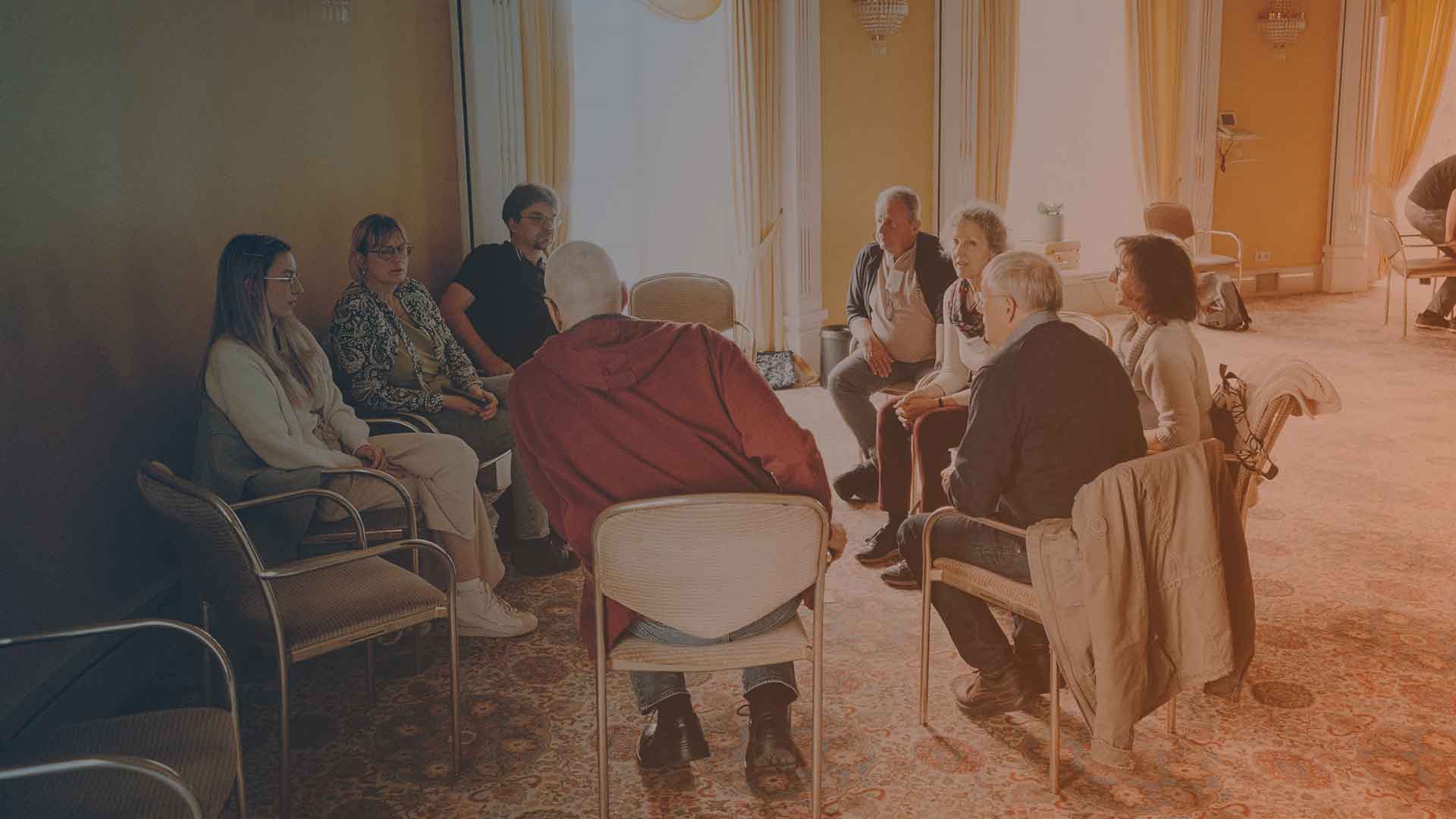
Twenty-four parents and two teenagers came to learn more and exchange ideas. As an advisor for children and young people, I'm especially pleased to see these two young Alphas – how wonderful and important it is to take responsibility for one's own health at an early age. It's great that you're here!
Right at the start, participants are asked interactively via mobile phone where they come from and what their genotypes are. The keyword survey about pressing questions and desired topics for this seminar is particularly interesting. The goal is to have answered all questions by the end.
The two speakers begin with an overview of the disease to bring everyone present up to speed. They cite the following figures regarding the prevalence of Pi*ZZ:
- Incidence Pi*ZZ: 1:2,000 to 1:4,000
- With approximately 780,000 births per year, that equates to 200 to 400 newborns per year.
- Thus, 3,600 to 7,200 children in Germany have severe AATM.
- As of January 2022, 7 out of 10 German children's centers cared for a total of 178 patients.
Regarding the liver, their conclusion is that it is unclear how many children develop relevant liver damage, that the influencing factors on the course of the disease are unknown, and therefore no prognoses about the course of the disease are possible.
It is reassuring to know that only about 5 of the children with the severe deficiency (Pi*ZZ and possibly Pi*SZ) require a liver transplant, and if so, usually in preschool age.
As far as lung health is concerned, no problems are expected in children and adolescents. To ensure this remains the case in adulthood, it is important to raise awareness among young people about lung health early on and to equip them with the knowledge that they can do a great deal to avoid developing lung problems later in life, around the age of 40.
- No smoking/passive smoking
- Avoidance of particulate matter, exhaust fumes, etc.
- Vaccinations according to STIKO plus flu, corona, hepatitis A
- Low-pollution career choice
Alpha-1 levels are measurable in the blood of newborns. They do not change significantly throughout life unless the child has an inflammation that is causing the levels to rise. It is therefore important to measure these levels when the child is not infected and the body is not under significant stress, for example, due to a burn or similar condition.
A key question in the plenary session was when and how the child should be informed and included in the "Alpha1" process. Both speakers, as pediatricians, said they are constantly amazed at how well children can cope, even with serious diagnoses.
It is advisable to gradually introduce children to the topic of alpha-1 antitrypsin deficiency and to have them seen by a pediatric hepatologist early and regularly. Here is the recommendation from the Alpha1 Children's Center Bonn:
- In cases of good progress, presentation of Pi*ZZ or Pi*SZ usually takes place once a year.
- For infants and young children, more frequent check-ups are recommended (every 3 or 6 months, or even more frequently if there is relevant liver disease).
- At Pi*MZ every 2–3 years
The examination includes a consultation, blood tests, an ultrasound, and, in adolescents, at least one additional lung function test for later comparison as adults. Further diagnostic support may include elastography or FibroScan, which assess the stiffness of the liver tissue. In some cases, a liver biopsy under sedation may be necessary, during which a small amount of liver tissue is taken.
For those affected, the diagnosis means that blood will be drawn at every Alpha-1 screening for the rest of their lives. How can a young child be prepared for the upcoming blood draw? According to the two pediatricians, announcing it beforehand at home is highly recommended. Even if there is some initial crying, the actual blood draw will later be less traumatic and won't be the only thing remembered, but perhaps the well-conducted doctor's consultation or the interesting ultrasound. Doctors frequently see children who are completely traumatized, often because they were previously given blood tests poorly and without proper explanation. This trauma is difficult to overcome later in life and often accompanies those with Alpha-1 for the rest of their lives.
For many children and teenagers, local anesthesia (Emla®, Tapfi®) before blood draws is very helpful, as it prevents them from feeling the prick and makes them more receptive to subsequent blood tests. The patches or creams are available at pharmacies (also by prescription) and should be applied by parents at least 30 minutes before the blood draw so that the test can begin without delay. As children and teenagers get older, factors like friends, school, and leisure activities become more important. The discussion revolves around the extent to which children should publicly disclose their genetic defect. One mother shares that when her son is asked, "Are you sick?" he replies, "Not yet, but I don't want to be!" What a brilliant statement, because it clearly demonstrates that the child is no different from others while simultaneously taking responsibility for staying that way.
It's very good if children receive age-appropriate sex education, meaning starting early. Once they reach puberty, so many things come crashing down on them that it becomes difficult to begin sex education then, because parents might not be able to fully reach them during this time. Therefore, the more resilient young people are, the better equipped they are to resist potential influences like smoking, marijuana use, and excessive alcohol consumption from their expanding environment.
Support for everyday questions from children and adolescents with AATM is offered by the "12 Questions – 12 Answers" recorded by Dr. Eva Pfister from Hannover Medical School, which can be found on our website. A very relevant topic is the transition, which describes the planned transfer of adolescents with chronic illnesses from pediatric to adult healthcare. There are several challenges involved in ensuring a successful transition:
- Shift from family-centered to patient-centered care
- Lack of transition structures between pediatrics and adult medicine (loss of information)
- Fears of losing trusted contacts
- Transition often occurs during a phase of life with many other changes (e.g., graduating from school, starting vocational training, moving out of home). These young adults do not feel ill and do not necessarily see the need for regular checkups.
One way to encourage young adults to undergo annual screening at an Alpha-1 Center is through enrollment in the EARCO registry, a pan-European network dedicated to promoting clinical research and education in the field of Alpha-1 antitrypsin deficiency (AAT deficiency). Further information can be found on our website.
What are the current treatment options for AATM?
Liver transplantation is the only curative therapy. It is necessary for children and adolescents with severe AATD who have fewer than 5 % cells. Since transplantation involves lifelong medication and there is always the possibility of rejection, it is not a solution simply to get rid of AATD. For a detailed presentation on liver transplantation by the Bonn-based specialist Prof. Dr. Rainer Ganschow, please visit our YouTube channel.
In cases of severe liver disease, the administration of fat-soluble vitamins (vitamins A, D, E, and K) may be indicated. Many children with alpha syndrome receive ursodeoxycholic acid (Urso falk®) as a possible therapeutic trial to protect the liver. It is a naturally occurring bile acid that alters the composition of bile. No relevant side effects are known; however, there are no studies on its benefits in children.
Alpha-1 antitrypsin deficiency should not prevent a child from avoiding any sports. They should be encouraged to try anything they like and have fun. The only exception is in rare cases where the spleen is significantly enlarged. In such cases, the child should avoid contact sports, a point the attending physicians will also emphasize.
Dr. Katzer and Dr. Weigert took over the Alpha-1 Kids Registry and relaunched it in 2023. Families can use this app to share their children's medical data with the team. The app is compliant with data protection regulations and very easy to use. Families benefit greatly, as it contains valuable information about AATM (Alpha-1 Antigen-Related Tumors) and allows them to easily collect their children's health data for their own purposes (e.g., information when changing doctors). Using initial and progress forms, as well as the ability to easily upload lab results via smartphone photos, the team at the University Hospital Bonn can analyze the data for AATM research. For families, this means they can take an active role and contribute to further research on AATM. The app can be found on the website https://alpha1kids.de and in the app stores under alpha-1-KIDS.
Theoretically, the app is usable worldwide; the ethics committee recently gave its approval. Now, other countries will be gradually integrated. Another useful app for children and young people with rare and chronic illnesses or disabilities is unrare.me, developed by, among others, the Children's Network and the Center for Rare Diseases Bonn. It's a communication app for people who have received a diagnosis and want to exchange information securely. It's also interesting for people who have symptoms but haven't yet received a diagnosis and would like to connect with others. The app is designed to facilitate networking among affected individuals, their families, and all relevant professionals.
Alpha-1 test: Liver-related blood values
AST (GOT)
- Enzyme from liver and muscle cells
- Increased when liver or muscle cells are damaged
ALT (GPT)
- Enzyme primarily from liver cells
- Increased when liver cells are damaged
GLDH
- Enzyme from mitochondria („powerhouses of the cells“) of liver cells
- Increased in cases of severe damage to liver cells
yGT (Gamma-GT)
- Enzyme from many cells
- Increased especially in cases of damage to the liver and bile ducts
Bilirubin
- breakdown product of blood pigment
- In the liver, it is converted from "indirect" to "direct" bilirubin (together total bilirubin).
- It is transported via the bile ducts into the intestine and excreted with the stool.
- Elevated bilirubin levels („yellow level“) lead to a yellowing of the sclera and skin (jaundice).
- Direct bilirubin levels are elevated in cases of liver or bile duct problems.
bile acids
- They are produced in the liver and excreted into the intestine via the bile.
- They help with the digestion of fats
- Problems with bile flow or liver increase
- Elevated bile acids cause itching.


