

Author
Alpha1 Germany eV.
November is Alpha-1 Awareness Month!
The Alpha-1 Centers, under the leadership of the German Respiratory League, have sent an important signal with two webinars for medical professionals to raise awareness of Alpha-1 Antitrypsin Deficiency (AATD).
One of the webinars is already available as a recording; the second will also be available online shortly. More information can be found on the Alpha-1 Center website at:
The webinar on November 4, 2025, also provided the impetus for this newsletter. We subsequently asked our advisory board member for prevention, Dr. Alexander Rupp from Stuttgart, to contribute an article on vaccination.
November is a global awareness day for Alpha-1 Antitrypsin Deficiency, with the aim of raising awareness among both doctors and patients.
Those affected can also take action this month: Talk to people around you about the condition, share informational materials, or seek advice on whether an Alpha-1 test might be beneficial for you or your family. Early detection is crucial for targeted treatment and improving quality of life.
Together we are setting an example for more knowledge, more understanding and better care for Alpha-1 Antitrypsin Deficiency.
November is also the time for vaccination…
by Dr. Alexander Rupp/Stuttgart
As the days grow shorter, not only does cold and flu season approach, but it's also the ideal time for many important vaccinations. While the flu vaccine is now familiar to many, there's often uncertainty surrounding other topics:
- Do I really need a COVID-19 refresher course?
- What is the deal with the new pneumococcal vaccine?
- And what exactly is RSV – a virus that can be dangerous especially for older people and infants, but hardly anyone knows about it?
It is becoming clear right now that so-called "vaccine fatigue" is increasing in Germany. According to the Robert Koch Institute (RKI), fewer than 50 people in some age groups have been vaccinated against influenza, and participation in COVID-19 booster shots is also significantly below the recommended level.
Many people feel confused – too many vaccines, too many recommendations, too little guidance. Yet targeted vaccinations can prevent serious infections, avoid hospital stays, and significantly reduce the risk of secondary illnesses. Because most vaccinations are administered with so-called "inactivated vaccines," they cannot cause the disease against which the vaccination is given.
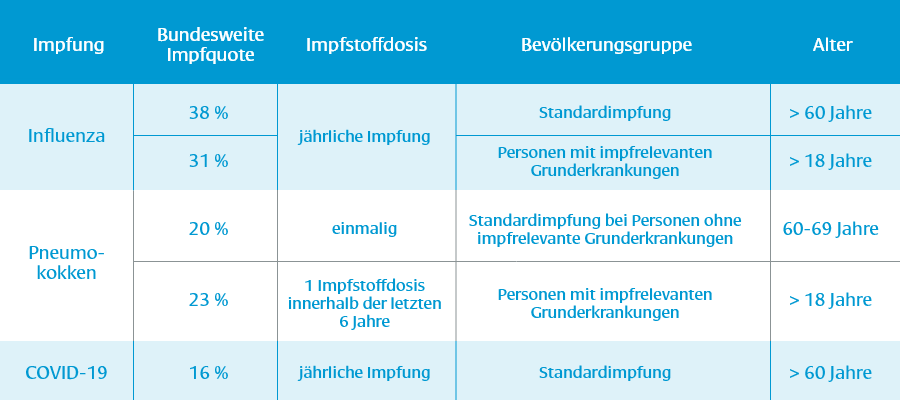
Tabel: Data taken from: Epidemiological Bulletin 50/2024
In this newsletter, we would like to give an overview of which vaccinations are particularly important in autumn and winter – from the well-known flu vaccination to the new pneumococcal vaccine and the RSV vaccination, as well as booster shots against COVID-19 and the sensible protection against hepatitis A and B, especially for people with chronic lung diseases. or alpha-1 antitrypsin deficiency.
Family members should also be vaccinated – because vaccination always protects the people around us as well.
Recommended vaccinations (lung & AATM)
Influenza (flu)
Influenza is a contagious viral infection that occurs particularly in winter. Vaccination protects against severe cases.
Recommended for:
- People aged 60 and over (preferably with a high-dose vaccine or a vaccine with an adjuvant)
- Pregnant women from the 2nd trimester onwards
- Children and adults from 6 months of age with certain pre-existing conditions (e.g. respiratory, heart or metabolic diseases)
- Medical personnel or people with frequent contact with many people
Pneumococci
These bacteria can cause pneumonia, meningitis, or blood poisoning. Vaccination protects those who are particularly at risk.
- Everyone aged 60 and over
- Children and adults with chronic illnesses (e.g. lung, heart, immune system)
- Adults aged 18 and over with health risks
- People with professional contact with metals (e.g. welders)
COVID-19
The Corona vaccination continues to protect against severe cases of the disease.
Recommended for:
- Adults between 18 and 59 years of age, if they have had fewer than 3 contacts with the virus or the vaccine.
- Everyone aged 60 and over, pregnant women and women of childbearing age
Recommended annually for:
- People aged 60 and over
- People with pre-existing conditions (from 6 months after the last vaccination or infection)
- Residents of care facilities
- Healthcare and nursing staff
- Relatives or close contacts of people with weakened immune systems
Hepatitis A and B
Hepatitis is a viral inflammation of the liver. There are two main types: A and B.
Hepatitis A vaccination is recommended for:
- People with sexual risk factors (e.g., frequently changing partners)
- People who inject drugs
- People with liver disease
- Residents of facilities (e.g. psychiatric, nursing or disability facilities)
- People with occupational contact with blood, wastewater or children
- Travelers to countries with an increased risk of hepatitis A
Hepatitis B vaccination is recommended for:
- People with weakened immune systems
- People who have had contact with people infected with hepatitis B
- Drug users, inmates, residents of institutions
- People with occupational risk (healthcare)
- Travelers to countries with increased risk
Shingles (Herpes zoster)
Shingles is caused by the chickenpox virus and can be very painful.
Recommended for:
- Everyone aged 60 and over (2 vaccinations 2-6 months apart)
- People aged 50 and over with chronic illnesses (e.g. COPD, asthma)
- The live vaccine is no longer recommended.
Whooping cough (pertussis)
Whooping cough can also affect adults and is particularly dangerous for babies.
Recommended for:
- Adults when their tetanus-diphtheria booster is due (vaccine: Tdap)
- Pregnant woman in the 3rd trimester
- Close contacts of newborns (at least 4 weeks before birth)
- Healthcare personnel – refresher training every 10 years
RSV virus
The RS virus can cause respiratory infections, especially in older people.
Recommended for:
- People aged 75 and over (one-time vaccination)
- People between 60 and 74 years of age with serious underlying health conditions or in care facilities
- The best time for vaccination is in September or early October.
Recommendations of the Standing Committee on Vaccination 2025
Events in November
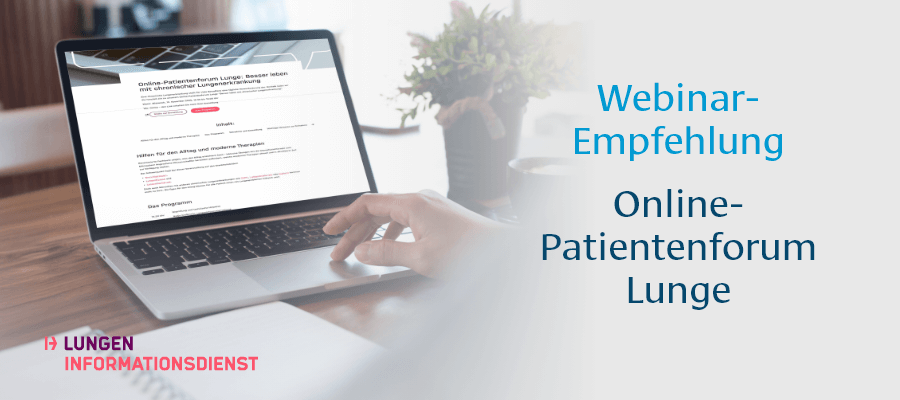
There is once again an online patient forum for lung patients:
Living better with chronic lung disease
- When: Wednesday, November 12, 2025, 4:30 p.m. to 7:00 p.m.
- Where: On-line: You will receive the link after your registration.
You can find more information on the Lung Information Service website.
To register
On November 15th is World COPD Day. We will also be active here; more information will be available on our social media channels that day. LinkedIn and Instagram.
Healthy through the immune system – recipe for „Golden Milk“
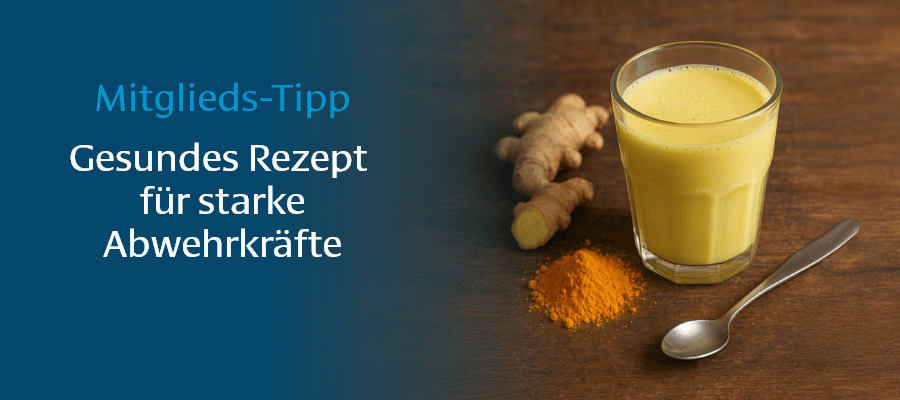
A warming drink for cold days – with turmeric, ginger and milk (or plant-based milk).
Ingredients:
- 250 ml milk or oat milk
- 1 tsp turmeric
- ½ tsp cinnamon
- 1 pinch of pepper
- 1 tsp honey (to taste)
- 1 small piece of fresh ginger, grated
Bring everything to a boil briefly, let it steep for 5 minutes – done.
Turmeric has anti-inflammatory properties, ginger promotes blood circulation, and the warm drink is wonderfully relaxing before bedtime.


